





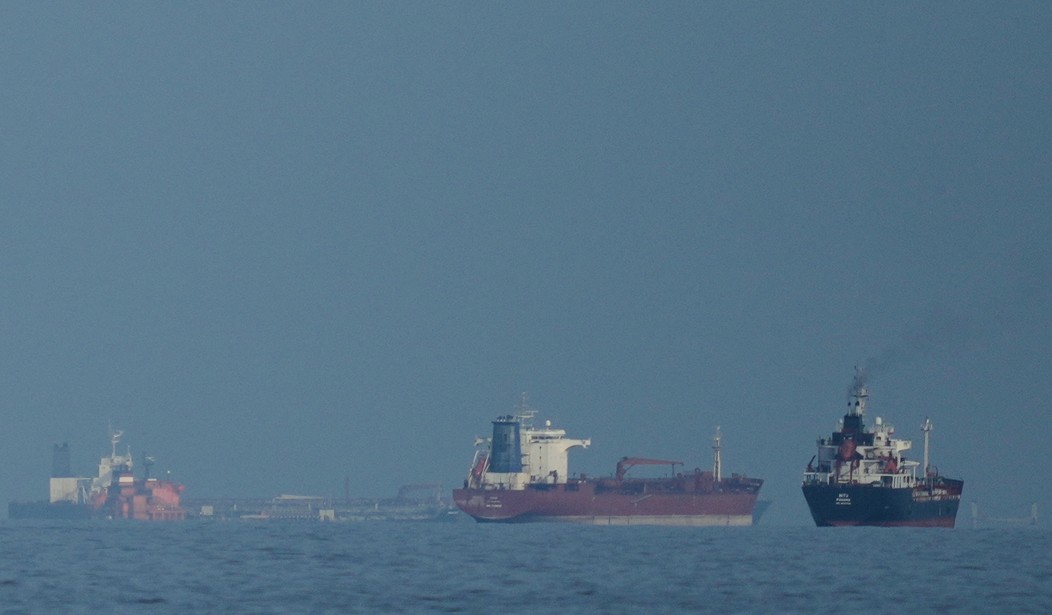
President Donald Trump announced Sunday that the United States will begin helping ships from “neutral and innocent” countries leave the Strait of Hormuz starting Monday morning. He called the effort Project Freedom and framed it as a humanitarian move for ships trapped by the Iran war.
Plenty of politicians mention compassion when cameras are rolling, but Trump continues to demonstrate how removed he is from “regular” politicians, tying the decision to action, sea power, and safe passage through one of the most dangerous waterways on Earth.
The Strait of Hormuz carries enormous weight in global commerce, and energy markets still watch it like a man watches smoke near a dry field. Hundreds of ships and roughly 20,000 seafarers have been stranded as the conflict involving Iran disrupts traffic through the region.
Iran has been blocking nearly all shipping from the Gulf apart from its own for more than two months. Last month, the U.S. imposed its own blockade of ships from Iranian ports.
It was not immediately clear which countries the U.S. operation would aid or how the operation would work. The White House did not immediately respond to a request for comment on the matter and the Pentagon declined to comment.
Trump threatened that any interference with the U.S. operation would "have to be dealt with forcefully."
Iran said on Sunday it had received a U.S. response to its latest offer for peace talks a day after Trump said he would probably reject the Iranian proposal because "they have not paid a big enough price."
Many crew members come from South and Southeast Asia; they had nothing to do with the war. They didn't start it, write Iran's threats, or choose to become bargaining chips in a dangerous waterway.
Ships and seafarers, many on oil and gas tankers and cargo ships, have been stuck in the Persian Gulf since the war began. Crew members have described to The Associated Press watching intercepted drones and missiles explode over the waters, and running low on drinking water, food and other supplies.
Many sailors come from India and other countries in south and southeast Asia.
Those people were doing ordinary work when an extraordinary crisis fell on them like an ex-Iranian cleric cannonballing in a pool.
Trump's statement cut through the usual fog, saying the United States had told those countries that America would guide their ships safely out of restricted waterways so they could “freely and ably get on with their business.”
The wording set the mission's tone: America isn't rescuing hostile actors; it's notifying neutral nations that lawful commerce and helpless crews won't be abandoned because Iran turned a vital shipping corridor into a danger zone.
The market noticed.
Oil prices fell after Trump's announcement. Brent crude dropped $1.83 to $106.34 per barrel — it's not much, but better than a stick in the eye — while the U.S. West Texas Intermediate fell $1.72 to $100.22. Markets don't reward speeches because the words sound cool; they move when a president signals that chaos won't be allowed to spread.
Nobody should pretend Project Freedom will be simple; public details remain limited, and follow-up from the White House and Pentagon hadn't filled in every operational blank by Sunday afternoon. I'm not a CNN reporter; I'm smart enough to avoid asking the president his military plans.
Trump's posture is clear; he's telling Iran, shipowners, seafarers, and energy markets that the United States sees what's going on and intends to move. In a region where hesitation often gets read as weakness—or, as in the case of U.S. mainstream media, thinking Trump is overmatched—the announcement gives America’s allies and neutral partners something firmer than diplomatic shrugging.
The compassion angle deserves notice because strength doesn't only count when it punishes. American power protects supply lines, calms markets, and helps stranded crews get home or get moving again. The same Navy that deters enemies also clears a path for working sailors who just want to leave a dangerous place alive.
People on the left will find reasons to complain because some people find a scandal when the rest of us call it Monday. They'll argue over timing, tone, risk, wording, tie color, head angle, and whatever else can be fed into the outrage machine before breakfast.
Mike seems to get hangry before breakfast.
Meanwhile, the ships still need passage, crews still need safety, and oil prices still affect American families filling their tanks and paying their bills. Trump is acting in the space where leadership has to live, between danger and delay. Or between the space of $4.25 gas and the Biden-era genius of calling paralysis a policy.
Project Freedom gives the country a clean view of Trump's governing style in a crisis; he didn't offer sympathy cards to the gay, comatose Iranian leader; he's offering safe passage to neutral nations trapped near Iran. Trump's not treating energy markets as abstract numbers on a screen: he understands that every barrel eventually touches a household budget somewhere.
Strength and mercy don't have to be enemies; sometimes they work best when they sail together.
President Trump’s Project Freedom shows what leadership looks like when strength serves a real purpose. Neutral ships need safe passage, stranded crews need help, and American families need energy markets that aren’t held hostage by Iran’s chaos. PJ Media VIP keeps digging into stories like this without sanding off the truth to protect the usual crowd. Subscribe today and get 60% off with promo code FIGHT.

Join the Conversation
VIP members get the ability to comment on articles.