







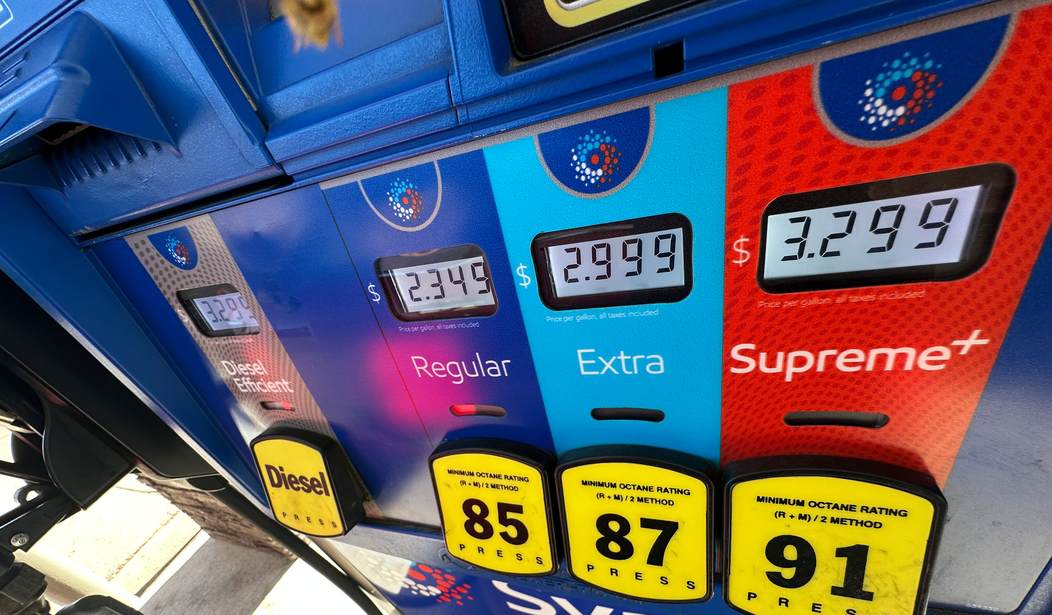
Over the past several years, we've watched our gas prices swing wildly; we remember the spikes that stretched family budgets and the sudden political urgency in Washington whenever those numbers climb.
Sen. Chuck Schumer (D-N.Y.) has launched a new line of attack against President Donald Trump, urging the administration to tap the Strategic Petroleum Reserve in response to rising gasoline prices.
Schumer's comments revive an argument that many voters heard repeatedly during the previous administration, a position that raises an obvious question: Where was that same concern when the federal government drained large amounts of oil from the Strategic Petroleum Reserve during President Joe Biden's term in office?
"The instability created by Trump in this war is already hitting families in their wallets," Schumer said Sunday, NBC New York reported. "The Strategic Petroleum Reserve is for moments just like this."
"But Trump, instead of using this tool, which so many other presidents have used to lower prices at the pump — he's saying the market will heal very quickly," Schumer added.
Schumer urged Trump to "listen to your average driver who's paying 40 cents more a gallon, that 'prices are healing very quickly.' Listen to your truck driver, who drives a truck for a living, who has said, " If the price keeps going up, you may go out of business. And you say, oh, 'they'll heal very quickly.'"
The SPR serves as the nation's emergency oil supply. Congress created the reserve after the energy shocks of the 1970s so that American presidents could respond to war, supply disruptions, or major economic threats.
The reserve sits in vast underground salt caverns along the Gulf Coast and holds hundreds of millions of barrels of crude oil.
Under Biden, the federal government carried out one of the largest drawdowns in the reserve's history. In 2022, Biden authorized the release of 180 million barrels of oil from the SPR over several months. Administration officials argued that the move would increase supply and help ease rising gasoline prices that had surged during global energy turmoil.
That drawdown reduced the reserve to levels not seen since the 1980s. Federal energy records showed the stockpile falling to roughly 350 million barrels, a dramatic decline from the more than 600 million barrels held only a few years earlier. Critics warned at the time that the policy sacrificed long-term readiness for short-term political relief during a midterm election year.
Now, Schumer has urged President Trump to release additional oil from the Strategic Petroleum Reserve amid rising gasoline prices. Despite recent polling, Schumer remains Senate Majority Leader and one of the most powerful Democrats in Washington. His message frames rising fuel costs as an urgent burden on American drivers and places pressure on the White House to act quickly.
The political timing has drawn scrutiny from energy analysts and lawmakers who recall earlier reserve drawdowns, even though draining emergency supplies to manage retail fuel prices sets a dangerous precedent. The reserve exists to protect the country during a true supply crisis, such as war or catastrophic disruptions to global oil production.
President Trump has taken a different approach, repeatedly arguing that the United States possesses abundant domestic energy resources and should focus on increasing production rather than relying on emergency reserves.
Trump said Sunday: “We’ve got a lot of oil. Our country has a tremendous amount. There’s a lot of oil out there. That’ll get healed very quickly.”
Only on four occasions has the U.S. authorized emergency releases from the SPR. The last authorized emergency release was in 2022 under the Biden administration, amid supply disruptions following Russia's invasion of Ukraine. That year was also the last time oil and gas prices topped $100.
Trump's argument rests on a simple economic principle: Greater supply helps stabilize prices over time, whereas emergency releases from the reserve provide only a temporary relief. Energy producers across Texas, North Dakota, and other states hold vast untapped resources that could enter the market if regulatory conditions allow.
The clash between Trump and Schumer reveals a deeper political pattern in Washington. Fuel prices rise, and lawmakers rush to assign blame. When prices fall, the urgency disappears.
Drivers across the country, however, feel the impact every time they pull to a gas pump. It's a pattern we've seen before; the reserve was drained dramatically when Democrats controlled the White House.
As if on cue, Democrats are demanding another release while attacking the current administration.
Energy policy rarely produces quick fixes; oil markets respond to global supply, geopolitical conflict, refinery capacity, and consumer demand. The SPR remains a powerful tool, but its purpose has always been emergency relief rather than routine price management.
Schumer's criticism may serve as a political message, yet the historical record on the reserve remains clear: Washington has already drawn down a large portion of the nation's emergency oil supply to lower pump prices.
We get to watch the same debate return while fuel costs rise again.
Gas prices have always been political fuel in Washington; leaders from both parties know that every driver sees the numbers posted on giant highway signs. Yet the Strategic Petroleum Reserve exists for a reason that goes far beyond election cycles or talking points.
The reserve serves as a national safeguard in times of real danger, not as a routine lever for managing political pressure.
Serious reporting and analysis often disappear in a media environment filled with spin and selective memory. PJ Media VIP keeps digging into the facts shaping the national conversation and brings readers deeper context on the policies affecting everyday Americans. A VIP membership supports that work while unlocking exclusive commentary, podcasts, and analysis. Use promo code FIGHT to receive a major discount on your subscription today.


Join the Conversation
VIP members get the ability to comment on articles.