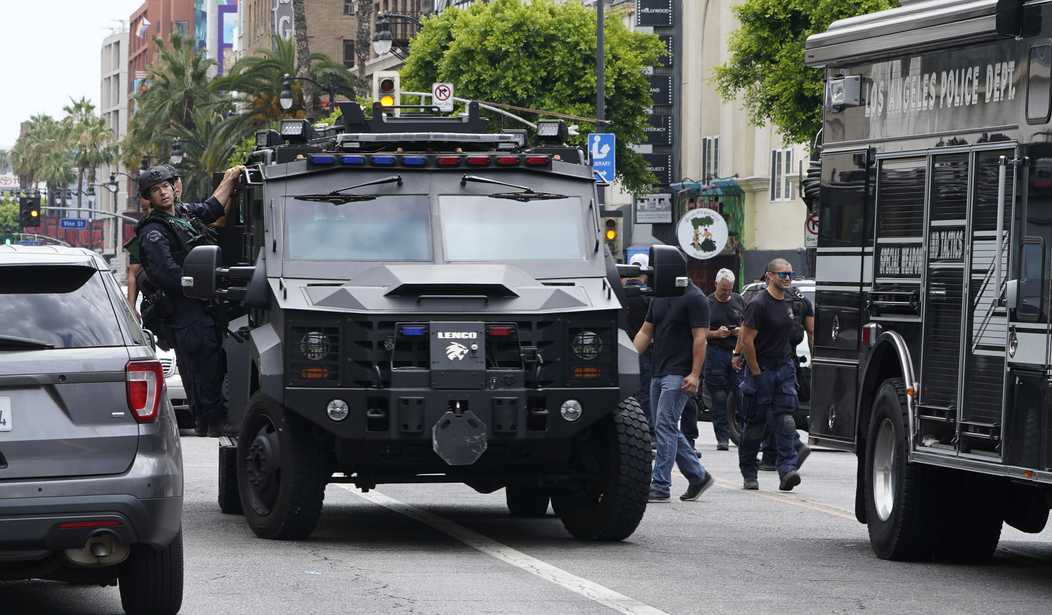

President Donald Trump leads a federal government that commands one of the largest law enforcement systems in the world. Most Americans recognize the FBI and DEA as armed agencies. Fewer realize how many federal departments now maintain their own tactical units trained for raids, arrests, and high-risk warrants.
A quiet network of federal tactical teams operates across Washington. Some units handle terrorism or organized crime, while others operate within agencies many citizens associate with paperwork, audits, or research. Over time, federal departments expanded their enforcement roles, and many created specialized teams trained for dangerous encounters (pdf).
Jarod Koopman serves as Chief of IRS Criminal Investigation, in charge of thousands of special agents who investigate tax fraud, money laundering, and financial crimes. IRS agents carry firearms and train for high-risk warrant service; operations sometimes involve suspects tied to organized crime or narcotic networks, where armed resistance remains a possibility.
IRS Criminal Investigation maintains tactical readiness because financial crime rarely exists in isolation. Fraud rings often intersect with narcotics trafficking, cartel money laundering, and other violent enterprises. Agents therefore train in defensive tactics, building entry, and coordinated warrant service when arrests carry elevated danger.
Gary R. Barksdale leads the United States Postal Inspection Service. Postal inspectors investigate mail fraud, identity theft, narcotics trafficking through the mail system, and crimes targeting postal employees. Inspectors carry firearms and make arrests nationwide. High-risk investigations sometimes involve suspects willing to use violence to protect illicit shipments.
Postal inspectors frequently coordinate with tactical teams from other agencies during large operations. Postal Police Officers protect sorting facilities and major postal infrastructure nationwide. Security responsibilities extend far beyond letter delivery; mail systems move billions of packages each year, making them attractive channels for criminal networks.
As PJ Media readers know well, Kash Patel serves as director of the FBI, which maintains one of the most extensive tactical systems in federal law enforcement. FBI field offices operate SWAT teams nationwide, and also maintain the Hostage Rescue Team, an elite unit trained for terrorism response and hostage recovery.
Between 2015 and 2019, FBI SWAT teams conducted thousands of operations involving high-risk arrests, barricaded suspects, and counterterror missions. Those teams train consistently in close-quarters combat, surveillance, and coordinated entry tactics. Federal investigators rely on those units when ordinary procedures carry unacceptable danger.
Daniel P. Driscoll serves as acting director of the Bureau of Alcohol, Tobacco, Firearms, and Explosives. ATF operates Special Response Teams designed to support agents investigating violent gun trafficking and organized crime. Those teams carry breaching equipment, tactical rifles, and protective gear for dangerous warrant service.
ATF Special Response Teams have been deployed hundreds of times in recent years during firearm trafficking investigations and gang enforcement operations. Agents frequently enter buildings where suspects possess illegal weapons or explosives. Tactical preparation reduces danger to agents, suspects, and surrounding neighborhoods (pdf).
Rodney Scott's U.S. Customs and Border Protection oversees several tactical units, including the Border Patrol Tactical Unit and specialized response teams positioned along the southern border. Those teams pursue cartel smugglers, conduct high-risk arrests, and intercept drug shipments moving across remote terrain.
Cartel organizations frequently operate with military-style equipment and organized security structures. Border enforcement, therefore, requires agents trained to operate in dangerous conditions involving armed smuggling groups and violent criminal organizations.
Terrance C. Cole serves as administrator of the Drug Enforcement Administration and maintains Special Response Teams that accompany agents during narcotics raids and cartel investigations. Those teams train constantly in tactical movement, warrant service, and hostage scenarios tied to drug trafficking networks.
DEA operations often target fentanyl distributors, methamphetamine traffickers, and organized criminal groups connected to international cartels. Investigations routinely involve suspects who possess firearms or fortified locations, creating situations where tactical entry becomes necessary.
Gadyaces S. Serralta serves as director of the United States Marshals Service. He also oversees the Special Operations group, a tactical unit that assists with high-risk fugitive captures, major courtroom security operations, and national emergencies. Marshals frequently track violent fugitives who evade arrest for years.
Special Operations Group deployments remain classified in many cases, yet federal authorities rely on those teams during the most dangerous apprehensions. Fugitive recovery often involves suspects with extensive criminal histories and access to weapons.
Federal tactical capability extends even further. Research facilities, transportation systems, and space infrastructure maintain security teams trained for armed response. NASA fields Special Response Teams that protect launch sites and astronaut facilities. The National Institutes of Health maintains armed officers responsible for protecting biomedical campuses and research laboratories.
Across the federal government, more than two dozen tactical teams now operate inside agencies responsible for enforcement, security, and infrastructure protection. Some critics question whether so many departments require such capability. Others argue modern criminal networks demand preparation across the entire federal system.
Federal agencies increasingly face threats tied to organized crime, cyber fraud, cartel money flows, and violent fugitives. Leaders across Washington maintain that tactical teams remain essential when investigations intersect with armed criminals.
The result leaves the United States with a vast law enforcement structure where even agencies known for audits or mail delivery maintain personnel trained to break down doors when circumstances demand it.