







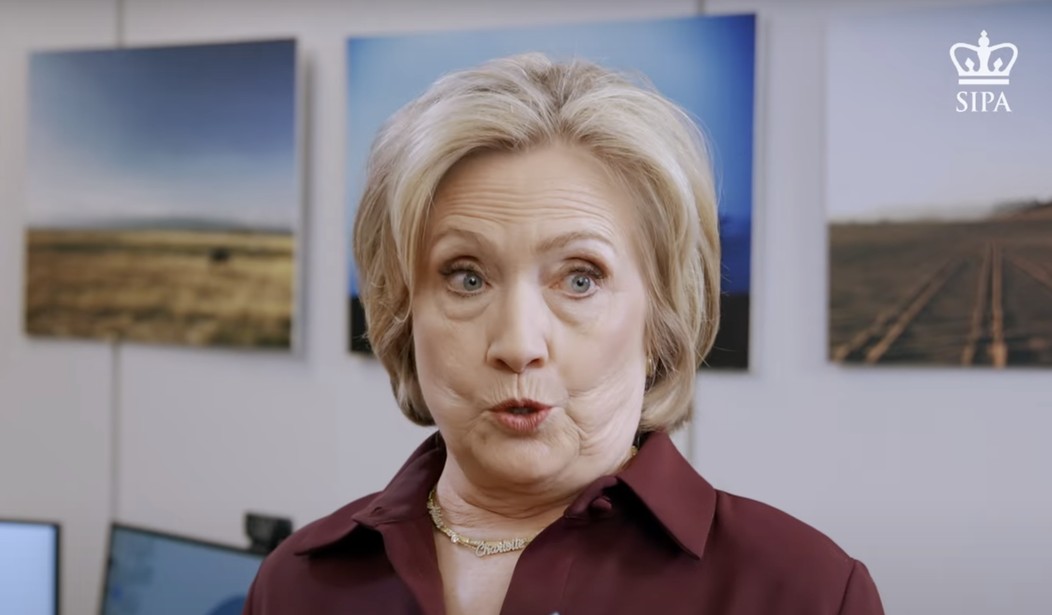
Hillary Clinton, a former all-star American leader, took the stage in Munich expecting a stroll on familiar ground. The setting felt friendly, the crowd leaned globalist, and the talking points seemed well-rehearsed.
Then a Czech politician, calmly stepping outside the approved script, asked a question that didn't flatter the room.
It was as if a thousand voices in the Force suddenly vanished; the room's temperature changed.
Czech Deputy Prime Minister Petr Macinka challenged prevailing narratives on sovereignty, migration, and Western leadership. He spoke; he didn't shout. He didn't posture, he simply disagreed.
Clinton's composure tightened as her facial expression stiffened. Her infamous temper flickered across her face in full public view.
The exchange quickly spread online, showing Clinton sharply reacting while Macinka remains measured. It was a contrast that told the story better than any summary could dream of.
A widely shared Facebook clip captured the moment from a different angle, showing how visibly irritated Clinton grew as her preferred narrative met resistance.
Calm dissent disrupts comfort
Clinton has well over 40 years of navigating hostile interviews and political storms; few situations publicly rattle her. Yet the Munich moment felt different: Macinka didn't attack her character; he questioned her assumptions in a calm, rational voice.
That alone proved disruptive.
Western elites have gathered in European conferences for years to reinforce shared assumptions about global governance, open borders, and centralized authority. Dissent rarely appears in those halls without first being filtered, because when it isn't, tension quickly rises, offering a glimpse into the human nature hidden behind long-built façades.
Macinka spoke as an elected official representing voters who increasingly resist top-down mandates from Brussels and beyond, arguing for national sovereignty and accountability to his country.
Clinton appeared completely off guard, as if the ground she felt safe standing on had shifted.
Projection on display
Let me be the first to express grave concern for Macinka's well-being. Given recent political history, he may want to publicly confirm he's enjoying excellent health and has no plans to be found in mysterious circumstances anytime soon.
Purely a precaution, of course.
This incident exposed something deeper: Democratic figures for years have accused President Donald Trump of destabilizing Western alliances and eroding global cooperation. Yet in Munich, frustration erupted not from chaos, but from calm contradiction.
When agreements fill the air, Clinton appears comfortable, but when respectful disagreement entered the conversation, she clearly bristled.
Her reaction undercut the image of seasoned steadiness she often projects on global stages.
A rough week in Munich
Clinton wasn't the only Democrat in Munich struggling with optics. Rep. Alexandria Ocasio-Cortez (D-N.Y.) and California Governor Gavin Newsom also faced criticism during their appearances. Both tried to present themselves as seasoned global leaders, but drew scrutiny for remarks that appeared tone-deaf and disconnected from global realities.
Related: AOC Just Humiliated Herself on the World Stage
The contrast between confident branding and uneven performance created friction. Munich has long been intended as a platform for polished leadership, but it has also been a stage for awkward exchanges.
Global politics demands agility and tolerance for dissent. Leaders seeking authority need to have thick skin to withstand questions without visible irritation.
A raised eyebrow, or a wrinkled face that suddenly appears smooth, speaks louder than a thousand words.
The script problem
As we've seen from Democrats the past few weeks, they work from prepared frameworks, where talking points guide conversations in friendly venues that reinforce comfort. But when somebody interrupts the rhythm, their ability—or, in this case, inability—to keep it together matters.
Clinton's body language suggested she wasn't happy with Macinka's calm, reasoned approach. I imagine that in her mind's eye, she was wishing for a little Darth Vader dark side to squeeze Macinka into a sugar cube.
Political leaders regularly insist that democracy thrives on debate, but debate loses its meaning when only one side fails to respect the other. Hillary's Munich moment reminded us that the elites don't appreciate it when the unwashed speak up.
People across Europe and America have increasingly questioned centralized power structures, voting for leaders who promise to prioritize national interests. Those voters expect representation, not lectures from on high.
When a representative from that moment speaks plainly on an open stage, dismissing alternative views doesn't work.
Final thoughts
Until somebody ignored it, Hillary's script ran smoothly. The interruptions showed something more than policy differences; they revealed the moment when Clinton ran into legitimate opposition to the soup she's been dealing out.
Confidence requires calm under pressure, and leadership demands composure when challenged. Hillary failed in both accounts. Munich offered a brief snapshot of that reality.
As global politics grows increasingly volatile, moments like this matter: when a steady, shrieking voice, sharing talking points discussed in safe forums, gets interrupted by a dose of reality, we get to see the real person behind the mask.
It's in moments like this that the 2016 presidential election reminds us of just how close we came to, well, you know, living in Hell.
If you value commentary that cuts through polished performances and examines what body language and tone reveal beneath the surface, join PJ Media VIP and enjoy a 60% discount, and support fearless analysis that refuses to bow to stage-managed narratives.


Join the Conversation
VIP members get the ability to comment on articles.