







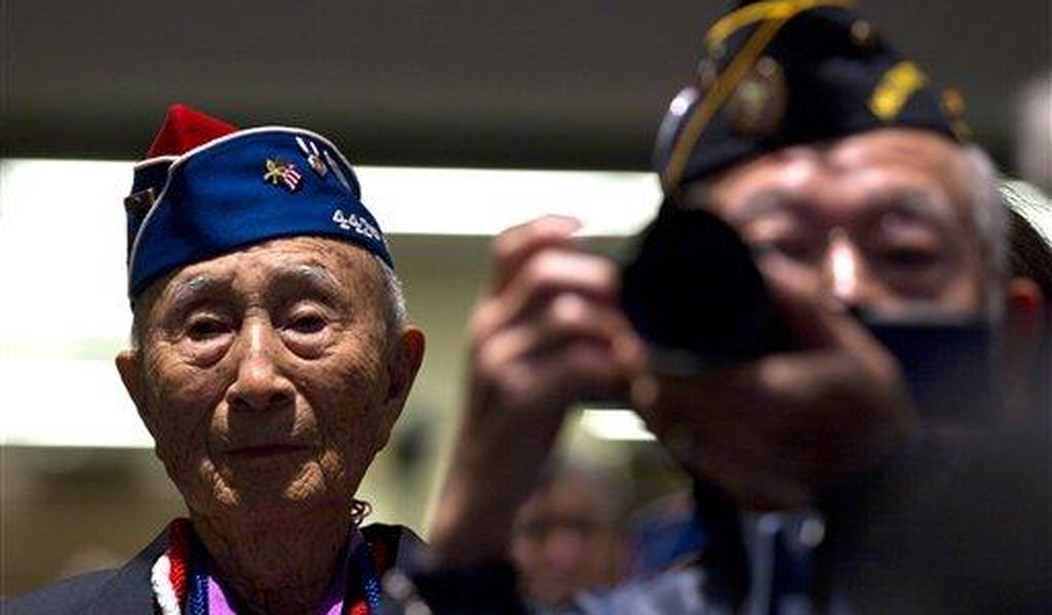
Fighting for a Country That Questioned Them
Despite their families living in internment camps, Japanese American men volunteered to serve their country during World War II. The lives of thousands of Americans were uprooted by Executive Order 9066, which stripped property and erased trust.
Regardless of President Franklin D. Roosevelt's terrible decision, thousands stepped forward anyway.
The 442nd Regimental Combat Team was formed from second-generation Japanese Americans living in Hawaii or on the mainland.
The U.S. Army assigned them to Europe after political resistance and internal debate delayed their deployment.
That sentence is a gross understatement of what those men had to work through. Books and a movie have been made about the 442nd, so please forgive me for this high-level summary of their courage. If you're so inclined, follow these links for more information.
The battalion quickly entered combat in Italy, France, and the Vosges Mountains, among other areas. Impossible missions became routine assignments from their acts of bravery.
Yes, I'm a fanboy of the 442nd; it's a fantastic story about incredible men.
Blood Paid Up Front
Because of its bravery, the 442nd became one of the most decorated units in American military history, yet with staggering costs. The unit's casualty rate was unmatched by any other U.S. unit in Europe.
Their dominance wasn't cheap: these soldiers pushed through entrenched German positions under fire that chewed through platoons. Field commanders relied on them because when failure carried consequences, they delivered results.
Another side note. By praising the 442nd, in no way do I mean to diminish the sacrifice of every unit during World War 2.
The battalion earned respect on the battlefield long before they ever earned it back home.
Recognition Arrives Long After Silence
With such a massive military effort, recognition came slowly as decades passed and stories faded. Promotions weren't often offered to those who never returned home; the Army moved on, so families alone carried their memories.
The recent decision to grant posthumous promotions to seven soldiers corrects a narrow slice of that neglect. Honoring Japanese American soldiers from the 442nd acknowledges the valor that bureaucrats overlooked.
"Fighting an injustice at home, these seven men later gave their lives fighting on the battlefields of Europe," said a news release from US Army Pacific. "They were unable to return to school and finish their commissioning efforts." The university awarded the men posthumous degrees in 2012. Monday's ceremony capping efforts to honor the men comes amid growing concern and criticism that President Trump's administration is whitewashing American history ahead of the nation celebrating 250 years of its independence, including last week's removal of an exhibit on slavery at Philadelphia's Independence National Historical Park, the AP reports.
Despite the honor, these promotions won't restore lives or lost years, but they restore the truth for the record.
Once relegated to footnotes, Americans will now see ranks beside names.
Why the Delay Matters
Although delayed, recognition carries meaning, exposing discomfort with admitting an error. Our nation struggled to acknowledge that principle was replaced with suspicion during wartime fears. Now, promoting fallen soldiers is quietly conceding that failure.
Those men fought two wars: one against foreign enemies, and another against doubt cast by their own government. Victory in the Second World War arrived first, while justice took far longer.
It still counts when honor is delayed, but any delay reveals character.
What the 442nd Leaves Behind
The 442nd proved loyalty through action, with courage reshaping military integration, while shattering assumptions built on prejudice.
Their story challenges Americans today who are tempted to judge patriotism by volume over sacrifice. The soldiers of the 442nd never publicly complained; they simply advanced.
Final Thoughts
The men of the 442nd Regimental Combat Team carried America forward under fire, even when their country hesitated to carry them. Posthumous promotions won't close that chapter, but we're finally left with an honest ending.
Some stories demand patience and moral clarity rather than instant outrage. PJ Media VIP continues highlighting courage, accountability, and historical truth when recognition arrives late. Join today and support work that refuses to forget the people who earned honor the hard way.
Join the Conversation
VIP members get the ability to comment on articles.