





While working in his garage, a man builds a long wooden table, then invites neighbors to carve messages into it.
At first, jokes and names appear; however, strangers arrive, and some carve threats, others carve lies, and a few carve instructions for violence.
After the table collapses under the weight of damage and lawsuits, the man insists on his innocence; after all, other hands held the tools.
It's a workable argument until the man realizes the table sits on his property, under his roof, and exists only because he invited the carving.
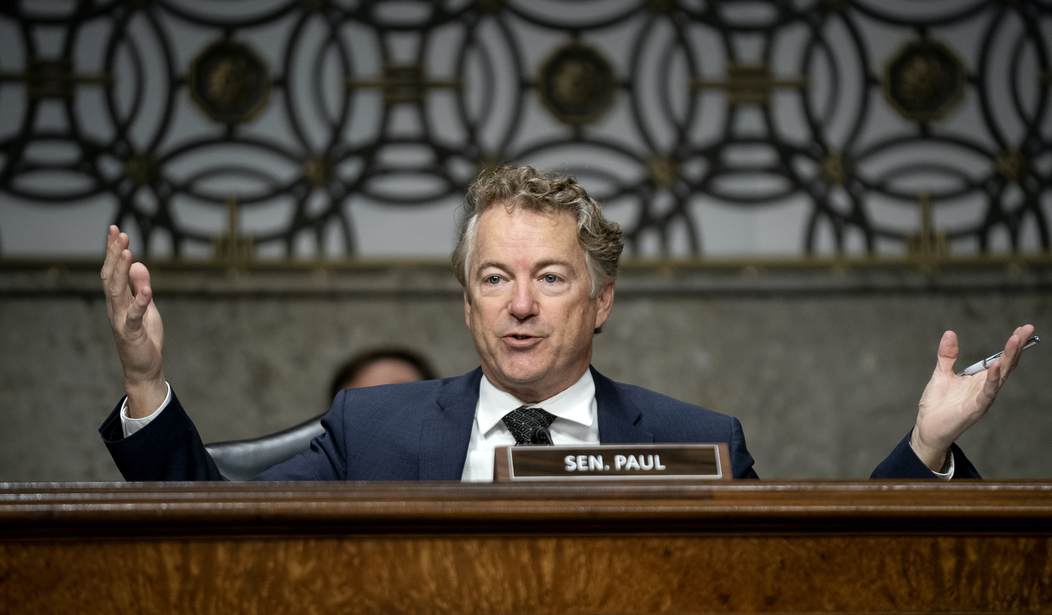
That moment arrived for Sen. Rand Paul (R-KY), and it didn't come from any legal theory or ideology; it came from experience.
The Senator Who Once Drew a Hard Line
Paul has long defended broad immunity for online platforms under Section 230, as a constitutional conservative, arguing that platforms function as neutral conduits, resembling phone lines rather than publishers, while speech flows through them, responsibility stays with the speaker.
His position lined up with the early internet optimism and a belief that free exchange would regulate itself, a clean-sounding promise. Open platforms produced open debate, and government interference threatened liberty.
Something then happened that rewired the argument.
Personal Experience Has a Way of Cutting Through Abstraction
The more he interacted with major technology platforms, the more his thinking shifted. As a sitting Senator and medical doctor, Paul watched content involving his own words, statements, and context become altered, flagged, suppressed, or framed in ways he couldn't control. Algorithms intervened, labels appeared, while visibility vanished.
Neutral pipes don't edit flow, and neutral hosts don't rearrange furniture while denying ownership of the room.
Paul didn't make claims of censorship, but said the process felt fragmented and opaque, driven by hidden, internal rules, automated enforcement, and corporate priorities.
Technically, speech was still allowed, but it was buried.
Where Neutral Hosting Ends and Editorial Power Begins
Section 230 protects online platforms from liability for user content while allowing good-faith moderation. That balance made sense when moderation meant removing illegal material or spam, but credibility has been strained under modern realities.
Platforms perform many functions: curate feeds, recommend content, downvote, or amplify speech. I don't have to tell you the current temperature: policies have been applied unevenly across political lines.
Engineers design the systems that shape what millions see—or never see.
It's at that point where the free-for-all carving project stops and starts resembling a commissioned display with invisible curators deciding which marks are seen.
Paul's shift doesn't call for silencing speech; it calls for acknowledging power. When a platform exercises editorial judgment, legal immunity needs to be reconsidered: Responsibility should follow control.
A Builder Cannot Disown the Structure
The path Rand Paul has taken matters because he's showing something rarely seen in today's politics: intellectual curiosity over partisan reflex. He didn't abandon principles of free speech; he followed them to their logical conclusion.
When rules are clear, speech thrives, while accountability preserves trust in systems that mediate public conversation. Unlimited immunity, paired with active curation, invites further abuse, while shielding decision-makers from any consequences.
As the internet continues to mature, platforms have exponentially grown, allowing influence to centralize. Legal frameworks written for dial-up-era forums strain under the global reach and trillion-dollar valuations.
That's the reality Paul saw, and he adjusted accordingly.
Final Thoughts
That wooden table, proudly built, still stands in the garage. The builder walks past it daily, reading the carvings he once ignored. His ownership didn't disappear when others picked up chisels; responsibility didn't vanish because participation widened.
When somebody builds something that invites other voices, shapes outcomes, and enforces rules, accountability follows the wood's grain.
Rand Paul didn't abandon principle; he noticed where the structure cracked and chose to stop pretending someone else owned the sawdust.
Conversations about platform power, liability, and free speech will shape how ideas travel in the coming years. PJ Media VIP keeps those discussions grounded, detailed, and honest, without algorithmic fog or corporate filters. Join today and support independent analysis that still believes accountability matters.


Join the Conversation
VIP members get the ability to comment on articles.