







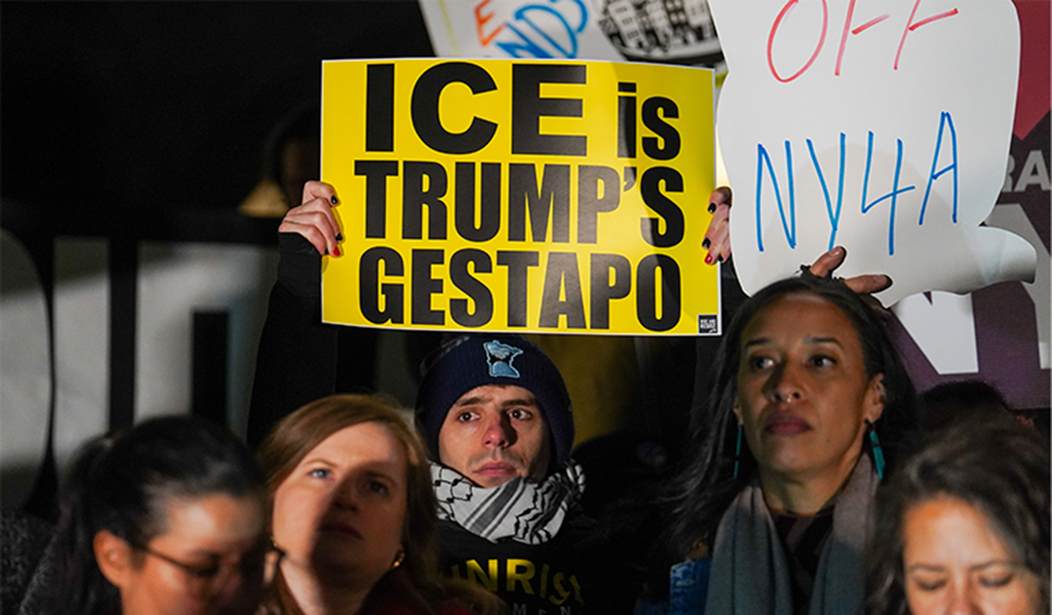
This news may weaken the left's narratives.
Federal investigators have come out to say that ICE agent Jonathon Ross suffered internal bleeding after being struck by Renee Nicole Good in Minneapolis.
Reports by CBS News state that Ross was treated at a hospital for internal injuries consistent with blunt force trauma, and the resulting internal bleeding triggered imaging, monitoring, and medical intervention. This sequence only follows a serious physical impact.
It was unclear how extensive the bleeding was. The Department of Homeland Security confirmed Ross' injury, but has not yet responded to CBS News' requests for more information. This story will be updated as we learn more.
Prayers first go to Officer Ross and his family. Internal bleeding is a mortal risk, and doctors don't admit patients for observation without cause.
Internal blood loss turns minutes into critical decisions.
The Claim That Collapsed
The far left has been playing the game in which Good is peaceful, non-threatening, and initially a legal observer, while protest language framed the encounter as unnecessary force.
Well, guess what? Internal bleeding erases that narrative; a human body records violence more honestly than slogans.
Medical evidence carries weight because biology doesn't participate in politics: CT scans reveal trauma regardless of ideology. Blood loss follows physics, not opinion.
Split Second Decisions
Use-of-force decisions unfold within the blink of an eye. Officers need to evaluate threat, distance, momentum, and personal survival in a moment. The saying "Paralysis by analysis" holds. And that's why officers are trained to respond based on a reasonable fear of serious bodily harm.
You don't have to be Doctor House to know that internal bleeding qualifies as serious bodily harm under every accepted legal standard. It's a reality that the courts recognize. Pretending otherwise rewrites both medicine and law.
Which, of course, the left has been doing since day one.
Why Full Context Matters
When a law is broken, and people die, investigations need to proceed because oversight and accountability matter. None of that survives selective storytelling, while leaving out injuries distorts public understanding and poisons trust.
People deserve the truth, even when it complicates preferred narratives. Families on all sides deserve honesty instead of omission; facts don't serve justice when people trim them for their comfort.
Final Thoughts
Daniel Patrick Moynihan once said that everyone is entitled to an opinion, but not to his own facts.
Even when facts are inconvenient, that principle holds. Medical records don't bend to chants, and internal bleeding doesn't suddenly appear because a story needs softening.
Each time events occur that the left deems evil, horrible, or whatever other term they'd use. This time was no different; opinions filled the air after the shooting. Instead of, you know, waiting until facts are assembled, assertions hardened before evidence surfaced.
Once hospital treatment was added to the equation, a different reality emerged.
Violence leaves marks, even if some voices refuse to acknowledge them.
Noise rarely announces the truth; it arrives through documentation, injuries, and outcomes that don't care who benefits. Facts can be argued over, rearranged, or ignored.
What remains is the truth, unvarnished, steady, and unmoved long after the shouting fades.
Serious stories demand room for facts to breathe, especially when narratives rush ahead of evidence.
PJ Media VIP exists for that reason. Join and support work that refuses shortcuts.
Join the Conversation
VIP members get the ability to comment on articles.