





With America's 250th birthday as an independent nation coming up in 2026, the big debate on the right this season about what it means to be an American couldn't be more timely.
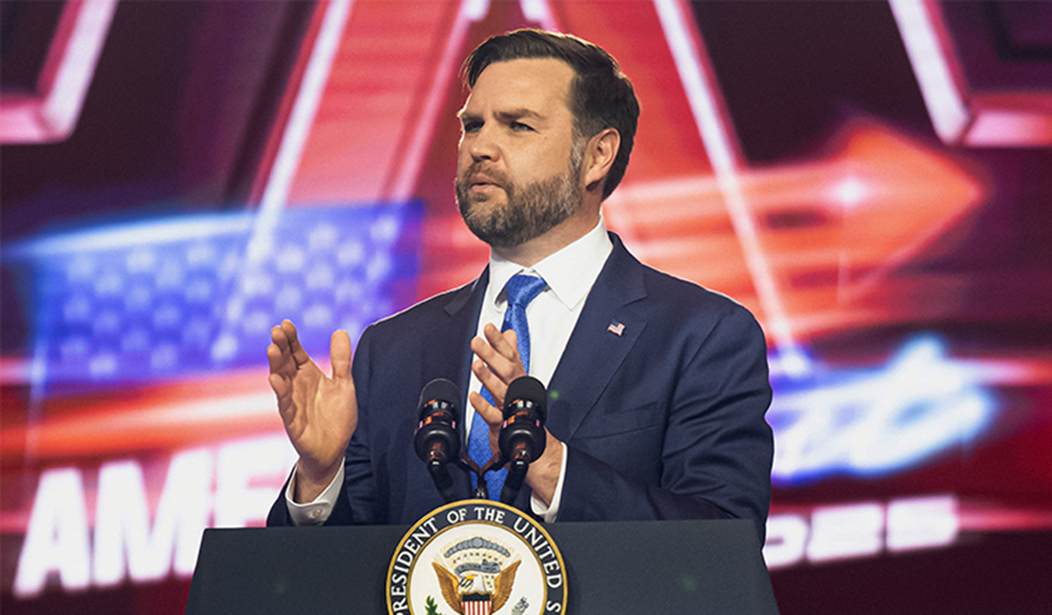
Vice President JD Vance and Vivek Ramaswamy -- the 2024 presidential aspirant who hopes to be elected Ohio governor next year -- have both weighed in.
The two extremes in the debate are the "creedal nationalists," who emphasize America as an idea, and those who boast of being "heritage Americans" with lineages in this country stretching back generations or centuries.
Aren't long-established families -- whose ancestors came over on the Mayflower or fought in the Revolutionary War -- more American than relative newcomers?
Absolutely not, say those who insist America is about values, not bloodlines.
For creedal nationalists, an American is defined by belief "in the rule of law, in freedom of conscience and freedom of expression, in colorblind meritocracy, in the U.S. Constitution, in the American dream," as Ramaswamy wrote in the New York Times Dec. 17.
Ramaswamy's forebears came from India: Does that make him less American than the descendants of 17th-century English settlers?
The argument isn't just about history; it's about immigration today.
Not only does creedal nationalism suppose the country has nothing to fear from immigration on any scale -- as long as new arrivals accept the patriotic catechism -- it also implies those who oppose large-scale immigration anyway are really un-American.
Yet the creed means different things to different people, and anyone can pretend to believe anything.
Defining a creed is difficult enough for a church -- it often leads to schisms.
So the temptation in politics is to make the creed as vague as possible, which translates into making it easy for anyone to qualify as an American.
Ramaswamy specifies in his definition, "a citizen who swears exclusive allegiance to our nation."
But other creedal nationalists commonly assert that noncitizens who embrace America's values -- or their own, typically liberal values -- are better Americans than native citizens whose ideas are in conflict with the creed, or with the way liberals interpret the creed.
On the other hand, "heritage American" is a doubly damaging concept. It needlessly alienates newer Americans while mindlessly elevating older ones.
Heather Cox Richardson, whose progressive Substack newsletter is a source of relentless liberal disinformation, is a "heritage American" with 18th-century roots.
t's a notorious fact that many Americans descended from Puritan forefathers are today enthusiastically and aggressively woke.
Just look at the average "No Kings" rally -- "heritage Americans" are in abundance, some looking old enough to have watched the Battle of Yorktown in person.
Such "heritage American" institutions as Harvard University and the Episcopal Church certainly don't hold much hope for conservatives.
Being an American has never meant subscribing to one political party, but that's the point -- much of the "heritage" population and the institutions entrusted to its custody have come to align with a single ideological faction today, one that does not revere the America of old.
At the most basic level, being an American simply means being a citizen, and all citizens are equal -- not only as a point of law but as a foundational principle.
Vance was utterly clear about this in his interview last weekend with UnHerd's Sohrab Ahmari:
"Whether you got your citizenship an hour ago, or you got your citizenship or your family got citizenship 10 generations ago, we have to treat all Americans equally."
But Vance's understanding of heritage bolsters the creed, rather than conflicting with it.
Taken on its own, the creed is abstract and open to endless debate.
Yet regardless of how one understands the creed, an American -- of any background, however recent or ancient in this land -- should honor the patrimony handed down to us by our ancestors:
Our American ancestors, the men and women who originally made this land great, not just our biological ancestors.
America's heritage is something to which all citizens are heir, regardless of how recently they arrived.
Honoring that heritage is a moral duty of good citizenship.
That doesn't mean overlooking the sins of America's past or present -- but it does mean expressing gratitude and loyalty to the memory of our national forefathers.
And that, in turn, means being careful about accepting too much immigration or demanding too little in terms of assimilation.
The Americans who built this country bequeathed us not only a Constitution but a culture, which is more than a litany of abstract propositions.
"(I)f you overwhelm the country with too many new entrants, even if they believe the right things, even if they're fundamentally good people, you do change the country in some profound way," Vance warns.
Heritage Americans have all too often repudiated their heritage.
Whenever immigrants and their descendants honor that heritage, they should be honored in turn as dutiful sons and daughters of America.
Editor’s Note: Support PJ Media’s news coverage and commentary this holiday season with our special Christmas sale. Join PJ Media VIP and use promo code MERRY74 to get 74% off your membership.
Join the Conversation
VIP members get the ability to comment on articles.