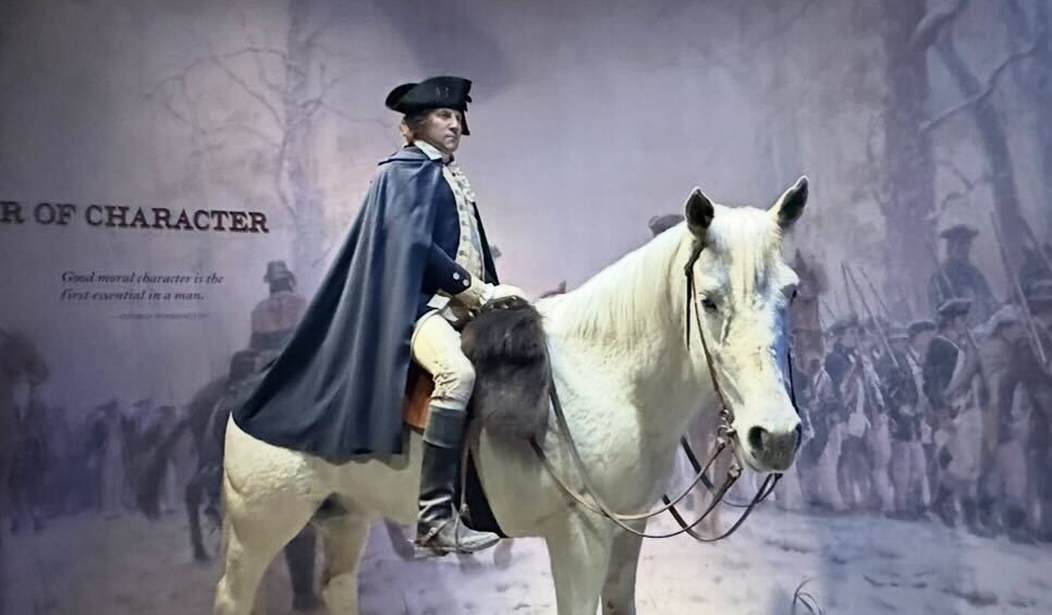

The "spirit of '76" in our day usually refers to enthusiastic patriotism and admiration for our Declaration of Independence and Founding Fathers. But in October 1776, Gen. George Washington, his men, and their supporters had to keep their courage alive through a series of devastating setbacks. And that determination despite looming disaster is the true spirit of '76.
We are still celebrating the 250th year of America's existence, and this is a time not only to honor the sacrifices of the past and appreciate the successes of the present but to learn from how Americans in previous epochs faced the crises of their day and solved their existential problems.
In July 1776, the United States of America declared independence. By fall 1776, Washington — still struggling to train an army largely composed of raw recruits and volunteers — was running out of money, supplies, and options. The more powerful and more experienced British forces, with their habitually vicious Hessian mercenaries, seemed likely to crush the nascent nation before it ever had a chance to establish itself.
Hence, on Oct. 28, 1776, British Gen. Howe and Washington were once again facing each other at White Plains, N.Y. The Americans were in the area of Purdy Hill near the Bronx River on that morning exactly 250 years ago when Howe ordered Henry Clinton and Leopold von Heister to take their men and advance on the Americans.
Related: America 250: An Eyewitness Account of the Surrender at Yorktown
The Mount Vernon website explains:
Washington initially dispatched about 1,000 soldiers commanded by Joseph Spencer to slow the advance of the British and German columns. While Spencer’s command fought its delaying action, Washington decided to extend his right to include Chatterton’s Hill. Spencer and his men fought until they were in danger of being enveloped and then retreated to the main lines under the covering fire of the Continentals and militia who had just arrived on Chatterton’s Hill under the command of Major General Alexander McDougall. At this point in the battle, both commanders seemed to have fixed on the importance of this hill. Washington sent his engineer, Colonel Rufus Putnam, to begin building entrenchments while Howe dispatched eight regiments (approximately 4,000 soldiers) and 20 British cannons to attack the hill. British cannon forced the Americans to abandon the two field guns on the hill, but American musket fire repelled the initial British assault.
Unfortunately, the Hessians under Col. Johann Rall, with some British cavalry, attacked the American militia on the right and spurred a retreat that forced Washington to move his forces off the field. The Americans had succeeded in inflicting so many casualties on the British that Howe decided not to pursue the Patriots, according to writer Salina Baker, and Washington was able to maintain an ordered retreat.
Heading into the winter, the Patriots had to admit they had lost New York and were in serious danger of being totally defeated by the British-Hessian troops. Washington had expressed near-despair when writing his nephew at the beginning of October, even before White Plains, and much of the Patriot Army was discouraged or outright hopeless (read more: America 250: George Washington Rallies From Near-Despair to Plan a Renewed Campaign). That was when Thomas Paine wrote his famed first installment of the series he aptly called "The American Crisis," which succeeded in rallying Patriots for another push. "These are the times that try men's souls," Paine wrote, and it captured the mood of the day, one which Americans looking back on 1776 with the knowledge of the Revolution's eventual victory might forget.
On Christmas night of 1776, Washington launched a dangerous, daring, and brilliant plan to cross the Delaware River and attack the Hessians at Trenton, New Jersey. Ironically, Rall — the same Hessian officer who had scattered the American militia at White Plains — died of a mortal wound he received during the Battle of Trenton. The Americans captured Trenton and defeated the Hessians with no casualties on their side except those due to the bitter winter weather. Almost exactly two months after the defeat at White Plains, Washington and his men had made a spectacular comeback, and the American cause was again alive and fighting.
But that only happened because, in the darkest days of 1776, the Patriots kept fighting for freedom and independence even when they believed they could not succeed. They fought a much more powerful enemy for a potentially doomed cause and turned their fortunes around. It's a lesson that we modern Americans, often discouraged by the strength and mania of enemies both foreign and domestic, need to relearn.