
Archiving the “strange death of Europe,” as Douglas Murray put it, and the West more broadly, at the hands of the neoliberal technocracy.
Rutgers women’s and gender studies professor decries the lack of white interest in ‘indigenous libraries’
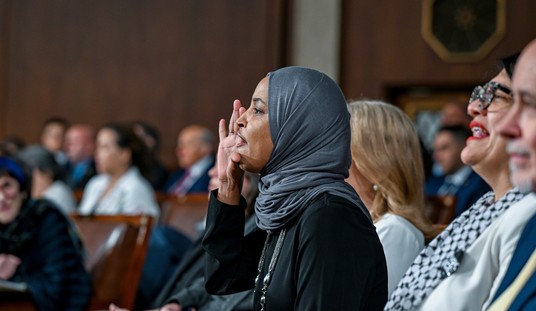
Outrageous Rutgers professor Brittney Cooper (whose courses include "Hip Hop Feminism" and "Black Feminist Theory") denounces “raggedy and violent” white people and their criminal underappreciation of pre-colonial “indigenous libraries”:
Here is where I land most days about white people. And I actually have been helped in this by thinking about indigenous people, right? See, part of the challenge around whiteness is that it totally skews our view of everything…
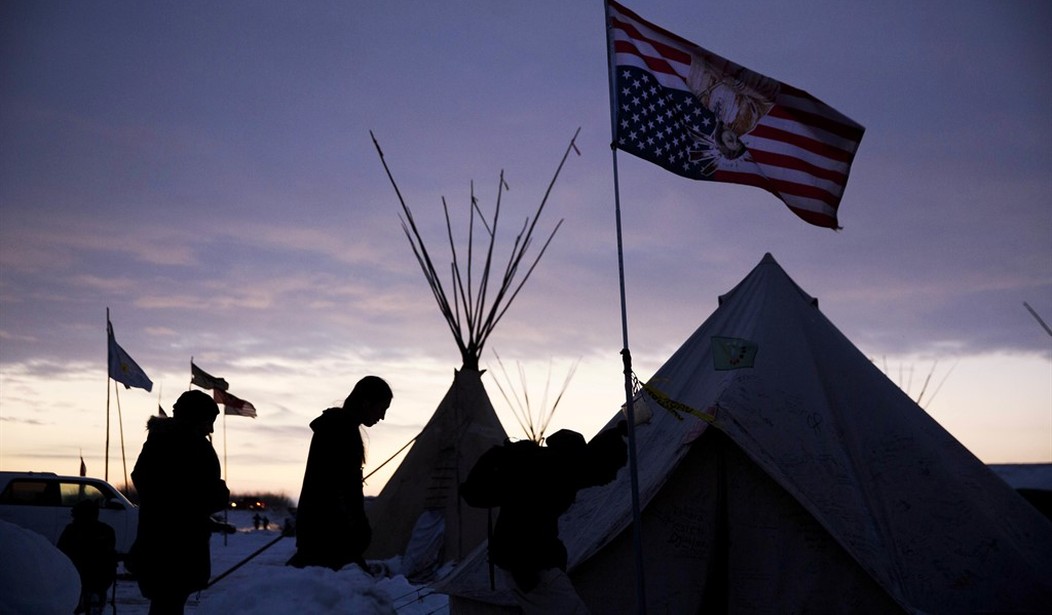
The world didn’t start when white people arrived in America and tried to tell all the rest of us how things were going to go. There were people out here making worlds, Africans and indigenous people, being brilliant and, you know, libraries and inventions and, you know, vibrant notions of humanity* and cross-cultural exchange long before white people showed up being raggedy and violent and terrible and trying to take everything from everybody.
Rutgers professor Brittney Cooper: White people don't appreciate 'indigenous libraries' because they're 'raggedy' and 'violent' pic.twitter.com/wAYHQoyNYf
— Ben Bartee (@BenBartee) April 20, 2026
*“Vibrant notions of humanity”!
Related: 12-Foot Statue of Obese Black Woman Appears in Times Square
A lot of the above is the standard “we were kings” tripe that we often get from these people — BIPOCs had a thriving and glorious Wakanda-like culture before the evil white man stole it from them, Shakespeare was actually a black man, etc.
You know the thing.
But I hadn’t heard the “indigenous libraries” line before.
So I queried ChatGPT: “How many libraries existed in North America prior to European colonization?”
Although it, as it is programmed to do, deployed several caveats meant to obfuscate the answer — which, of course, is “zero” — it eventually cut to the chase:
There is no reliable numerical estimate, because most Indigenous North American societies did not use bound manuscript collections in the Old World sense, and many knowledge systems were oral or preserved in non-book formats.
That said, the answer depends heavily on what you mean by “library.”
📚 If “Library” Means Book or Manuscript Collections
Before European colonization, North America (north of Mexico) had very few—likely close to zero—institutions resembling Afro-Eurasian manuscript libraries.
Related: North Carolina Senate GOP Nominee Sports Taliban-Style Niqab, ‘Down With ISIS’
Of course, it’s somewhat difficult to construct a library — as in a collection of written materials — when there were literally zero written materials that the glorious advanced civilizations of North America prior to European colonization produced.
Via Britannica (emphasis added):
No native writing system was known among Indigenous peoples of North America at the time of first European contact, unlike the Maya, Aztecs, Mixtecs, and Zapotecs of Mesoamerica who had native writing systems. Nevertheless, a number of writing systems for different Indigenous languages were developed as a result of the stimulus from European writing, some invented and introduced by European and Euro-American missionaries, teachers, and linguists. The most famous system is that invented by Sequoyah for Cherokee, his native language. It is not an alphabet but a syllabary, in which each symbol stands for a consonant-vowel sequence. The forms of characters were derived in part from the English alphabet but without regard to their English pronunciation. Well suited to the language, the syllabary fostered widespread literacy among the Cherokee until their society was disrupted by government action; its use, however, never completely ceased, and attempts are being made to revive it.