
“Soft” terminology (i.e. “publicly funded,” “equity”) can be used to disguise suspicious content whose objective has a hidden cost. “Hard” terminology points out the flaws that the soft counterpart actively hides.
Police equity seems fuzzy
In 2023, the local government-themed podcast GovLove released an episode on “Equity in Policing.” Max Markham, who works at the Center for Policing Equity as vice president of policy and community engagement, was the interviewee. The episode covered how the police or other government workers should treat people to make policing more equitable in St. Louis, Mo.
On this podcast episode, it is suggested that poorer communities with mostly “liquor stores and corner stores” are more likely to have people who commit crimes, and that more local government funding for after-school programs will help mitigate crime across age groups. Markham’s job was supposed to help the north side of St. Louis overcome its high crime rate. The south side was “better funded” and, according to Markham, did not have as much crime.
In addition, Markham calls police treatment “punitive,” omitting that police officers are just as human as the people they serve and that their actions are intended to keep their fellow human beings out of harm’s way. The “discrimination” rhetoric that Markham employed gives the impression that it is mainly intended to cause division among people.
Markham has now painted himself into a corner. There is a threefold moral dilemma in this situation.
Is it right to exploit law-abiding taxpayers, who would be providing the funding for these programs, to keep other people — including people from different states whom the taxpayers do not personally know — from committing crime?
Is it better to have private citizens, such as those associated with a church, charity, or nonprofit organization, establish local community mentoring programs like the Lions Club instead of the government?
Does the government have a hidden agenda that private citizens, nonprofits, or charities lack?
The Center for Policing Equity and Markham may have told people they were doing a good thing, but they were spending taxpayer dollars in the process. There is a whole new meaning to why Markham said, "Hats off to St. Louis for wanting to take this on."
Some people are struggling to work multiple jobs and buy food for their families. Although they struggle to get by, they are not automatically destined to be criminals, and they choose to avoid reckless life choices. This dynamic was especially pronounced in 2023, the year GovLove produced the episode, as there had been a downturn in the U.S. economy attributed in part to the controversial “Build Back Better” Biden administration movement. The GovLove podcast appears to overlook the moral reasons behind high crime rates, such as people wanting to get something without working.
The government may succeed in mitigating one problem but cause another, and it may squeeze taxpayers dry in the process. It is better for parents to remain the central authority figures. The historically proven way to resolve crime is for good parents to remain at home with their children to instill family values such as honesty and hard work. This teaches children to make a difference in society and develop high standards for their actions, while keeping the government out of the equation.
National Public Radio became scared of truthful 'hard' terminology
National Public Radio stopped using X on April 12, 2023, after being labeled “government-funded media."
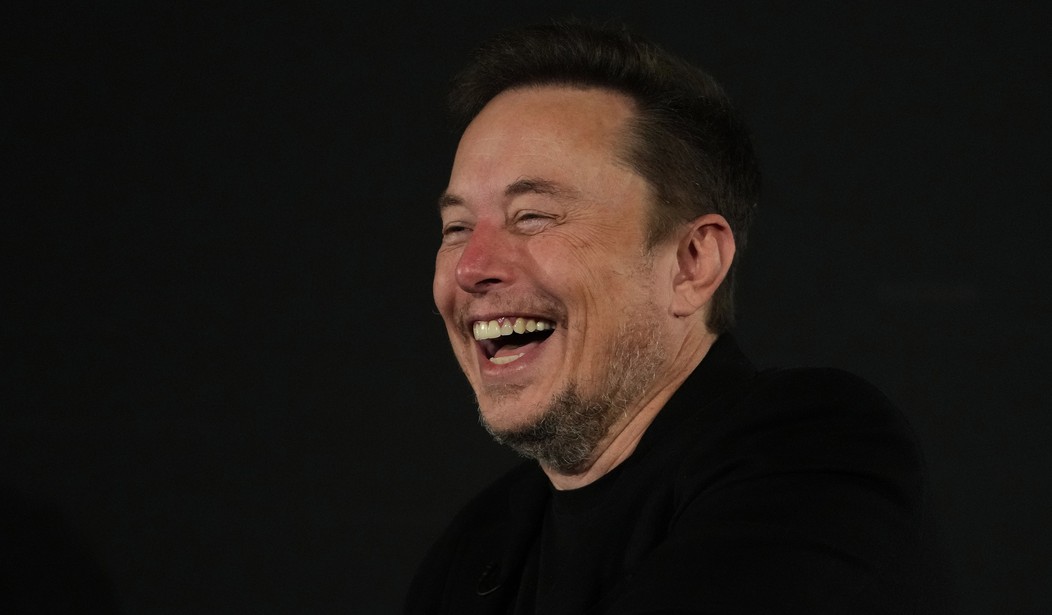
X’s then-CEO, Elon Musk, called NPR “state-affiliated media” the previous week. In response, NPR ceased posting to its main account. It used other affiliated accounts for the next seven days. As soon as Musk changed NPR’s X label to “government-funded media,” NPR completely abandoned X and no longer uses any of its accounts.
The NPR spokesman, John Lansing, claimed its goals were “freedom of speech” and “holding the powerful accountable.
In response to Musk’s label, Jeff Brady, NPR's climate and energy correspondent, dramatically posted: “Uh, no." Musk stated, “Seems accurate” when calling NPR “state-affiliated media." Brady’s language induces cognitive dissonance in contrast to Musk’s comment.
NPR did not like the “government-funded” or “state-affiliated” labels because they suggested that the radio station’s reporters were dishonest and letting themselves be manipulated by the government. That label essentially compared NPR with propaganda. NPT did not want its audience to doubt its reports, so it permanently left X.
In reality, NPR can be best compared to PBS. Both were once supported by the Corporation for Public Broadcasting, various foundations, and other government agencies until PBS was defunded by the Trump administration in May 2025 and CPB shut itself down by internal vote later that year. The two organizations have had eerily similar worldviews and one-sided arguments in their programming. Is it a coincidence that they have similar sponsorship?
The Corporation for Public Broadcasting reassured listeners that it only gave NPR one percent of its budget. The corporation claimed that more money came from viewer donations, foundations, and “federal agencies and departments,” yet all federal items can also include taxpayer funding. Even a little government influence, including wasted taxpayer money, says a lot.
Musk was exposing NPR for what it was. By identifying news stations as having government influence over how they report, viewers around the world would know not to trust everything they hear in the media. Musk likely planned to use those labels for other corrupt, one-sided news stations in an effort to help the world, including the United States, fight back against corruption by not tuning in to those channels. NPR’s abandonment of X suggests that it could not stand to have its corruption exposed and used more sanitized terminology such as “publicly funded” to cover its actions. Perhaps this helped pave the way for NPR and PBS’ quick downfall.
Hard numbers in the Festivus Report
It is a tradition for Senator Rand Paul (R-Ky.) to create a new Festivus Report during the Christmas season each year. His library of Festivus Reports continues through 2025; he will likely produce another for the 2026 Christmas season.
The Festivus Report contains several well-sourced footnotes and examines hard numbers to find the extent of blatant government overspending. As per the 2024 edition, the U.S. government has spent $13 million on a Sesame Street co-production geared to Iraq and $10 billion on abandoned offices no employees will ever use. According to the 2025 edition, the government wasted money on an LGBT "gender bender" promotion in Guatemala and scientific studies observing ferret behaviors when those little mustelids drank too much beer.
Festivus Reports have pointed out the government's reckless financial decisions for eleven years. Numbers do not lie.
Learn about language use in the cultural and political realms. Join the PJ Media VIP Membership, discounted now at 60% off with promo code FIGHT.