Note: Most Thursdays, I take readers on a deep dive into a topic I hope you'll find interesting, important, or at least amusing. These essays are made possible by — and are exclusive to — our VIP supporters. If you'd like to join us, take advantage of our 60% off promotion.
“You will say you lose your freedom. Freedom is an illusion.” —Colossus, Colossus: The Forbin Project (1970)
"Freeeeeeeeeedom!" —William Wallace, Braveheart (1995)
Communist China has a problem, and America's political and business elites are all too willing to help solve it — at the cost of our prosperity and security.
The New York Post reported on Monday that "China’s spymaster warns that AI is a threat to Communist Party rule." Sure, other outlets reported it, but I always check with the Post first because it reliably uses gloriously bombastic words like "spymaster" right up top in the headline.
Anyway, Chen Yixin serves the Xi Jinping regime as the head of China’s Ministry of State Security. In a recent issue of the state-run — which is to say Communist Party-run — China Cyberspace Magazine, Chen warned that "Artificial intelligence is penetrating all aspects of human society at an unprecedented speed, breadth, and depth, profoundly reshaping the global economic structure, power dynamics, innovation paradigms, and social governance logic."
Chen nailed it when he wrote, "Whoever can achieve more refined perception, more accurate judgment, and more precise strikes through algorithms will gain the initiative on the battlefield."
I'd add that while Chen doesn't say so, the battlefield includes gray-zone activities short of open warfare. You read about this stuff almost every day now, it seems. Including bullying neighbors at sea (like the Philippines), targeting dissidents abroad (oftentimes via clandestine overseas "police stations"), and mounting political and military pressure against Taiwan.
AI aids and accelerates Beijing's target selection, operational coordination, and social media campaigns.
Stick a pin in "social media campaigns," because I'll come back to it shortly.
Gray-zone aggressions expand more broadly to what the experts call "military operations other than war." The experts even have the world's awkwardest acronym for it (MOOTW) because of course they do.
Seriously, how do they say that out loud at Crystal City cocktail parties? "Moot-wah?" Sounds like an air kiss from a Lockheed sales rep.
But I digress.
The Post report continues: "Unlike the West’s concerns over the possibility of AI reaching consciousness and threatening humanity, Chen’s worries focused on how foreign agents and enemies of the state may use AI for 'large-scale espionage.'"
"Enemies of the state" is a loaded term in a Communist dictatorship and covers a far broader swathe of people than just us filthy capitalist pigs here in the West.
While Chen's article — at least according to my ChatGPT translation — doesn't explicitly mention the domestic threat AI poses to Party control, the implication is hard to miss. Chen calls for "comprehensive Party leadership" and, separately, punishment for AI-enabled data theft and the production and dissemination of information the state deems harmful. It's hardly a stretch to think that Chen sees the AI threat in the wrong Chinese hands as much as he does in American.
It all comes down to upholding that comprehensive Party leadership, and under Comrade Xi's rule, comprehensive means comprehensive.
Dire stuff, right? Yes and no. Chen also advised that the CCP "must recognize the opportunities and seize the initiative, while also understanding the risks and adhering to the bottom line."
Emphasis added.
While Chinese AI enjoys certain strengths, American tech firms maintain distinct advantages. China has more or less closed the gap on "frontier models" at the bleeding edge of AI development, but the U.S. enjoys big leads in data center construction, raw compute power, and the chips that run it all.
Sanctions play a key role. Without Taiwan Semi's fabs (sanctioned!), ASML's extreme-ultraviolet (EUV) lithography machines (sanctioned!), and Nvidia GPU chips (ditto), China struggles to overcome our hardware advantages. Beijing does everything it can, from sanctions avoidance schemes to outright theft, to produce homegrown equivalents, but the results are more disappointingly ersatz than genuine.
Besides, America's most important edge is one that the CCP can't afford to let China replicate: our free-wheeling, laissez-faire tech culture. From the start of his extended term as Communist Party boss, Xi began reversing China's decades-old free-market reforms. Under Xi, there's less of Deng Xiaoping's "it is glorious to grow rich" mantra and more Party control over pretty much everything.
But that does put China in a bind. AI creates new domestic and international threats to the CCP, but staying behind the U.S. increases the foreign threat, while further advances risk increasing the domestic threat.
That's one reason, as Eric S. Raymond recently put it, China "officially stated that they consider the calls for an AI pause to be a 'power play' and will not be participating in any US-led agreements to slow down development." The Beijing Times reported on Tuesday that China's state-owned Global Times accused Anthropic CEO Dario Amodei of proposing a "quiet AI Cold War" to "widen America’s lead" through tech barriers and regulatory schemes.
Any worldwide pause would freeze China's disadvantages into place.
Whatever the domestic threat might be to CCP control, Beijing can't afford to slow — that is to tame — Chinese AI development. Getting the Americans to tame themselves, however... in Xi's eyes, that would be ideal.
But who in the U.S. would ever encourage us to do such a thing?
Enter, stage left: Barack Hussein Obama.
Before Democrats jumped on board, a panic began this summer with a more focused and localized target: data centers. While the complaints were genuine and local, the national panic was largely manufactured overseas:
The playbook itself isn’t new. Find a raw nerve, flood it with content that echoes what people are already saying, then let the fracture widen on its own — Russia, China, and Iran have all run this pattern before around natural disasters, elections, and protests. Data centers are just the newest venue.
Alethea is already seeing the early signatures of that playbook at work: official state media, AI-generated content, and inauthentic social accounts, all pushing the same message. Left unchecked, that could add up to something concrete: stalled permits, radicalized opposition, and projects that become too politically toxic to finish. None of that is unique to data centers; it’s simply the first industry where the playbook has fully played out.
"If we can't get Nvidia cards for building our data centers," you can almost hear Xi say, "we can at least slow the Americans down from building theirs. Smithers, release the bots!"
You can watch in real time that same playbook in action against America's next generation of AI advances — but the twist is that this time it's American politicians and tech CEOs running the plays. There are a couple of reasons for that, starting with Obama.
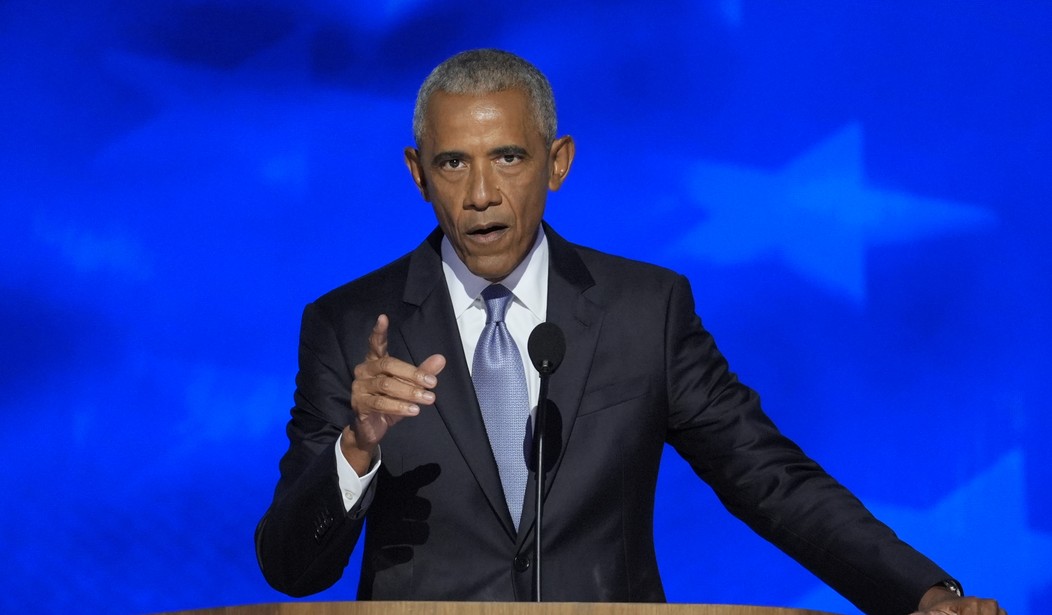
"During a private fund-raiser" last week, the New York Times reported on Sunday, "the former president warned that the technology could be 'dangerous' if not managed urgently and with a clear plan."
More:
In his remarks on Thursday, which have not been previously reported, Mr. Obama urged House Minority Leader Hakeem Jeffries, Democrat of New York, to assemble a clear framework for a public conversation about A.I. policy, should Democrats win back the House in the midterm elections, according to a partial transcript provided by Mr. Obama’s office.
He also suggested that candidates running for president in 2028 ought to make A.I. one of their “central agendas” and “have a very clear plan” for responding to safety and economic concerns around the technology.
Investigative reporter (and MAHA guy) Sayer Ji caught this story the other day, and remarked that the "NYT story reads like a former president weighing in," but if you read it closely, "it’s something else: the next domino in an eighteen-day sequence."
What follows is a thread so long (and including a Part 2) that I lost track of how many posts Ji put up. But he details a weeks-old and coordinated domestic campaign to take political control of the most disruptive technology since the internet or the personal automobile — because that's exactly what's being proposed, as I'll show you further down.
Recording Right Angle with Bill Whittle and Scott Ott on Tuesday, Scott brought up the Obama story during his segment, framing it as an election issue. Paraphrasing broadly, Scott said Obama is getting the Democrats on the "scared of AI" issue to win a few more congressional races in November.
Alas, there's more to it than that.
Any technology disruptive enough to put the Fear of God into the CCP is just as threatening to America's entrenched interests, whether you want to call them the Deep State, the Uniparty, or just the Swamp.
I mean, you saw what they did to Donald Trump after his 2016 election win, starting with the Russia Collusion Hoax and ending with nothing, ever.
Trump was the unacceptable disruptor in 2016, and so he sees through the current scam. "I am the Hoax Buster," Trump declared on Truth Social this week, "and I'm right now breaking another Hoax - That AI is going to take over, consume, and destroy the world."
But the Media Outrage Machine is on full throttle, so much so that "63 percent believe AI could destroy humanity," no matter what Trump says or what the reality is.
Again, that's no accident because America's elites have a plan for how to deal with disruptive AI: government cooption.
Obama is the master of this sort of thing, and Jeffries his pupil.
And Another Thing: I hope you'll read my friend and colleague Charlie Martin's series explaining the good and bad about data centers, and with none of the panic. You can read Part One here and Part Two here with more to follow in the coming weeks. My biggest takeaway is that states and localities that used to sign bad deals for data centers have wised up, and now insist Big Tech pays for little things like its own water and electricity. Awesome.
ClintonCare failed 30-plus years ago for several reasons, but a major cause was the insurance industry's well-organized opposition to Hillary's semi-nationalization effort. Remember the “Harry and Louise” ad campaign featuring a fictional married couple discussing their worries at their kitchen table? Those ads were well-executed and extremely effective, and Harry and Louise became national talking points.
Obama by 2009 had figured out a more seductive method: Bring the insurance companies into the game, and they'll become happy players. For reasons detailed in many other places, ObamaCare raised costs for consumers while fattening insurance company profits.
Harry and Louise were disruptors in 1994, but by 2009 they were in on the scam.
That's the future of America's AI industry, as America's elites would have it.
I mentioned America's currently entrenched interests. But we also have interests that are suddenly interested in entrenching themselves.
Over the weekend — I covered this in more depth on Monday — Anthropic CEO Dario Amodei proposed a slowdown or even a "pause" in AI development, followed by a "sensible" regulatory scheme. That's the "quiet AI Cold War" Beijing was up in arms about.
Amodei's sensible regulatory scheme involves government empowerment of an organization called Model Evaluation and Threat Research, or METR, which deserves some looking into. Fortunately, tech analyst Kevin Bass did that for us on Monday.
METR, he wrote, "is financially dependent on Anthropic's success — specifically, on the explosive growth of more than $7 billion dollars in Anthropic stock." Without going too deep into the weeds, "if Anthropic goes under, many of the organizations that fund METR go under as well."
In other words, the overseer has a vested interest in the overseen. We call that regulatory capture, and it is the bane of progress, innovation, and your wallet.
If you'd like to go into the weeds, Straw Hat Hacker Rooke Poole can show you the way in this thread. I learned a lot.
Now back to Kevin:
The same organizations that fund METR also fund the many organizations, such as the Tarbell Center, that promote AI Doom.
The Tarbell Center publishes AI Doom articles in The Verge, Science, LA Times, The Dispatch, TIME, and others.
They are selling the problem, and then selling the solution to the problem -- from the same money pile: Anthropic's.
All of these organizations are financially dependent on the same exploding $7 billion money pile.
"China is keeping messaging tight," Bass added. "That is why optimism for AI is so high in China."
What we get in the U.S., as the New York Post put it in Tuesday's exposé, is "Amodei’s handpicked super-woke globalists he thinks will save us from an AI apocalypse."
Well, no. He hopes to cement his position — with a little help from Hakeem Jeffries in the new year.
Whipped-up panic, indeed.
But there's more, and it involves Anthropic losing a major client: the U.S. government.
"In February The Department of War didn’t just cancel a contract with Anthropic AI," JayTC posted on Monday. "They treated Anthropic as a hostile vendor and forced the whole defense industrial base off Claude."
The reason? "Anthropic wanted corporate veto power over defense weapon systems. The DOW rejected them," with Hegseth calling Amodei's firm a "supply-chain risk to national security."
Jay finished by saying, "I find it funny that it's now Anthropic 'sounding the alarm' on A.I. being 'too powerful.'"
Anthropic's problem is that the company spends too much and generates too little revenue. In fact, the entire industry lives in fear — perhaps rational, perhaps not — that the profits promised by their multitrillion-dollar infrastructure buildup will never materialize.
So now they come begging to Uncle Sam for some "sensible" regulation that just coincidentally will save them from themselves.
Even investor Michael Burry — The Big Short guy who saw the 2007-08 crisis coming — just "slammed leaders of OpenAI, Anthropic and other tech giants for orchestrating a 'self-serving' call to slow the pace of AI development," again according to the New York Post.
I was not at all surprised to see OpenAI's Sam Altman jump right on board, because if there's a questionable AI scheme, he's likely in on it. My best friend is in the industry, and he can't say "Sam Altman" without adding "snake oil salesman." I'm just happy he doesn't also have to spit, or at least not every time.
I was not surprised — but I was deeply saddened — to see Elon Musk join in, too. But the siren song of regulatory capture is nearly irresistible.
A few months ago, Anthropic was deep in the sheets with Washington. Now that the company is out, Amodei seems desperately to want back in — up to and including a capture scheme that could make ObamaCare look like Aunt Millie sneaking a fiver out of the collection basket.
Some light-touch regulation might still be necessary. Although I'll admit that while I've spent today looking into how and why not to do it, I haven't yet researched whether federal regulation is truly needed or what sensible regulation might look like.
But decades of experience taught me what a manufactured panic looks like, and we both know what Washington gets up to when given any excuse to write major legislation in a big rush — I'm looking at you, PATRIOT Act, CARES Act, and TARP.
I know I've thrown an awful lot at you in just one essay, so let me leave you with one last (and hopefully memorable) thought.
The 2008 financial crisis helped put Barack Obama into the White House. If Washington's answer to AI risk creates an even bigger crisis — and I believe it would — who gets the power to "save" us next time?
Last Thursday: Let's Talk 9/11, Then and Now