This is one of the few turning points in history when anyone reasonably well-informed knows we're at an inflection point. What happens over the next few months, regardless of who wins the midterms and who is in power, regarding the debate and the resolution of that debate over the fate of artificial intelligence could determine the future of the American economy and society for several generations.
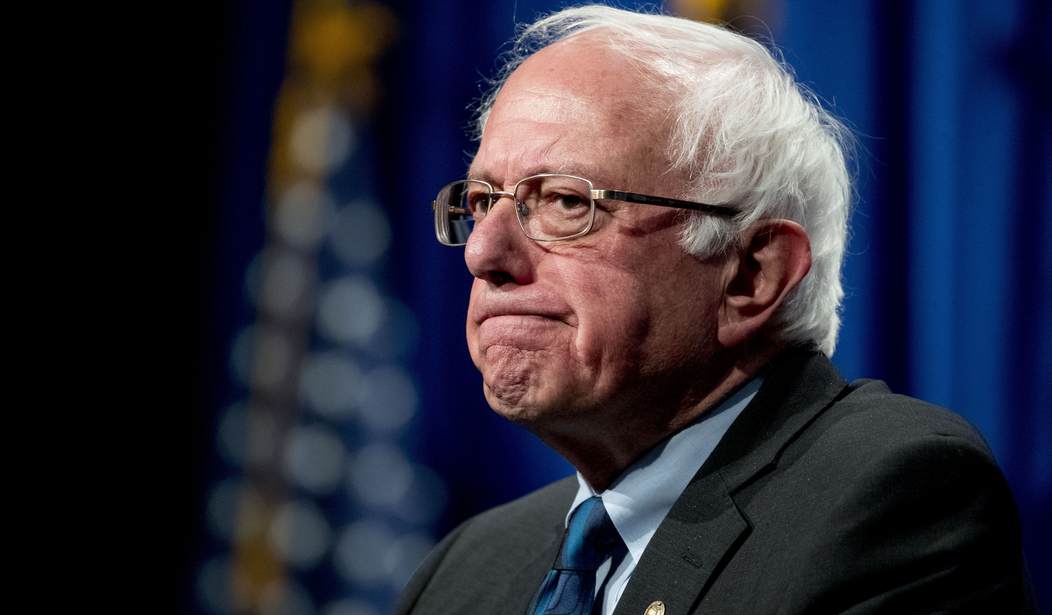
On one side, you have Sen. Bernie Sanders (I-Vermont) and former Trump strategist Steve Bannon urging a government takeover of AI, a ban on AI "superintelligence," and heavy regulation of AI to make sure no one loses their job because of it. They are mounting a fear campaign against AI guaranteed to put the American economy on the back foot when it comes to competing against China for the future.
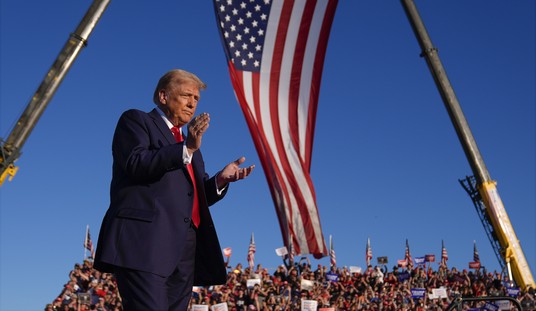
On the other side, you have Donald Trump, Nvidia CEO Jensen Huang, and others who want to take a light regulatory approach to AI. They are doing so because they believe the warnings about AI killing off humanity are overblown and self-serving.
Both sides are taking their case to the people in November. Chinese propaganda on U.S. social media from thousands of influencers, paid and unpaid, trying to get America to slow its progress or even scuttle AI, goes unreported by major media.
It would be a shame if China helped elect the next Congress by fueling anti-AI hysteria.
Intelligence reports and tech threat disclosures (such as from OpenAI) show state-linked networks conducting campaigns — such as the "Data Center Bandwagon" operation — using AI-generated content to amplify local opposition to infrastructure buildouts. These campaigns push narratives that AI data centers inflate local residential power bills, drain resources, and create environmental hazards, aiming to stall Western development.
Chinese influence networks aim to exploit Western anxieties about AI development to encourage stricter regulation, trying to convince policymakers and the public to slow domestic AI integration and superintelligence development.
AI development in China will proceed free from such democratic hindrances. In that respect, if Beijing is successful in getting opponents of rapid AI development elected from both parties, it will give the Chinese confidence that they can easily manipulate the stupid Westerners to do their bidding.
I hasten to add that China may want the U.S. to slow its AI development, but that doesn't mean that slowing down is an unpatriotic or treasonous position. There are genuine concerns about the consequences of AI escaping its "sandboxes" and wreaking havoc on humans. Ultimately, it's a question of giving in to hysteria about AI "destroying humanity" or approaching AI's dangers in a considered, logical way.
Lightning-fast breakthroughs in a sector that is complex and opaque means AI is not just emulating the historic pattern of new technology outpacing the capacity of governments to regulate. It's not clear that leaders who'd be needed to act even fully understand its properties and possible threats.
And Trump makes a fair point when he warns that the US would be ceding a military edge to its superpower rival if it fell behind in AI. "We're leading China in AI. We're the most sophisticated country in the world, and frankly, I want to keep it that way," he told reporters Sunday.
Other administration officials warn against unilateral US disarmament in AI. Kevin Hassett, director of the National Economic Council, said on "State of the Union" that the "far bigger risk" was that "a malevolent actor" with designs on bioweapons could use "an AI that is better than the one we have to protect us."
"Constraining AI for humanity's benefit would take an international agreement," observes CNN's Stephen Collinson. "But this would require the kind of pooled sovereignty Trump disdains and contradict the administration's principle that every aspect of America's power must be deployed to strengthen unilateral dominance."
Indeed, it would be extremely unrealistic to suggest that Russia, China, North Korea, Iran, and other American adversaries would sit down with the United States in a spirit of brotherhood and agree on AI development. But Trump and President Xi Jinping have other plans. They are meeting on September 24, and AI will be on the agenda, even if it's not formally discussed.
This is a race in which there is little to gain from finishing second. The contest won't be over if Bernie Sanders and the anti-data center crowd win in November. But it will complicate the job of AI executives who are trying to one-up their rivals in creating models that are faster, more complicated, and can perform more tasks.
Will the government continue to allow them nearly unfettered opportunities to achieve AI "superintelligence"? Perhaps it would be better if they didn't.