





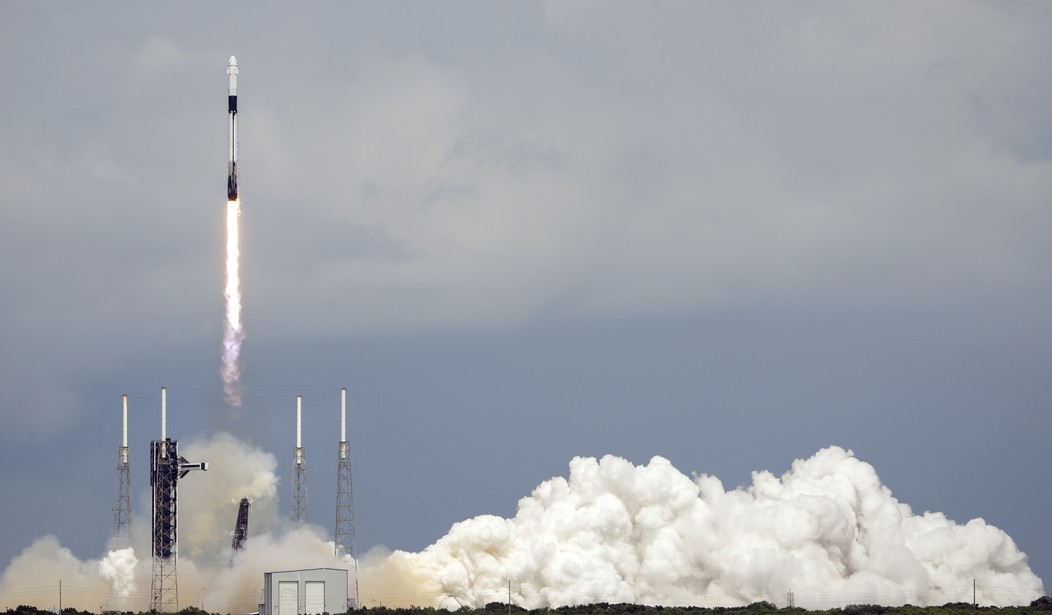
Elon Musk's SpaceX began making moves on the ground that could eventually lead to the retirement of the company's venerable Falcon 9 reusable launch vehicle, which changed the world. Pause before we even get started to ponder that roughly 145 launches this year could mark the beginning of a long goodbye.
As of this month, Falcon 9 has flown 624 orbital missions with about 621 full mission successes since 2015, for an industry-leading success rate and a launch cadence that entire nation-states can only dream of matching. And SpaceX did it while providing massively reduced costs to its customers — that includes you, American taxpayer — and pioneering operational reusability at scale.
Nevertheless, for the first time, Falcon 9 will fly fewer missions this year than the previous year, as the company retools its Cape Canaveral launch facilities for the massive Starship. “With 39A becoming a primarily Falcon Heavy and Starship pad, we don’t actually need two operational droneships on the East Coast to maintain our Falcon manifest,” SpaceX vice president of launch recently posted. And SpaceX president Gwynne Shotwell said earlier this year, "This year we’ll still launch a lot, but not as much... And then we’ll tail off our launches as Starship is coming online."
There's an FAA notice for the next Starship flight test on May 12 (with a backup slot on May 13), though the closer we get to that date without an actual announcement from SpaceX, the less likely it seems. But there are reasons for optimism that Starship development this year will look more like 2024's frenetic pace than last year's comparatively glacial speed.
Broadly speaking, Starship has two missions.
The first is serving as a revolutionary low-cost/high-volume Low Earth Orbit (LEO) launch vehicle. Once Starship is proven, perhaps by the end of the year, SpaceX can finally begin sending up the bigger, faster Starlink Version 3 satellites 60 at a time.
Starship's second mission — sending men and previously impossible payloads to the Moon, Mars, and beyond — is where things get tricky. When Starship enters orbit, it has enough fuel to perform some maneuvers and then return safely to Earth. Getting to the Moon or Mars requires perhaps half a dozen or more other Starships to serve as orbital fueling stations to top off the tanks and send it on its way.
The company has yet to master orbital refueling, but tests should begin this year.
So that's three main missions, since we really ought to include the tanker job.
Why retire a perfectly good rocket like the Falcon, even if it takes several years? For that, first let's take a closer look at Starlink, which is the Falcon's main customer.
A single Falcon 9 launch increases Starlink capacity by roughly 2.5 terabits per second (Tbps), and the launch itself costs the company an estimated $15-$28 million. (External customers pay $74 million, still the cheapest in the industry.) But a single Starship mission increases Starlink capacity by 60 Tbps for less than $10 million for the launch. That's more than 20 times added capacity at a total launch cost roughly 50%-66% lower.
Starlink revolutionized internet service, at least in harder-to-reach places. Starship will revolutionize Starlink.
SpaceX hopes to reduce the cost per kilogram to orbit by 90% or more. You read that right. Most people have zero clue how Starship changes things, but its cost, capacity, and reach (when refueled) make the impossible merely difficult.
How about customers like NASA, the NSA, or private firms? Won't they still have use for Falcon 9?
Maybe not — scale economics work best when Starship is the default launch system.
Getting Starship's cost-to-orbit down to where Musk wants it means flying in volume. Once Starship is in full production, every Falcon 9 launch takes away from that volume. It might seem absurd that a rocket capable of carrying five or six times more cargo to orbit could eventually cost one-third the price (or someday even less) to launch, but that's the goal. The sooner SpaceX transitions to Starship at scale, the sooner it reaches those economics.
And if there's not enough commercial demand to fill a particular Starship flight? SpaceX already does ride-sharing, and could fill the excess cargo capacity with Starlink or xAI satellites.
Still, Falcon 9 changed and revitalized the launch industry and human enthusiasm for space. Part of me hopes there will always be one flying.
Recommended: The Space Launch Industry Is in Big Trouble... Except for You-Know-Who
You want more?
PJ Media VIP members get so much more, including exclusive podcasts and video live chats with your favorite writers. You can support alternative conservative news and save 60% with promo code FIGHT.



Join the Conversation
VIP members get the ability to comment on articles.