





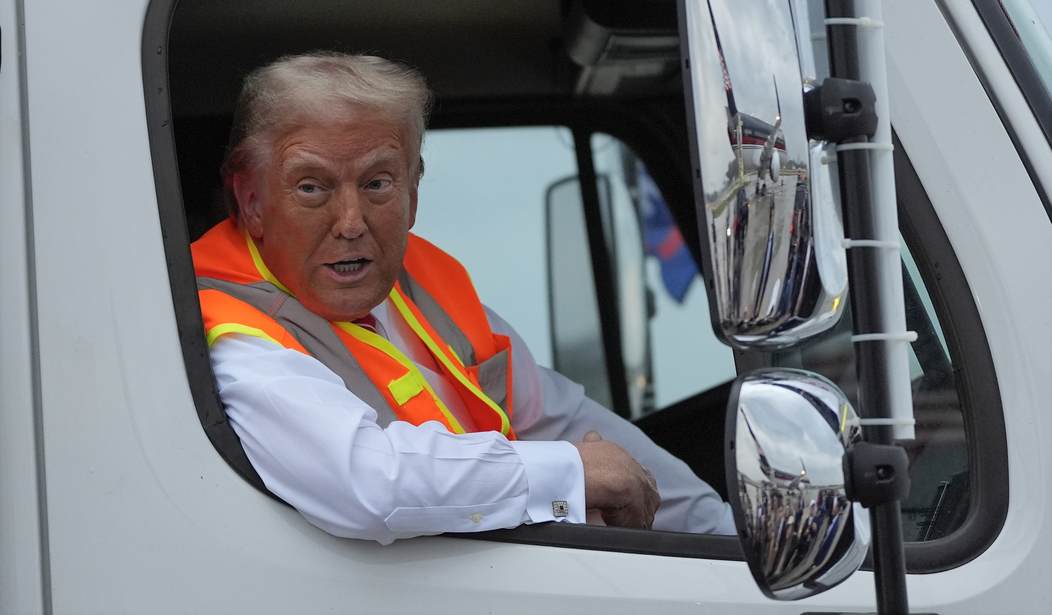
Experts: "Trump said weaker gas mileage rules will mean cheaper cars. Experts say don’t bet on it."
Carmakers: "Hold my kei."
Kei trucks are ultra-compact, ultra-efficient pickup trucks designed specifically to fit Japan’s kei-jidosha (light vehicle) regulations, and they're beloved around the world. But you could never buy one here, thanks to Washington's ever-tightening Corporate Average Fuel Economy (CAFE) regulations, first imposed on new cars and trucks in 1975.
You know, the regulations President Donald Trump rolled back last week.
Trump said, “If you go to Japan, where I just left, and if you go to South Korea and Malaysia and other countries, they have a very small car—sort of like the Beetle used to be with the Volkswagen—they’re very small, they’re really cute, and I said, ‘How would that do in this country?'"
“And everyone seems to think good, but you’re not allowed to build them, and I’ve authorized the secretary to immediately approve the production of those cars… Honda, some of the Japanese companies do a beautiful job, but we’re not allowed to make them in this country and I think you’re gonna do very well with those cars, so we’re gonna approve those cars."
But the Associated Press's Alexa St. John is having none of that, apparently, in a piece explaining why Trump is wrong and CAFE is right and just get used to expensive cars forever.
Without doing a Full Frontal Fisking of St. John's "THE FACTS" article, let me present the facts she missed or ignored.
Trump promised that new car prices might drop by $1,000 under his relaxed standards — really, just going back to the CAFE standards we used just a few years ago, when the planet still wasn't dying. And that's great, as far as it goes.
But consumers might be more interested in new, much less expensive, product categories that CAFE forced carmakers out of and American car-buyers away from.
"Average prices have also skewed higher as automakers have leaned into the costly big pickups and SUVs that many American consumers love," St. John wrote — did I detect a note of disdain? — without mentioning that CAFE is the reason Americans moved away from affordable sedans and station wagons, and into trucks and SUVs.
CAFE treats cars and “light trucks” as two totally different categories, each with different required fuel economy targets. The rules are less stringent for so-called "light-trucks," which incentivized manufacturers to re-jigger the entire automobile market.
And Another Thing: CAFE is pronounced like "café." But I always say CAFE like "kafe," which rhymes with "chafe." Because it does. People look at me funny, but I just don't care.
Cars got more expensive to develop, and profit margins shrank. But the regulatory definition of "light truck" — which includes massive pickups and SUVs — allowed carmakers to manufacture to upsell buyers into vehicles with less regulatory tech and fatter profit margins.
And consumers who had never previously considered buying a pickup or SUV found they really liked them.
The Law of Unintended Consequences always reigns supreme: CAFE didn’t just raise car prices across the board — it structurally forced the American market away from cheap cars and into profitable trucks.
I honestly don't know if Detroit (a definition which only kinda-sorta includes the Stellantis-owned Chrysler Group) will jump into the cheap car market Trump just reopened. I suspect they're more than satisfied earning fat profits on big SUVs and trucks — but I'd love to be wrong.
Perhaps more likely is that Trump's rollback made room for foreign brands that already have selections of under-$20,000 kei-type vehicles — and his tariffs might make it more profitable to manufacture them at existing or expanded plants right here in the U.S. of A.
CAFE got us into this mess. Rolling it back helps get us out. This is the vital fact St John's "experts" ignored.
Not even a week since Trump's announcement, the auto industry is filled with whispers about selling small, affordable new cars and trucks in the American market for the first time in... I don't even know how long. What I do know is that the average new car price topped $49,000 in October, and consumers need a break.
I have a 19-year-old who would love to buy an inexpensive new car, but that market is regulated out of existence. A kei-type car like the Suzuki Alto, Dacia Sandero, or Hyundai Casper, however, might look pretty good to young buyers who want the reliability and low maintenance costs of a new car but can't afford one.
Product timelines are long in this business, however, so don't show up at your Toyota dealer in January, hoping to buy a Hilux Champ for $18 grand.
But if Trump's CAFE rollback sticks, in the not-too-distant future, we might just Make Affordable Cars Again.
Recommended: Can CNN Survive the Netflix Earthquake?


Join the Conversation
VIP members get the ability to comment on articles.