





A 21-year-old Christian woman was murdered inside her home in Rawalpindi on September 3 by a Muslim neighbor whose advances she had rejected, the Christian Daily International reported.
Saba Mehboob, who separated from her husband a year ago, was shot in the forehead after the alleged assailant (Adnan Butt) entered the house, according to her brother Joshua Mehboob. The suspect then abducted her teenage step-brother and pressured him to falsely confess to the murder, according to the victim’s family.
Human rights advocates have long raised concerns about the vulnerability of religious minorities in Pakistan, particularly in cases involving sexual violence, forced conversions to Islam, and allegations of blasphemy. Rights groups have also documented cases where victims or their families face intimidation and pressure to settle disputes outside the formal justice system.
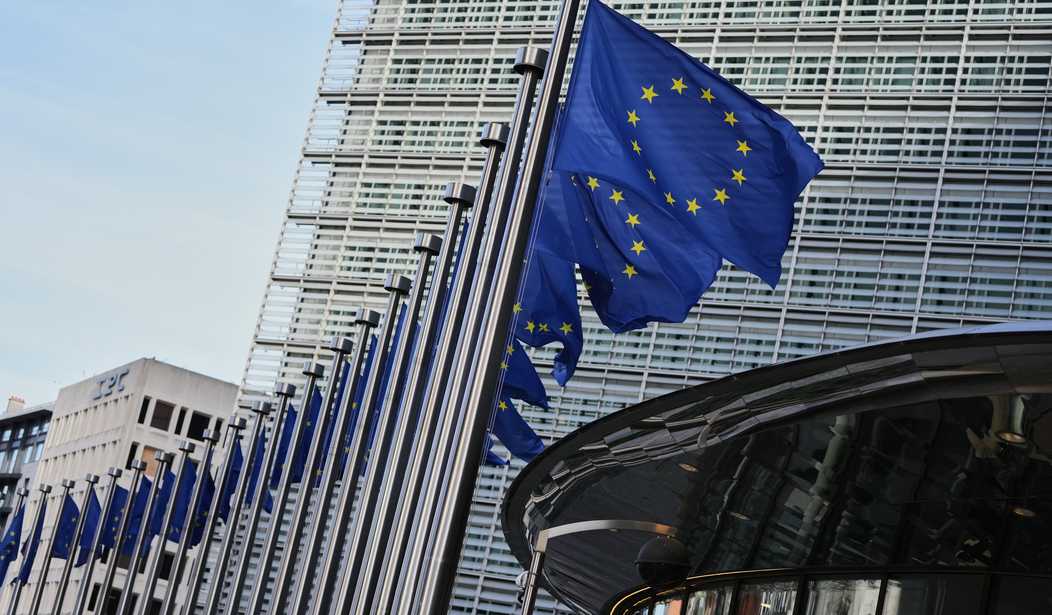
Meanwhile, the EU ambassador to Pakistan, Raimundas Karoblis, warned that Pakistan’s continued access to a lucrative European Union trade preference could be jeopardized if Islamabad fails to demonstrate meaningful progress in protecting human rights (including the rights of religious minorities).
Pakistan is the largest beneficiary of the European Union’s Generalized Scheme of Preferences Plus (GSP+). The country exported €7.5 billion worth of GSP+-eligible goods to the EU in 2024, according to the European Commission’s latest report.
Karoblis said on August 31 that Pakistan’s continuation in the EU’s GSP+ beyond 2029 was uncertain because the implementation of United Nations human rights conventions is likely to be a decisive factor in the country’s reapplication.
“It is not certain and it is not guaranteed,” Karoblis stressed in a podcast with journalist Munizae Jahangir available on YouTube.
It depends on the level of implementation of the U.N. conventions,” he said. “One of the preconditions within the present GSP+ scheme and the future scheme is the absence of a serious failure in implementing the U.N. conventions. This is based, first of all, on the conclusions of the U.N. monitoring bodies.
The comments come as religious freedom advocates continue raising concerns about Pakistan’s treatment of Christians and other religious minorities. Concerns are particularly high in cases involving blasphemy allegations, forced conversions, child marriage, attacks on places of worship and discrimination in law and practice.
Human rights organizations estimate that approximately 1,000 women and girls from religious minorities (Hindus and Christians) are abducted, forcibly converted to Islam, and married off in Pakistan each year. According to the organization Open Doors, which monitors Christian persecution globally:
Christian women and girls in Pakistan face severe gender-specific persecution. Christian girls are abducted, raped, and forced to convert and “marry” their abductor, with victims as young as seven, including girls with disabilities. Families often never see them again, while the police rarely act and the courts frequently fail victims. Survivors endure shame, PTSD, and social stigma in Pakistan’s honor-based culture. Christian women are also targeted with acid attacks, workplace harassment, blasphemy allegations, and honor killings. Many remain trapped in debt-bonded labor, such as brick-kilns, where they face additional sexual violence and exploitation.
Pakistan, however, has benefited from the EU’s Special Incentive Arrangement for Sustainable Development and Good Governance (GSP+) since 2014, securing an estimated €732 million in tariff savings in 2024 alone.
The scheme links preferential trade access to the implementation of international conventions on human rights, labor rights, environmental protection, climate change, and good governance.
For Pakistan, which has ratified the 27 conventions required under the current GSP+ framework, the key issue in the coming years is implementation.
"All of the conventions have been ratified by Pakistan,” Karoblis said. “From a legal point of view, the first condition is therefore fulfilled. But now, particularly with the new scheme, the emphasis will be exactly on implementation. I mentioned already that the government will need to present an action plan with concrete measures for implementing or improving the implementation of the U.N. conventions. It will also need concrete timeframes and concrete performance indicators. So, indeed, implementation is really important.
Under the proposed future system, the number of conventions will rise from 27 to 32. Karoblis said Pakistan had already ratified all of them. He stressed that the EU would consider not only future commitments but Pakistan’s existing record. The ambassador also specified, however, that if Pakistan does not reapply for GSP+, or fails to meet the conditions for the scheme, it would revert to ordinary GSP rather than lose all preferential trade treatment.
Under ordinary GSP, tariffs would remain approximately 30 percent lower than conventional tariffs applied to countries such as China and the United States, although they would be higher than they are under GSP+.
Karoblis identified minority rights as one of the principal areas where Pakistan experienced regression since the introduction of GSP+ in 2014.
"The main areas of concern are enforced disappearances and extrajudicial killings, freedom of expression, the rights of journalists, and minority rights," he said.
A major concern for the EU is the blasphemy cases in Pakistan, the ambassador said. The country's blasphemy laws carry severe punishments, including the death penalty and life imprisonment, under the Pakistan Penal Code.
While insulting Islam's prophet Muhammad carries a death penalty or life imprisonment under Section 295-C, insulting his companions, relatives, or family members (including his eleven wives) carries a maximum penalty of life imprisonment under Section 298-A. Following legislative changes associated with the Criminal Laws (Amendment) Bill process in 2023, the minimum punishment increased from 3 years to 10 years of imprisonment, extendable up to life imprisonment.
This means that if a person is found guilty under Section 298-A, the court must sentence them to at least 10 years in jail, which can reach a full life sentence. The offender is also subject to a fine of 1 million rupees. The offense is non-bailable.
Pakistan’s blasphemy laws are increasingly used to intimidate Christians and other religious minorities. Hence, Christians live in constant fear of blasphemy accusations and violent threats.
Often, the laws are exploited to target Christians during unrelated feuds such as land disputes or economic reasons. Even an accusation can provoke mob violence against victims, their families, and the wider Christian community, as illustrated by the 2023 Jaranwala attacks in which over 25 churches were attacked and Christian-owned homes destroyed.
According to Open Doors:
Christian men in Pakistan live under the constant threat of blasphemy allegations, false imprisonment, torture, and execution. Murders are common if men are accused of insulting Islam, while entire families suffer the fallout of false charges. Christian men and boys are compelled to take low-status or hazardous jobs, often labelled “Chura” (filthy), or trapped in bonded labor such as brick-kilns. Some conceal their faith to avoid losing jobs or facing charges. Reports of sexual abuse of boys are rising, with victims silenced by fear and shame.
Karoblis pointed out the treatment of the minority Ahmadi community as another serious issue.
“The situation of the Ahmadi community is a major concern. Ahmadis are also citizens of Pakistan, and their rights should also be respected,” he said, urging protection of their physical security, places of worship, and other rights."
Freedom of expression and journalists’ rights were also among the ambassador’s areas of concern.
Pakistan’s Prevention of Electronic Crimes Act (PECA), provincial defamation acts (like Punjab's defamation laws), and counterterrorism provisions severely restrict free speech by criminalizing dissent, enabling broad state censorship, and fostering widespread self-censorship.
Journalists, activists, and citizens face rapid arrests, FIRs (First Information Reports), and pre-trial detentions simply for sharing or reposting critical commentary on social media platforms.
“These are issues which really should be addressed in order to change the situation, make progress and tackle the challenges journalists face today,” he said.
According to Karoblis, the EU has consistently raised concerns about forced disappearances and arbitrary detention with Pakistan.
“The first response is that 'we are in a specific security situation', which is true,” he said. “Pakistan ranks number one on the Global Terrorism Index. But our view is that even in this situation, human rights conventions and guarantees should be applied. We are not saying that the government should not fight against terrorism. But basic rights, such as the right of defense and the right of access to families, should be protected.”
The ambassador added that perpetrators should be held accountable. He called for enhanced monitoring of cases involving enforced disappearances.
Yet, the Pakistani government continues to forcibly disappear its own citizens. One of the recent victims was Imran Ali, a student from Balochistan province.
UN experts on September 3 expressed grave concern over the enforced disappearance, torture, and extrajudicial killing of Ali in Balochistan. They urged Pakistan to conduct a prompt and impartial investigation into the circumstances of his detention and death.
On August 27, 2025, Ali was abducted from his apartment by approximately 20 agents from the Counter-Terrorism Department and was taken to an undisclosed location. His family received no official information regarding his fate or whereabouts for one year, yet individuals formerly detained with Ali confirmed after their release that he had been held in custody. Ali was reportedly tortured for several days while in detention.
The experts warned that Ali’s death is not an isolated incident but reflective of a pattern of what appears to be a widespread and escalating practice of unlawful detention, including on the basis of vague and overbroad counter-terrorism provisions, torture, enforced disappearance, and extrajudicial killing of Baloch people. These violations follow reports of intensified State military and security operations in Balochistan, amid widespread allegations of collective punishment.
UN experts have publicly expressed their concerns about the situation in Balochistan, most recently in March 2025, April 2025, and July 2026.
The EU envoy also raised concerns about judicial proceedings, including military trials of civilians and the treatment of political opponents in detention. Karoblis said the EU has addressed political pluralism, the rule of law and human rights in its dialogue with Pakistan.
“Political pluralism is one of the issues which we are raising in our human rights dialogues, in the specific subgroup on democracy, rule of law and human rights,” he said. “In these cases, the same as with the majority of other cases involving people who are in prison, we are looking primarily at issues such as conditions of imprisonment, conditions relating to torture, for example. We are also looking at issues concerning the right of defense and similar matters.”
Meanwhile, Pakistan deported more than 2.4 million Afghans since launching its repatriation drive in 2023, Prime Minister Shehbaz Sharif said this past June. He was defending a campaign that UN agencies and rights groups say has placed growing pressure on Afghanistan’s humanitarian crisis.
For decades, millions of Afghans seeking refuge or employment have fled across the borders to Pakistan and Iran. The number escaping Afghanistan has continued to rise since the Taliban takeover in August 2021.
The EU ambassador called for the protection of Afghan refugees who would face danger if returned to Afghanistan.
“Afghan refugees have lived in Pakistan for 40 years and have been quite integrated into society,” he said. “I don’t see that they have created an additional burden for Pakistan. On the contrary, they have contributed significantly to GDP.”
Those who are eligible for international protection, for whom it is dangerous to return to Afghanistan, and vulnerable groups, should be protected, he said.
“Our expectation is that special care should be given to these categories of people. Deportation should not take place in such cases,” he said. “For other Afghans, their movement should, of course, be organized, carried out with dignity, and with guarantees concerning their property and other rights.”
Pakistan has enjoyed duty-free trade access to the European market under the GSP+ status since January 1, 2014. However, over the past twelve years, the country has consistently failed to meet the human rights obligations attached to these privileges.
How can the European Union justify granting aid and trade privileges to a regime that imprisons people for blasphemy and treats its non-Muslim communities as second-class citizens?
A state that enforces capital punishment for blasphemy, permits the systemic abduction and forced conversion of religious minorities, and perpetrates enforced disappearances has forfeited its right to Western partnership. It cannot remain an eligible partner for Western aid or trade privileges.
The European Union must transition from rhetorical condemnation to substantive economic and diplomatic measures. To maintain the integrity of its human rights and trade frameworks, the EU must implement concrete policy actions that hold Pakistan's regime accountable.
Editor's Note: Do you enjoy PJ Media's conservative reporting exposing the radical left and woke media? Support our work so we can keep bringing you the truth.
Join PJ Media VIP and use promo code FIGHT to receive 60% off your membership.


Join the Conversation
VIP members get the ability to comment on articles.