
“Journalists” come up with new terms all the time to somewhat justify and somewhat conceal what amounts to journalistic activism. Not just bias, but oftentimes aggressive, Machiavellian activism that goes well beyond simple partisanship.
One of the latest terms for this is “accountability journalism.” People who use the term try to wrap themselves up in a sort of fake honor that they try to assign to the term. They like to think of themselves as speaking truth to power, when in fact what they are really trying to do is be the power and to put their ideological allies in power.
A glaring recent example of this came in the form of an X post from Vanity Fair writer Julia Black, who wrote: "My heart goes out to the intrepid team at the @nytimes who did absolutely generational reporting on the Nvidia scandal…I know the feeling of trying to do accountability journalism in a culture that simply does not care about accountability. Incredibly disheartening."
my heart goes out to the intrepid team at the @nytimes who did absolutely generational reporting on the Nvidia scandal I know the feeling of trying to do accountability journalism in a culture that simply does not care about accountability. Incredibly disheartening.
— Julia Black (@mjnblack) November 23, 2026
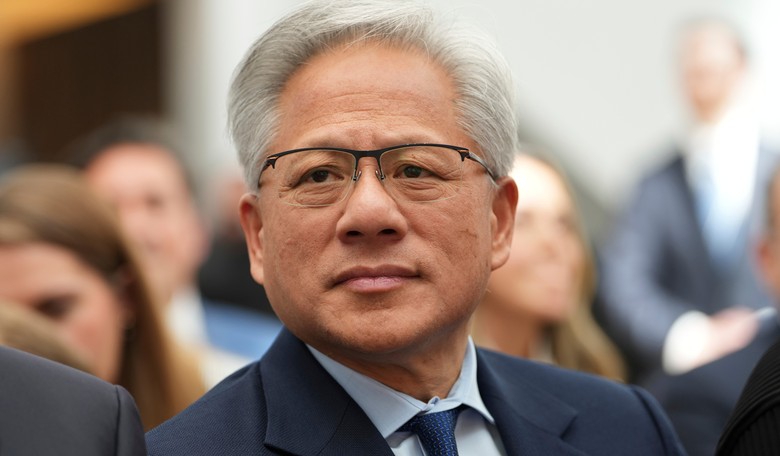
That was Black lamenting the fact that the New York Times’ shoddy reporting wasn’t effective at taking out a greedy capitalist in one Nvidia CEO, Jensen Huang.
You probably already know this, but to recap, Huang was pushed out of the company he founded and built into the cornerstone of the current AI transformation of American society. The reasons given for this in much of the reporting are: he had an affair or two with colleagues; one of those colleagues was speculated to have been a Chinese spy; and third, some of the reporting alleged that he may have sold his firm’s chips to China against U.S. regulations and policy.
We all know the drill at this point. The “seriousness of the allegations” is enough to cancel or take down anyone the left targets in this way. It doesn’t matter if the allegations are true or not. All that matters is that they are serious. The fact that certain allegations have even been raised at all is enough to create the wrong perceptions, and that alone is justification to take you out.
Under pressure, Huang resigned, and Nvidia’s board of directors replaced him on an interim basis with the firm’s robotic female CFO Colette Kress.
After this news broke, I had a conversation with a portfolio manager about all of it, and he told me something that applies here, but it is a general rule of thumb in his line of work: “When a growth company replaces the CEO with the CFO, sell. The reason is, CFOs cut spending for a living; they are not visionaries. CFOs cut losses, they don’t grow companies.”
All of this combined sent the company’s stock price into the tank. On November 11, the stock closed at $173.73 per share. After the blowup over Huang’s affairs hit the market, along with his November 12 resignation, the stock plummeted to a closing price on November 20 of $125.53.
But it wasn’t just Nvidia’s stock price. The company’s misfortunes nuked the larger stock market. This all put pressure on the company to take another look at all of those allegations against Huang to determine just how legitimate and how serious they were.
When it started to appear that the company overreacted, and after President Donald Trump weighed in on the matter, a movement to reinstate Huang to the corner office succeeded. Nvidia’s board did reinstate Huang. By the close of the market on November 23, Nvidia and the rest of the market rebounded dramatically. Nvidia recouped roughly 82% of its per-share decline of $48.20, closing at $165.05 on the 23rd.
As for those very serious allegations, after the whole situation was put under a microscope, no one could prove that Alice Huang, the mistress in question, was actually spying on the Nvidia CEO and his firm. That didn’t stop “fake news CNN” from concluding she was a spy, but that would be inaccurate.
About those chip sales to China, U.S. Attorney General Todd Blanche and the Justice Department (DOJ) investigated and concluded they could find no evidence that Huang or Nvidia broke any laws.
Everything he and his firm did with regard to chip sales in Asia was fully transparent to the U.S. government and in compliance with guidance, the law, and regulations. The DOJ’s assessment of the situation factored into Nvidia’s decision to reinstate Huang as CEO.
That’s the background. Someone tried to take Huang out by using enough facts, mixing them with enough fiction, all to create a narrative that would cripple Nvidia. This is some really nasty stuff.
The “shorts” made money on the bad news here, and that’s another issue. Short sellers on Wall Street realized huge profits during the sharp sell-off of Nvidia stock in mid-November. Then when the stock rebounded after Huang’s reinstatement, those same short sellers felt the pain of stock market whiplash.
While this drama is hardly over, the situation does appear to have stabilized, which, if you have an IRA, an index fund, or a 401K, that’s good news for you, because there is a very good chance your retirement is heavily reliant on AI stocks.
Vanity Fair’s Julia Black doesn’t seem to care about any of this. All she seems to care about is the failed effort to destroy Huang, and in the process, destroy Nvidia. What she may or may not understand is that in wishing for the destruction of Nvidia, she's also wishing for the destruction of America's competitiveness in the AI sector, which is the primary economic growth engine in America.
She may not have come right out and specified all of that, but she didn’t need to. Her animus toward Huang said it all.
There’s a risk calculation you run every time you get a momentous tip about a powerful person. Getting the story out will mean exhausting piles of work, and sometimes considerable personal risk. You have to ask yourself whether it will be worth it—what change you actually hope to see come out of the disclosure. I’d be lying if I said the calculus on this equation hasn’t changed in recent years, Black wrote on X.
Then she added: “I am of course not saying that any of these journalists wished to see a specific outcome. (I can’t speak for any of them at all!) But if it were me I would want to feel that my work was being considered thoughtfully, which this (rapid!) outcome suggests it is not. Also yes I’m aware my language is a little melodramatic but some of us still care about things.”
In other words, Black wanted to see a specific outcome and was disappointed. She seems to measure the quality of her work on the basis that it plays a role in dictating winners and losers. It’s not enough to simply report the news, and perhaps analyze events. You must effect change. This is the new mantra of fake news “journalists.”
All of this falls under that “accountability journalism” umbrella.
As an aside, without pretending to be Black’s psychoanalyst, I have spent enough time in the past few decades dissecting media content to identify a concerning common thread in Black's language and thinking. Black seems to put a whole lot of stock in emotion before all else.
Her three X posts here were dripping with emotionally skewed framing, using such terms as: “My heart goes out to the intrepid team at the @nytimes;” “I know the feeling;” “in a culture that simply does not care about accountability; “Incredibly disheartening;" “I would want to feel that my work was being considered thoughtfully;” and “some of us still care about things.”
Pardon my old-school perspective, but I must ask, whatever happened to facts?
I went to journalism school, too. My training taught me that you have to start and end with the facts. You have to build your story around facts and the truth. You should strive for objectivity and not become emotionally invested in any particular outcome or story subject. Black took the decidedly opposite point of view. It’s all about emotion with her.
Never underestimate the power of emotions in content creation. It’s what drives clicks and shares these days. It’s also what gets socialists elected in deep red states. Even so, there is a silver lining in that some of Black’s fellow media types noticed that Black crossed the line from professionalism to unprofessionalism with her social media rants.
Wut? Today’s development does not discount the generational reporting that the NYT team did. This thread implies that the journalists’ end goal was to oust Jensen Huang, which is not the case. They absolutely succeeded at holding someone in power accountable, which IS the job. How the Nvidia board responds is a totally separate issue that doesn’t change the great work they did.
— Weijia Jiang (@weijia) November 23, 2026
What an absolutely bizarre confession for a self-proclaimed "journalist" to express about what they see as the function and purpose of journalism.
— Glenn Greenwald (@ggreenwald) November 23, 2026
NBC correspondent hits out at Vanity Fair writer's post about Nvidia https://t.co/TL9IN28YFn via @DailyMail`,
— Marty (@WrestlingMarty) November 24, 2026
Keep up the good work, Julia Black. I’m sure one of the socialists taking up space in the Capitol Building this January could use a good propagandist. You seem to be a good fit for at least one of your comrades.