
Entire books have been written about what is known as “the Philadelphia campaign” of 1777 in the American War for Independence from Britain. This column is a briefer account of that campaign.
In 1777, the British wanted to take control of Philadelphia, which was ground zero for the American Revolution. And so what followed was a series of battles on which the fate of America’s freedom hinged.
History is full of examples of armies that lost wars because of strained resources. Historians often point to World War II and how the Allies fought Hitler’s German troops on two fronts, forcing Hitler, the instigator, to split his strength in half on each front, contributing to the Allies’ ultimate victory.
The British would learn the same lessons about limited resources during the Philadelphia campaign.
In the summer of 1777, the British war hub was New York City, a launching point for its campaign to take Philadelphia, the capitol of the revolution. The thinking was if the British could occupy both New York and Philadelphia, the Continental Army could more easily be crushed and the war would be won.
Launching the campaign
British Gen. William Howe was in charge of the British forces and the campaign to seize the Pennsylvania town. In August, Howe’s 13,000 troops went by boat from the Chesapeake Bay to the Head of Elk (now known as Elkton), Md. From there, the British regulars marched onward to Philadelphia.
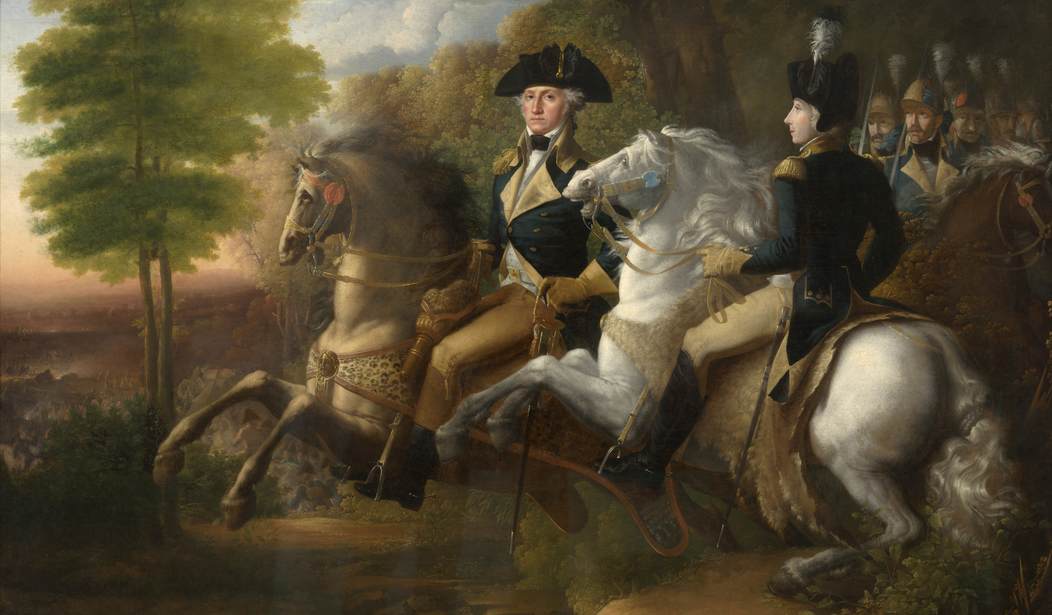
As soon as Washington learned of the movement, he mobilized his army to engage. It was on Sept. 11, 1777, that Washington’s army met up with the British at the Brandywine River. The Americans made some big mistakes on this day. Washington’s reconnaissance teams misjudged Howe’s forces and their positioning. Washington wanted to fight from the high ground on Chadd’s Ford, but fog became a problem. The soupy air provided cover for the British as they attempted to outflank the Americans.
Washington’s right flank was vulnerable, and so as the battle wore on, the Americans had to retreat to Chester, Pa.
Howe’s army pursued the Americans quickly, forcing Washington to send one of his divisions to the advancing British army to “harass” them as a way to slow them down. Brig. Gen. “Mad” Anthony Wayne commanded this division.
Wayne decided to set up his army’s encampment close to the British army on the outskirts to the west of Philadelphia, in a place called Paoli. Soon enough, Howe learned of Wayne’s presence and decided to attack the Americans under the cover of darkness at night on Sept. 20, 1777. They caught Wayne and his men by surprise, leading to the loss of 53 American soldiers and another 71 who were captured by the British and taken prisoner.
This was such a fiasco that Wayne faced charges of misconduct. He then became irate and requested a full court-martial and investigation, which found that while he made certain strategic errors, he was not guilty of misconduct. In the end, the debacle in Paoli had a unifying effect on the Continental Army.
It was billed as “the Paoli massacre,” and the Americans saw this as a wake-up call. As the British army continued to move on Philadelphia, the American Continental Congress vacated the city and escaped to Lancaster and then York, Pa. On Sept. 26, the British army marched into the heart of Philadelphia unopposed.
The occupation
The British then commandeered housing for officers and other members of the army, looting houses and stores throughout the city, generating more deep-seated hatred from the local residents who were not able to escape before the occupation. Howe now had troops in the city and in nearby Germantown.
While the British commanders looked at what they had accomplished as a solid occupying force, Washington saw a divided army, and with that, he saw opportunity.
He decided to attack Howe’s forces in Germantown on Oct. 4, 1777, using a sophisticated four-pronged attack. Once again, fog entered the picture and made things difficult. After some intense fighting, the attacking American army was forced to retreat, a defeat for Washington.
Still, the boldness and brazenness of the attack got people in Europe talking. France took note. On the other side of the pond, the French could now see that Washington’s army was as tough and disciplined as any. Throughout the campaign, Europe’s appreciation for the American war machine only intensified.
In October, the American defeat of the British at Saratoga, N.Y., got people on both sides of the Atlantic starting to believe the Americans could win the war.
At the same time, Howe either was unable or refused to support British Gen. John Burgoyne’s invasion of New York from Canada. This reinforced perceptions that the British did not have the capacity or the resources to suppress the colonial uprising. Soon enough, the French decided to form an alliance with the American revolutionaries.
Howe had logistical problems. Supplies and food were becoming scarce. Washington had been able to prevent the British army from obtaining what it needed from outside the city.
Washington controlled access through three forts and a number of fortifications on the Delaware River. The forts were Fort Billingsport, Fort Mercer, and Fort Mifflin. They were located at key access points to the city.
As winter approached and as basic provisions became more scarce, Howe decided he had to attack Fort Mercer on the New Jersey side of the river. The fort occupied a bluff that overlooked the river. It was a strong vantage point situated just across from Fort Mifflin, which was on Mud Island just south of the city.
Attacking the American forts
Col. Carl von Donop led Hessian forces on Oct. 22, 1777, to attack Fort Mercer. Von Donop had been defeated at Trenton by Washington. He saw this as a chance for revenge. And so, he and a group of 1,200 troops landed ashore late in the day, setting out to scale the fort’s high walls and protruding, sharpened logs on the exterior.
But it wasn’t just the fort. The Hessians had to contend with a mobilized Pennsylvania Navy, which launched barrages of cannon-fire from the Delaware River.
The Hessians found themselves caught between the violent naval attack and insurmountable fort walls. The next day, two British ships, the Augusta and Merlin, caught fire and exploded.
Next, Howe decided to try to take Fort Mifflin. In an odd twist of fate, British Capt. John Montresor had overseen the construction of the fort he was now charged with attacking.
American Lt. Col. Samuel Smith from the Maryland militia was the fort’s commander. He had 200 men in support as the fort took what has been described as the heaviest bombardment of the war. From Nov. 10 through Nov. 15, the British shelled the fort from the river and from land. In the end, the fort was pretty much destroyed. There was no one to mount a defense. Days later, the Americans evacuated Fort Mercer as well, surrendering the waterway’s access point to Philadelphia to the British.
These events preceded a long, cold winter in and around Philadelphia. British troops took up residence in the city, while Washington’s Continental Army established its camp at Valley Forge.
As I wrote about earlier in this series, Valley Forge proved to be transformative for Washington on a personal level, for the army he commanded, and for the war effort.
Related: ‘America 250’ Tuesday: Washington Defeats a Deadly Winter at Valley Forge
Just before the colder months hit, in October, Howe resigned from his position over his complaints that he did not receive the support he wanted and needed to achieve his objectives. He was relieved of his duty in the spring of 1778.
After Howe came Gen. Henry Clinton, who would discover that as the snow melted, the Americans now had an ally in this war effort in the French, and that during those cold months, Washington had trained, reorganized, and shaped his army into an entirely different and fearsome fighting force.
Fearing an attack by the combined forces of Americans and the French, the British left Philadelphia by summer and returned to New York. This set the stage for a new chapter, where the British would increasingly find themselves on the losing end of battles, and eventually, control over America.