Back in the early 1990s, when college girls started getting tattoos, I remember thinking, “That cute little butterfly on your lower back looks sexy now, but in 35 years, it’s gonna be weird seeing old women with trashy tattoos.”
Because, until the 1990s, tattoos were reserved for gangbangers, military members, and other tough guys. Normies didn’t get ‘em. And you certainly never saw ‘em on old people.
It was unthinkable!
Heck, I still don’t have any tattoos: Never felt compelled to give the government another way to identify my body.
But now, they’re ubiquitous. Pretty much everyone I know who’s under 40 has dozens. (Including, alas, facial tattoos. Which was an interesting choice for Mike Tyson, but on everyone else, it looks like you fell asleep at a frat house and someone drew all over your face.)
At this point, it’s exceedingly rare to see a young guy or gal without ‘em.
And just like I thought in the 1990s, there are now millions of middle-aged women with tramp stamps, ankle tats, and tribal tattoos — and it DOES look weird. As their bodies expanded, so did that cute little butterfly.
After 35+ years, it now looks more like an albatross.
Once, in 1999, I spent a week in Cancun with a few college buddies. We visited a bar that sold booze on the bottom level, and had a tattoo/body-piercing shop on the second floor. Tourists would get liquored-up, wander up to the second floor, and stagger away with brand-new “artwork” on their bodies.
True story: A month before my Cancun trip, I completely broke the bone on the top of my middle finger. (Football injury.) Because of the break, the doctors had to insert two metal pins, one through the joint itself — to keep the finger from moving — and another through the top of my finger, just below my fingernail. Because the pins were the same size, it sort of looked like it was all one pin.
So, while I was looking at the photos on the second floor of the Cancun bar, one of the tattoo artists approached me: “Hey mang! You wanna be hardcore? Check this out, Holmes!”
He lifted up his shirt and showed me his (heavily) pierced nipples.
I said, “That’s nothing; look what I did!” and showed him my “pierced” finger. (To illustrate my point, I stuck my Marlboro on the top of the pin and pretended it was a cigarette holder.)
He was VERY confused: “But… how… how did you do that?!”
I looked at him like he was living under a rock: “Dude, everyone in America has these now. Don’t you do ‘em here? Get with the times, bro.”
He actually called over the other employees to examine my middle finger!
It just goes to show that fashion trends may come and go, but foolish branding decisions can last a lifetime. So exercise restraint, discretion, and common sense when branding yourself. Avoid impulsive decisions. Think long-term.
Otherwise, you’ll be staring at middle fingers.
(And for the love of God, DO NOT get tattoos or piercings when you’re drunk!)
That’s not just wise advice for hard-partying Cancun tourists; it’s smart policy for U.S. politicians, too.
PRedictions: The arrest of Maduro will trigger international repercussions — some good, some bad.
On the positive side, the stunningly successful military raid will scare the bejesus out of America’s enemies. No other military on earth could’ve pulled that off.
The U.S. military is in a class of one.
So, if you’re an anti-American agitator in Iran, Colombia, or elsewhere, you’re probably not gonna sleep particularly well for the foreseeable future: Every time there’s a bump in the night, you’re beating a path to your safe room.
It also imperils China’s strategy for circumventing sanctions. Should the ChiComs try to “liberate” Taiwan, they can no longer depend on cheap oil imports from Venezuela.
That’s bad news for a country that imports 75% of its oil.
But on the other hand, if China manufactures a bogus criminal charge against the president of Taiwan, they could point to the Trump precedent as a pretext for invasion. And when the U.S. claims the Monroe Donroe Doctrine for the Western Hemisphere, who’ll stop the Chinese from asserting something similar in the East?
PRojections: As the age of globalism comes to an end, it certainly seems that we’re poised to enter a new era of competing spheres of influence.
After the end of World War II, it was American foreign policy to defend free trade and free markets. (If you’re an idealist, this was because we believe in freedom and opportunity; if you’re a cynic, you might liken it to a bribe: We’ll let you trade freely and prosper economically, in exchange for being on America’s side in the Cold War.)
Either way, the Cold War is now over — as is the age of globalism. They had a nice, long run, but their day is done.
And more likely than not, they’ll be replaced with competing spheres of influence.
The U.S. is solidifying its spheres of influence in North and South America. China has a vested interest in the East. France and Turkey have the geography and resources to be regional power-players, too.
Under the old, pre-World War II rules, empires tended to limit their trade to their spheres of influence, because traveling elsewhere required gunboats and military reinforcements.
Post-World War II, anyone could travel anywhere. And so, they did.
But with the U.S. no longer serving as the global police, it’s unlikely that “free trade” as we now know it can survive.
Interestingly, no other country on earth is as vulnerable to the collapse of free trade as communist China. Not only does it import 75% of its oil, but it also imports more food than any other country. Additionally, with its rapidly aging demographics — China has more people aged 52 and over than 52 and under — it lacks the internal consumption base to keep its own economy afloat.
Without exporting millions of products all over the world — or importing food, fertilizer, and oil — China risks complete and total collapse. Despite their saber-rattling rhetoric, China depends on American ships patrolling the ocean, guaranteeing China free and open access to the seas. Its own navy can’t do it, because only 10% of Chinese vessels can travel more than a thousand miles.
China probably can’t survive as a modern country without America’s help.
Which means, control of the Asian Sphere of Influence might be up for grabs in the next few decades, too. Japan, South Korea, and the Philippines will be closely monitoring the situation.
PRaise: To the United States Armed Forces. That was a helluva job, boys. Very impressive.
Well done!
PRedators: Anyone with AT LEAST half a brain understands three things about Iran:
- It’s in America’s national interests for the Iranian people to overthrow the anti-American mullahs and establish a new, pro-Western government.
- The Iranian mullahs don’t care about human rights, nor do they have any qualms over murdering their own people.
- Whereas the Iranian mullahs have a vested interest in beating the protesters into submission, it’s in America’s national interest to encourage them to continue protesting.
Which was why President Trump warned the mullahs not to harm the protesters, or the U.S. military may intervene:
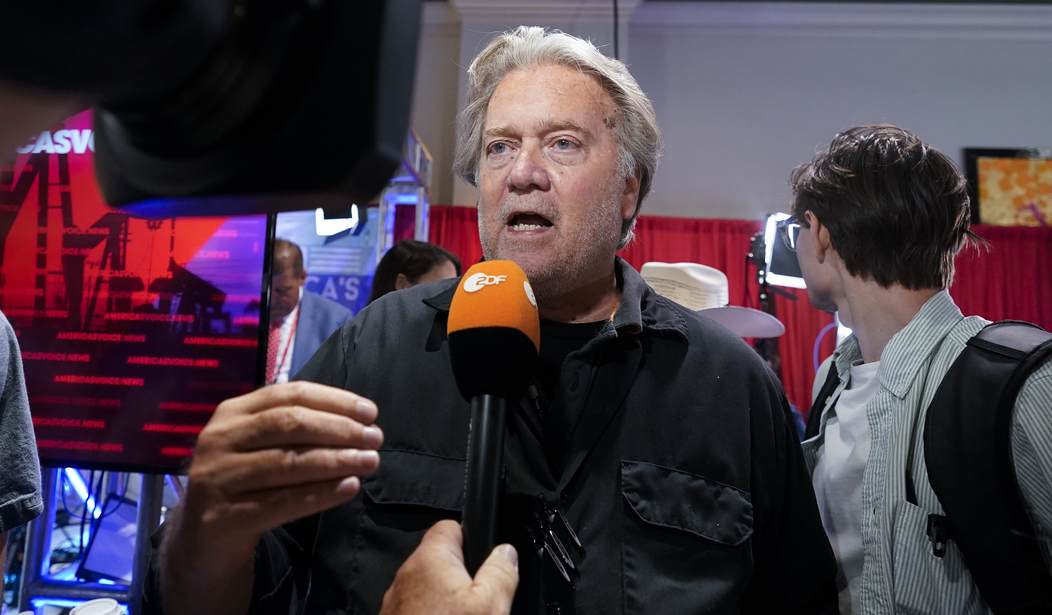
You’d think that supporting the Iranian protesters would be a noncontroversial position. Yet self-appointed “America First” leaders like Steve Bannon have compared President Trump’s tactics to… Hillary Clinton and Samantha Powers?!
MAGA media personality and former White House chief strategist Steve Bannon compared President Donald Trump to Hillary Clinton in a scathing attack on his old boss on Friday.
During a discussion about Trump’s threat to use the U.S. military to come to the defense of Iranian civilians protesting against the brutal Islamist regime in charge of their country, Bannon expressed his strong disapproval.
“Aren’t people teasing right now that Samantha Powers [sic] and Hillary Clinton must somehow have gotten invited to the Mar-a-Lago New Year’s Eve celebration because the president coming out today saying, ‘Hey, we’re locked and loaded,’ isn’t that straight from the Samantha Powers and Hillary Clinton playbook?” asked Bannon.
No, Steve. When Hillary Clinton was secretary of state under President Obama, that wasn’t “straight from their playbook” at all.
Instead, their “playbook” gave Iran billions in unmarked U.S. bills, relief from sanctions, and a legal pathway to nuclear weapons.
It’s odd how people like Steve Bannon keep claiming they want regime change in Iran, but then object to every policy that increases the probability that the Iranian people will rise up and overthrow the mullahs. It’s almost like they’re (gasp!) completely full of [feces]!
But y’know who else strongly objects to regime change in Iran?
The other Islamic dictators in the region, including the ones in Qatar.
For the umpteenth time, “America First” influencers keep pushing for “Qatar First” policies. It’s a key reason why Qatar (and Saudi Arabia) were the two biggest PR winners of 2025.
And it’s why we can’t trust certain MAGA-aligned influencers anymore.