On Saturday, Feb. 28, 2009, four friends went on a fishing trip in Tampa Bay. One played college football at the University of South Florida; two others — defensive end Marquis Cooper and linebacker Corey Smith — played in the NFL. A fourth friend, ex-USF walk-on Nick Schuyler, accompanied them.
After their boat capsized in the middle of the ocean, Nick was the only one who survived.
It was a stupid, avoidable accident. In an earlier boating trip, they had lost an anchor that was ensnared on ocean debris. So, when their new anchor got stuck, they tried to free it by gunning the engine.
Instead, their boat flipped over. Three men died because they didn’t want to pay $100 for a new anchor.
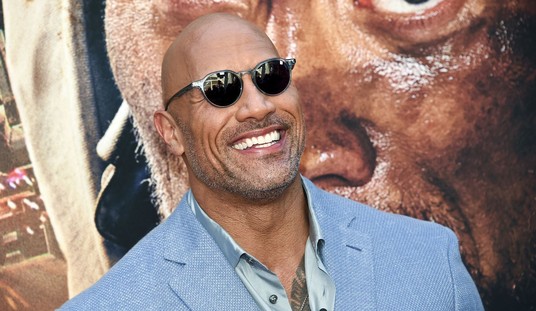
Nick’s story is now in theaters across America. (Starring Shazam actor Zachary Levi as Nick, even though Nick was in his early 20s and Levi is now in his mid-40s.) But if you think that casting choice was curious, consider this: For a short while, Dwayne “The Rock” Johnson was attached to the movie. (Johnson is eight years older than Levi and half-black, half-Samoan; Nick was a 24-year-old white college kid.)
Well, that’s Hollywood for ya.
I met Nick for the very first time about a week after he was rescued on March 2 by the U.S. Coast Guard: They found him desperately clinging to the engine mount of the upside-down boat, suffering from severe hypothermia. The water was just 60 degrees; Nick had been stranded for 46 hours. According to the Coast Guard, he was a few hours away from death.
But that wasn’t the extent of his suffering.
Recalling all the details from 16 years ago is tricky; my apologies to Nick (and my ex-PR colleagues) if I’m misstating any of the details. But here’s how I remember it:
Nick’s mom worked for a Tampa-area attorney. The boating tragedy was frontpage news in Tampa Bay and all over the country. Even as Nick was recovering in a hospital, the gossipmongers were out in full force.
Speculation was running rampant.
Everyone knows that NFL athletes are ultra-competitive, super-fit warriors; they’re the elite of the elite. It boggled the mind that they would simply succumb to the cold water. Surely, there was more to the story!
Almost immediately, there were whispers of foul play.
At the time, hit TV shows like Law & Order were airing episodes “inspired by true stories.” Not based on true stories; inspired by them. It’s a subtle word-change, but the difference is significant: A story based on true events owes a greater fidelity to the truth, whereas an “inspired” story can be almost entirely fictionalized.
That was Nick’s fear: He didn’t want Law & Order to tell the world that he murdered his best friends.
It would’ve been too much for his heart to handle.
Long story short: Nick’s mom’s attorney reached out to my PR firm. A few days later, my boss (and friend) Jack Glasure and I met Nick in his apartment.
And in all honesty, Nick Schuyler looked guilty as sin.
Not because he did anything wrong. I want to be clear: There’s NO evidence of any foul play whatsoever, and I’m completely convinced Nick is innocent. I’m not insinuating anything like that.
To me, he looked guilty because he didn’t understand why he survived and his friends didn’t.
Nick is in phenomenal shape. He’s buff, strong, and worked as a personal trainer. If anyone could survive a capsized boat, it was him.
But then again, his friends were also in phenomenal shape. One of them, Will Bleakley, had played in a pair of USF bowl games; the other two, Marquis Cooper and Corey Smith, played for the Oakland Raiders and Detroit Lions, respectively. They were all large, powerful men — and very familiar with cutthroat physical competition.
So why did Nick live and his friends die?
Looking back on it, Nick told me that he suspects being sick helped him. He was feeling cold that morning and wore extra layers of clothes. Perhaps that was the difference between living and dying.
Or perhaps fate works in ways we cannot understand.
Nick also told me that his motivation for surviving was his mother: He imagined her anguish and heartbreak over losing her child, so he fought like hell to survive.
But his friends had mothers, too.
None of the answers were satisfying. Instead, they raised more questions… and more contradictions.
I saw Nick at the Tampa premier of Not Without Hope last week. It was the first time we had gotten together since a book-signing event in 2013(ish). I was surprised by how much older he looked.
He’s still in great shape. But when we first met in early 2009, he was a 24-year-old kid who was shellshocked and reeling. Now, he’s a confident, married man in his 40s.
And he became a daddy to a little boy in 2017.
Survivor’s guilt is a strange thing: Rather than being grateful you lived, you’re confused, scared, and remorseful — even though you didn’t do anything wrong.
The human mind is a pattern-recognition machine. It’s constantly searching for correlations and connections in the chaos, striving to make sense of the senseless.
Even when the pattern doesn’t exist.
So, we cope. We persevere. We wipe away our tears, put one foot in front of the other, and try our damnedest to continue our journey.
God doesn’t always give us answers. Instead, He gives us something else: hope.
Not Without Hope is now playing in theaters. I hope you check it out.