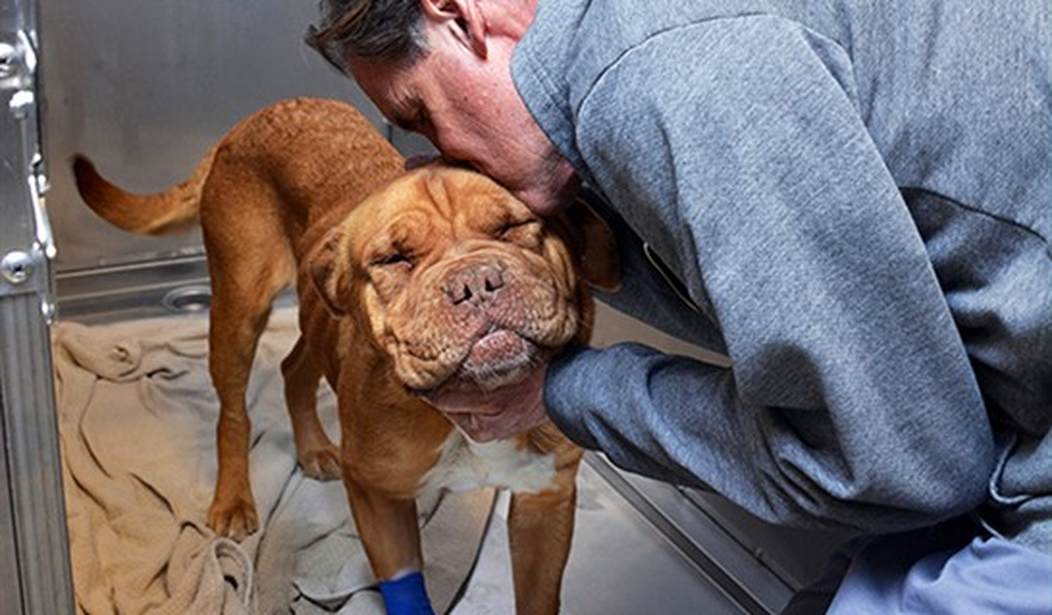

A few days ago, the Atlanta Humane Society posted on social media a picture of a woman hugging a little black dog as if her life depended on it. The joy on both of their faces was obvious. The caption made the picture even more meaningful.
"I’m Venus, and I want to tell you about the night my mom and I left," it began, from the point of view of the dog. "We had both been hurt and she couldn’t take it anymore. So she grabbed me and we ran. No plan. Nowhere to go. Just her, me, and a car to sleep in. That car became our home, but my mom wanted to fight for a better future for me. That’s when she reached out to the Pets in Crisis Support Program."
It goes on to explain that Venus was placed in a foster home for a short period of time while her "mom" was able to secure a place to live and get back on her feet. Now, they've reunited and can continue their lives together.
That's what the Atlanta Humane Society's Pets in Crisis Support Program does: "provides temporary foster housing to pets of families who are facing the crisis of housing instability, domestic violence, or a health emergency for up to 90 days so these pets can be reunited with their families." During that time, the Atlanta Humane Society "provides all veterinary care, medicine, food, and supplies needed for foster animals, as well as a supportive network of other foster parents and volunteers."
I love this for so many reasons. As someone with pets myself, I've always gone above and beyond to make sure they're safe and happy, but I know life can change at any moment. The idea of being separated from them — or knowing they're out there wondering where I am — breaks my heart.
Several years ago, I used to go to our local government-run animal shelter and take pictures and write up little stories about the adoptable dogs and cats, hoping it'd help them find a home, and while that work was fulfilling, it was also devastating. I saw people turn in their pets for the most ridiculous of reasons, but I also witnessed people who had limited options.
The old veteran on a fixed income who was having surgery and had no way of taking care of his two dogs while he recovered in a rehab facility. The young man whose job suddenly had him going overseas for a few months and he wasn't sure what to do with his dog. The young woman who left a bad relationship and suddenly found herself homeless and didn't know what to do with her cat while she stayed in a shelter temporarily. The woman whose dog had an injury, and she'd just lost her job and couldn't afford the vet bill.
What was even worse was coming back in a week or two and noting that the dog or cat from these situations had been euthanized.
None of these people took the decision to give up their pets lightly, but they felt like they had no other choice. There were loud, sobbing tears and hugs; carefully written notes about the animals' favorite foods and toys; and final goodbyes so gut-wrenching, you thought about them for weeks.
But what if there were more programs to prevent this?
I know there are many others out there, and they're wonderful, and they're growing. In addition to temporary foster placement, for example, there are organizations that provide help with vet bills, offer low-cost spay and neuter programs, provide free or cheap vaccines, or keep a dog or cat food pantry for pet owners down on their luck,
They prioritize reunification and support rather than force surrender, like many taxpayer-funded cold, expensive high-kill shelters do.
In 2024 alone, 5.8 million pets ended up in shelters. Around 607,000 of those animals were euthanized. Most shelters and organizations say that "lack of access to affordable veterinary and behavioral services as well as affordable pet-friendly housing were common reasons for dog relinquishment." Studies have shown that these types of community-oriented programs can help prevent all of that — they just lack resources and support.
But I'm not just saying this because I have a bleeding heart for animals. They also save money. Between 2016 and 2020, United States shelters actually saw a 23% decrease in intake and a 56% decrease in euthanasia, which is largely attributed to programs like these. Providing someone with a $30 bag of dog food or neutering their cat at a low rate costs a lot less than housing, feeding, vaccinating, and paying staff to care for an animal who will eventually be euthanized, which requires more money for drugs and disposal.
Other studies have shown that, for example, Trap-Neuter-Vaccinate-Return (TNVR) programs for feral cats would cost taxpayers $9 billion annually. That seems like a lot, but catching and euthanizing feral cats, as many municipal shelters do, costs taxpayers $16 billion per year. It's cheaper, more humane, and, in the long run, it can lead to even more cuts.
There's also the human aspect. Having a pet by your side is good for your physical and mental health in many ways, and one of those ways is stress reduction. Losing a pet when you're already in the midst of a crisis or stressful situation falls under the category of "stacked grief" or "cumulative grief" — suffering another major loss when you're still grieving the first one — which is more likely to worsen that person's overall outcome and lead to issues like PTSD and depression. Vulnerable groups, like the elderly, people with chronic health issues, and domestic abuse survivors, are typically more resilient when they have a pet. Many people even avoid seeking help because they fear losing their pets.
Creating more programs like this would benefit so many people in communities across the country, but they would require the people within those communities to get involved. My research shows that government-run shelters often use outdated models that don't really benefit anyone, but when they work together with private nonprofits, it not only produces the best outcomes, but it saves the most money. Funding challenges will always exist when it comes to animal welfare, but programs that provide support rather than force surrender can stretch resources further and create healthier, happier lives for humans and animals.