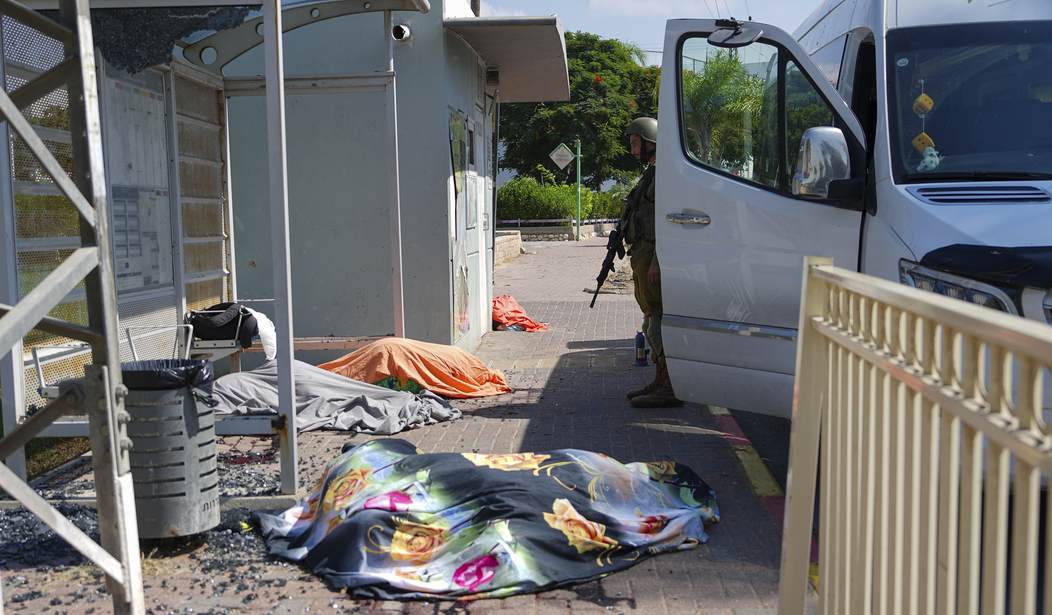

It's unimaginable. Dawn breaks over the Nova Music Festival. Kids have been drinking, smoking pot, and even tripping on LSD and other hallucinogens all night, when Hamas terrorists swoop down on the venue in paragliders. Others show up in "technicals": pickup trucks with machine guns mounted in the truck bed.
It's "unique among mass casualty attacks," according to PTSD researchers treating the hundreds of survivors of the festival. Did the drugs play a role in the trauma? And can the same drugs play a role in the victims' recovery?
Two-thirds of the NOVA survivors that the organization SafeHeart is treating have been diagnosed with PTSD. That's more than three times the rate of PTSD diagnoses compared to any other trauma. The researchers, doctors, and clinicians who have been treating these walking wounded since October 7, 2023, gathered at the Peres Center for Peace and Innovation in Jaffa on November 11 for the second annual conference, "to compare what they have learned, even as SafeHeart’s leaders worry that funders have moved on," observes eJewish Philanthropy (eJP).
“There has never been a trauma under such drugs like this. A mass-casualty event with drugs at the center of it,” said Efrat Atun, SafeHeart’s CEO.
The attendees were wrestling with several questions: "Did being under the influence of a powerful psychedelic like LSD during the attacks make it more or less likely that the survivor will develop PTSD? What about MDMA? What about alcohol?" asks eJP.
There is a growing body of evidence that psychedelics can be used as part of the treatment of PTSD. Clinical research shows promising but preliminary evidence that psychedelic-assisted therapy can significantly reduce PTSD symptoms, particularly in patients who have not responded to standard treatments. Rather than acting as standalone medications, these substances are studied as tools to enhance structured psychotherapy.
SafeHeart treats survivors and studies them at the same time, combining research and clinical practice as Israelis confront trauma on a scale they have never known.
“Something has changed,” said Avital Diment Litvin, who supervises therapists at SafeHeart and treats patients there. “In Israel, post-[trauma] is not underneath the surface. That changed after Oct. 7.”
The trauma now spans very large civilian populations, she said, and the therapists treating survivors are sometimes traumatized themselves, all during what she called the longest war Israel has known.
“Many children in Israel, more than ever before, suffer from anxiety,” she said. “On a day-to-day basis, people are much more anxious, edgy, sometimes aggressive.”
To understand that population, SafeHeart partnered with University of Haifa researchers, who are tracking 1,268 festival survivors through surveys, physical measurements and cognitive testing, with new findings at SafeHeart’s second annual conference yesterday.
The team laid out its approach in “The Nova Protocol,” a study design posted to the preprint server medRxiv in August and not yet peer-reviewed. The project is led by Roee Admon, who heads the university’s Stress and Psychopathology Research Lab, and Roy Salomon, a Haifa professor who is also SafeHeart’s head of research and a member of its board. Beginning in the first weeks after the attack and running for about two years, it tracks survivors through wearable sensors, saliva samples, brain scans and interviews, alongside a comparison group.
The conference, “Trauma, Psychedelics and Therapy: The Power of Community,” placed cutting-edge research directly in front of those who could use it the most. "Sessions ranged from psilocybin-assisted PTSD treatment to support groups for parents and mothers of survivors," says eJewish Philanthropy. "A high-tech company, which asked not to be identified publicly, held its own conference at the center the day before and donated to SafeHeart."
“Think about such a large cohort of survivors that all of them experienced the same event on the same day, and you follow them over time,” Nova Protocol chief Admon said. “That enables us to ask many questions about dynamics over time.”
SafeHeart CEO Atun says, “We have a much higher percentage of people with PTSD that are not actually getting better,” she said. “We have a higher percentage of people that have later onset. … That’s why in SafeHeart, what we’re directing at is long-term therapy.”
"It’s not a sprint; it’s a marathon,” Atun said. “We are here for the long term for anyone that needs us.”
SafeHeart executives like Atun fear that "donor fatigue" may be setting in. "There is more of a focus on the North and South [wars with Hamas and Hezbollah] and less on survivors, and it’s worrying and difficult,” Atun said. “The need for support for survivors goes up with time; some of them have worsening situations.”
The Israeli government is stepping up support, but it may not be enough.
“As an organization founded without a budget, we don’t know if there will be money,” she said, adding: “I’m worried for the future. The needs are growing, and people think the survivors are in the past, but actually their needs continue to grow.”
Long-term, healing for many survivors is a painfully slow process, even with the addition of psychedelics. The entire nation of Israel suffered on October 7. Those wounds will not heal anytime soon.
Also for our VIPs: What Near-Death Experiences Look Like: Study Uncovers Geometry and Color in Final Moments