
My grandmother was born in the 19th century in a tiny village in County Clare, Ireland. She was fastidious, as most immigrants were at that time. They may have lived in the slums, but that didn't stop these women from caring for their one- or two-bedroom flats as if they were the Taj Mahal.
That's why I'm sure she'd be aghast at what the world has done to outer space, especially in near-Earth orbit. All the spacefaring nations treat the pristine environs of outer space like a garbage dump. Every rocket launch leaves behind all sorts of garbage, such as paint chips, bits of a booster rocket, and nuts, bolts, and other crap.
It would all be harmless curiosities except the flotsam and jetsam is moving at the orbital velocity of 17,500 mph. That could end a spacewalk real quick or even blow up a satellite if it hits the wrong spot.
It's a problem that's only going to get worse. Much worse. NASA is currently tracking about 27,000 bits of space junk that are big enough to show up on radar. But there are hundreds of thousands of smaller bits that make some orbits a crapshoot.
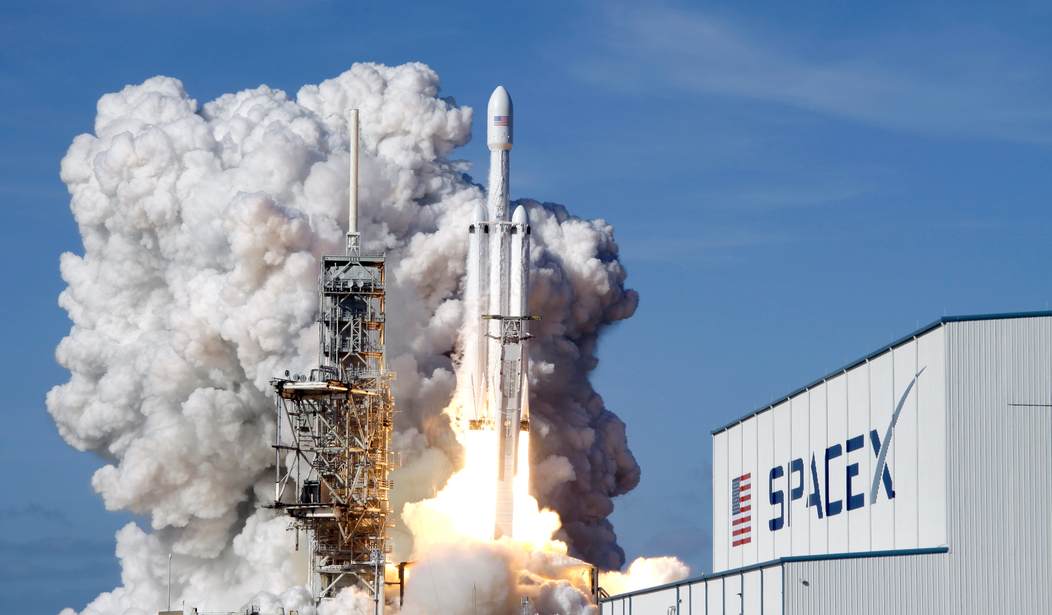
Even in near-Earth orbit, space is immeasurably vast, and the objects NASA is concerned most about are extremely unlikely to hit a valuable satellite or a human being. That's now. But what happens when Elon Musk and SpaceX begin sending not a couple of dozen launches but several hundred launches a year? And what of Elon Musk's plan to put a million data center satellites in orbit?
A couple of dozen other space companies are planning multi-launch schedules, and Russia, Japan, the EU, and China are all going to deploy their own satellites and vehicles.
The time is now to get out in front of this massive problem before catastrophe strikes.
“The amount of material is stacking up,” says Mariel Borowitz, an associate professor at Georgia Tech who specializes in international space policy and security. She calls it "decluttering" (my grandmother would be pleased with that) and says it's a multi-level, multi-nation problem that needs to be addressed.
Who owns the clutter? Some of that debris is far from its original satellite or launch vehicle. If NASA puts a satellite into orbit, Borowitz explains, “it belongs to the United States even if it breaks into pieces."
"The same holds true for any company or government. If you wanted to tidy up someone else’s junk, [Borowitz] says, you still wouldn’t have the right to do it," writes Popular Science's Tatyana Woodall.
There's no cheap way to declutter the massive amount of junk already in orbit. But if you're looking for a pie-in-the-sky investment, my money is on any company with a good idea for decluttering space.
Starlink, on the other hand, reported more than 207,000 propulsive maneuvers in the six months to the end of May, though these are largely automated and involve satellites with more fuel-efficient electric propulsion.
Still, SpaceX’s approach “requires a significant investment in engineering for sustainability and performance,” SpaceX vice president of satellite policy David Goldman told the FCC July 1.
“Not only must SpaceX invest in satellites that are more capable and perform more maneuvers that carry considerable cost to SpaceX, but unlike other operators with less emphasis on sustainability, SpaceX is willing to deorbit satellites based on long-term reliability forecasts, rather than waiting for failure of critical subsystems.”
Preemptively deorbiting a troubled satellite before a critical component fails can prevent creating more debris, but it could also cut off revenue earlier than necessary.
One Japanese company, ELSA-d, wouldn't clean up any debris already in orbit. Instead, "its makers are banking on future satellite engineers to incorporate magnetic docking plates into their designs—and pay for ELSA-d’s assistance when the time comes," reports Space News.
This suggests some kind of regulatory regime that would force companies to adopt the docking plates design. It's a pretty good bet that companies are going to be moving too slowly, leaving it to the government to put their foot down.
One of the best-named space companies, Rogue Space Systems, is building a 56-foot-wide plasma-powered vehicle they call "Orbot Fred." "Four robotic arms will grasp and move a maximum of 700 pounds of garbage away from other satellites’ orbits, then send the haul to burn in Earth’s upper altitudes," says Space News.
The U.S. and Japan aren't the only nations working on a solution to the decluttering problem.
Sweeper is actually one of the oldest proposed missions meant to help keep space collision-free, with the original plans dating back to 2010. Its creator, the Russian rocket company Energia, hasn’t shared any updates on the project, so there are still question marks on all the details. Energia plans to assemble and test the vehicle by 2023. The pod, which might run on nuclear power, will have the capacity to collect and destroy at least 600 defunct transmitters over a 15-year life span. It’s unclear whether it would eventually turn into orbiting junk itself—or whether another Sweeper would need to bring it back to Earth.
Still to be addressed are the toxic vapors left over after launches. It's hoped that nuclear rockets and different fuels will alleviate another growing problem: air pollution and ozone layer depletion from so many launches.
There are no major problems so far that would bring space ventures from several nations to a screeching halt. All are manageable with a little care and cooperation from the interested powers. Perhaps we'd be better off getting our 19th-century grandmas on the problem. They'd fix it right up after knocking a few heads together and feeding everyone a steaming helping of Irish stew.
Also for our VIPs: This Month, Voyager 1 Will Reach a Spectacular Milestone: One Light Day From Earth