




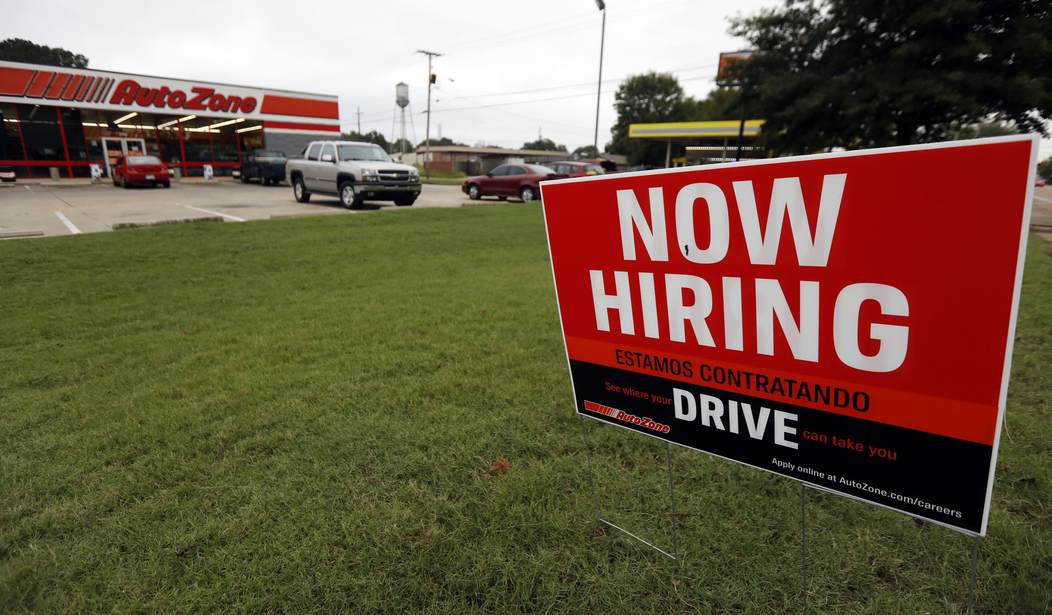
The jobs report reflects a growing disconnect between the public's perception that AI will be bad for the economy and their personal job situation, and the reality that AI is driving a genuine economic boom.
The jobs picture brightened considerably in October.
"Employers added 165,000 jobs last month, the Bureau of Labor Statistics reported Friday, and the unemployment rate dropped to 4.1 percent," reports The New York Times. "Job gains for August and September were revised upward by a total of 84,000 positions. Average hourly earnings rose 3.1 percent compared with the same time last year."
Layoffs are at historically low levels. Employees have also been reluctant to leave their jobs. Does this mean that the doom and gloom predictions about AI were wrong?
Naysayers believe it's premature to say one way or another what AI's effect on jobs will eventually be. But we know that the AI buildout underway, where trillions of dollars are being spent by businesses, has initiated a genuine economic boom.
The latest report released by the U.S. Bureau of Economic Analysis (BEA) showed real gross domestic product (GDP) increased at an annualized rate of 3.4% in the third quarter of 2026. The 3.4% growth rate beat consensus expectations (which hovered around 3.2%) and marked an acceleration from the 2.2% growth recorded in the second quarter.
"The Job Openings and Labor Turnover Survey this week showed that the quits rate rose in September, a sign that workers may be feeling more confident in their ability to get new jobs, The Times reports. That may mean a boost in hiring is on the way.
Another positive indication that reflects AI's impact on the overall economy is the surge in data center construction that Democrats and some Republicans want to shut down. Fears of that possibility drove stocks into the ground with a massive sell-off on Wednesday.
But even Democrats won't kill the goose that lays the golden eggs.
Skanda Amarnath, executive director of Employ America, estimated that the spending categories most tied to the AI boom contributed to “well over 7.5% of GDP.” And it’s still growing at a rapid clip: AI-related capital expenditures drove 13% of the growth in total nonresidential business fixed investment from the second quarter to the third quarter, according to Abiel Reinhart, a senior economist at JPMorgan Chase.
Investors may settle down over the next few days, concluding that whatever restraints might be coming on AI, particularly at the state level, will merely result in a mild slowdown. But the jitters aren’t likely to go away.
“This is a moment for getting policy right,” said Adam Kovacevich, founder and CEO of the center-left industry coalition Chamber of Progress. Kovacevich noted that many Democrats don’t support a total shutdown of data center construction. “American AI companies are powering the stock market, people’s retirement accounts, their pensions. The data center buildout is putting a lot of Americans to work.”
So what impact has AI actually had in real time on the job market?
White-collar industries like accounting, legal services and finance mostly added jobs in October, but their growth has been decidedly weak over the past few years. The information sector — a broad category that includes much of tech but also media companies — has been cutting jobs steadily since late 2022. Microsoft last week announced that it was offering buyouts to tens of thousands of employees, making it the latest tech giant to cut jobs.
Economists are cautious about attributing that softness to A.I., however. Other forces, such as high interest rates and shifting demand patterns following the pandemic, could also be playing a role. And despite announcements like Microsoft’s, layoffs remain low, even in white-collar sectors.
There are some indications that AI is displacing entry-level workers. But that could be a reflection of massive increases in minimum wages at the state level and the fact that the low rate of turnover is keeping entry-level jobs from opening up.
"The impact of A.I. is showing up clearly in one place, however: blue-collar jobs," notes the Times. "The data center build-out is helping to prop up employment in the construction sector, even as high interest rates have led to a sharp pullback in home building."
In fact, the irony is that electing all these Democrats may lead to a slowdown in all aspects of the AI build-out that would bring economic growth to a screeching halt. And Trump knows exactly where the blame will lie.
Some economists and AI prognosticators still predict an AI bubble that will burst when sky-high profit expectations aren't met and investment in the AI buildout slows dramatically. That may not happen, as investors are becoming more realistic about the near-term prospects for AI-driven profits.
Businesses thrive on certainty. The current business climate is so uncertain that, as my grandfather used to say about arriving in the U.S. in the 1880s, "It's good to be shifty in a new country."
Those who recognize opportunity and adapt quickly will thrive.
Exclusively for our VIPs: Most Consciousness Scientists Say AI Is or Could Become Conscious
Editor's Note: President Trump is leading America into the "Golden Age" as Democrats desperately try to stop it.
Help us continue to report on President Trump's successes and combat Democrats' lies. Join PJ Media VIP and use promo code FIGHT to receive 60% off your membership.



Join the Conversation
VIP members get the ability to comment on articles.