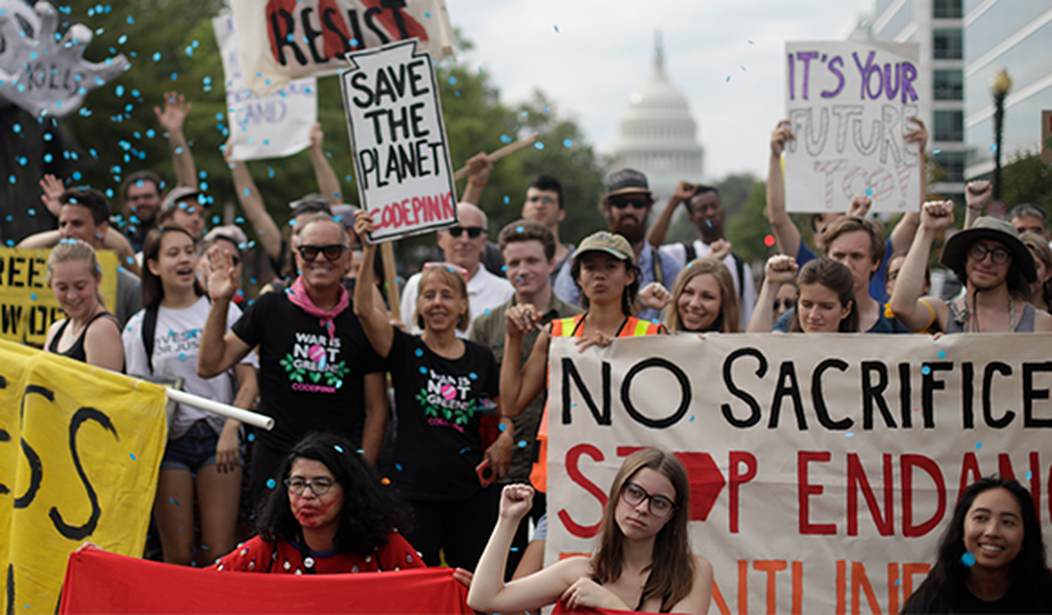

Thank goodness, it's no longer cool to be an unquestioning bot when it comes to climate change. That doesn't stop some in the media and even some climate researchers from beating a dead horse about climate change being responsible for, well, everything.
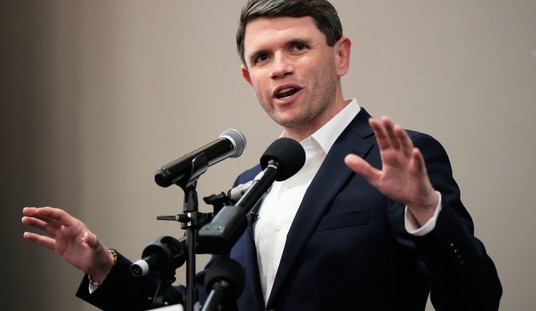
Roger Pielke, Jr., writes about "the messy and complicated places where science meets policy and politics." He made his name in the early 21st century by questioning scientific dogma about climate change. Pielke holds degrees in mathematics, public policy, and political science. He spent over two decades as a professor in the Environmental Studies Program at the University of Colorado Boulder and served as a scientist at the National Center for Atmospheric Research (NCAR). He's currently a senior fellow at the American Enterprise Institute. His climate research centers on natural disaster trends, extreme weather economics, and climate policy evaluation.
In other words, he's no dummy.
Pielke is well known for his research correcting how the public, media, and some scientists analyze financial losses and physical damage caused by landfalling hurricanes. His central argument revolves around the distinction between climate-driven impacts and demographic factors.
Media reports frequently point to "record-breaking" dollar totals from recent hurricanes as direct evidence that climate change is causing worse storms. Pielke points out that unadjusted dollar damage is a flawed metric because society builds drastically more valuable infrastructure, housing, and commercial property along coastal regions than it did decades ago.
Naturally, when Pielke first started pointing out this obvious fact, he was immediately branded a "climate change denier." It got worse for his critics when he pioneered a methodology known as "damage normalization." This method adjusts historical hurricane loss figures for inflation, local population shifts, and increases in local wealth/property values. It estimates what past storms — like the 1926 Great Miami Hurricane or 1969's Hurricane Camille — would cost if they hit today's built environment. Climate change groups and the media have now adopted the methodology to describe storm damage.
Once hurricane damage is properly "normalized," the upward trend in historical disaster costs disappears. He shows that the primary driver of rising storm damage costs is concentrated coastal wealth and other societal factors, not increased hurricane frequency or intensity.
Pielke is now worried that the dummies in climate research are given free rein to spout their "climate change theory of everything" and not be corrected by a pliant, and mostly ignorant media.
"The notion of climate change has collapsed our discussions of complex environmental-social-political issues into a cartoonish characterization of 'climate change' as an all-purpose causal agent responsible for just about everything that people don’t like — Wildfires? Climate change. Immigration? Climate change. Jellyfish? Climate change," Pielke writes in his Substack, The Honest Broker.
He adds, "The climate does change, and humans influence the climate. Neither Sarewitz nor I here at THB challenge these basic realities — they are not the problem." Dan Sarewitz, writing in Slate.
“The real problem is . . . the hysterics . . . who insist, often in the name of science, that all the suffering to come will have only one true cause, and that redemption can be achieved only by following one true path," Sarewitz wrote. "No matter that long and sad human experience teaches us where such absolute orthodoxies lead."
This is climate change as religious orthodoxy. It's the doctrine of sin and penance: The framework often positions human industrial activity as an original "sin" against nature, where carbon reduction acts as secular penance or ritual purification to avoid catastrophe. When catastrophe strikes, like hurricanes, tornadoes, and even wildfires, the planet must put more effort into the "penance" of reducing carbon.
Climate variables are largely ignored, especially when they conflict with observable facts.
With such a trend in a climate variable, it is common to see explanations like the following from authoritative sources (emphases added):
European Commission: “Floods are the most common and most costly natural disasters in Europe. They are becoming more frequent due to climate change. . . ”
Nature: “The frequency of the most persistent heatwaves is increasing rapidly because of climate change.”
Canadian government: “Climate change is making natural disasters more severe, more frequent, more damaging and more expensive.”
npj Natural Hazards: “Floods are intensifying globally, primarily due to climate change.”
As evidence piles up that debunks some climate change mythology (icebergs melting away completely, hurricanes increasing in intensity, cats and dogs, living together mass hysteria!), some researchers make a pathetic effort to dig in their heels and double down on their flawed hypotheses.
Pielke points to a July 2026 report by the National Academies of Sciences, Engineering, and Medicine (NASEM), "Attribution of Extreme Weather and Climate Events and Their Impacts," and points out that NASEM sees climate change as a causal agent for many issues where the actual reason for these weather events is unclear or unknown.
“Climate change increased the intensity of the rainfall” (flooding in Germany 2021, p. 37);
“Climate change caused snowfall to increase in northern Spain... but decrease in southern Spain” (Storm Filomena, 2021, p. 105);
“Increased rainfall due to climate change caused a 5–19% increase in flood volume” (Cyclone Idai, Mozambique, p. 107);
“Climate change led to an increase in the maximum wind speeds by approximately 7 percent” (Hurricane Melissa, p. 108).
"Given that the IPCC has not claimed to have achieved detection for flooding, snowfall, or tropical cyclone maximum wind speeds, I found it odd that 'climate change' was claimed to have such a large causal effect on these individual events, given also that the IPCC definition of 'climate change' does not characterize it as a causal agent," Pielke observes.
You know you're off the deep end when even the Intergovernmental Panel on Climate Change (IPCC) doesn't go as far as you in blaming climate change for everything.
"Climate change" has become shorthand for the lazy reporters, ignorant researchers, and those true believers who worship at its altar and make pilgrimages to its shrines. The science and politics have become so mixed together that separating them is nearly impossible in many cases.
Pielke includes the IPCC Fourth Assessment Report (2007), which describes the detection and attribution of climate change. He concludes, "I can’t help but read this — and you should also — and conclude that we were once much smarter about these concepts."
Perhaps Pielke should write a "Climate Change For Dummies" handbook.
Editor's Note: The mainstream media continues to gaslight, spin, and lie about President Trump, his administration, and conservatives.
Help us continue to expose their left-wing bias by reading news you can trust. Join PJ Media VIP and use promo code FIGHT to receive 60% off your membership.