
Environmental and scientific organizations are uniting to try to stop SpaceX's Elon Musk and Blue Origin's Jeff Bezos from placing one million data center satellites in low Earth orbit (LEO).
Musk and Bezos both have considerable stakes in AI companies, with Musk's SpaceXAI and Bezos's Prometheus among the most prominent companies in the industry. The duo believes that with growing opposition to Earth-based data centers creating a computing bottleneck, the optimum solution would be to build data centers in space.
But a million of them? The coalition of opposition groups sent a new petition to the Federal Communications Commission (FCC), demanding a review of their impacts.
"Allowing a million orbiting data centers with no environmental review isn’t just irresponsible — it’s reckless," Tim Whitehouse, executive director of Public Employees for Environmental Responsibility, said in a statement on July 8. "The potential for these projects to degrade the atmosphere with pollution and debris and harm wildlife needs to be carefully considered before licensing these projects."
There is no legal or regulatory requirement for FCC to review the plan. The EPA might be interested, but it's doubtful it would have jurisdiction. The FCC is required to comply with the National Environmental Policy Act (NEPA), however, the FCC historically relies on a "categorical exclusion" rule that assumes satellite licensing generally has no significant environmental impact on Earth.
It all depends on whether you take Musk and Bezos at their word about one million data centers in orbit. Stephen Green has thoughts on that.
The question isn't, "Can Elon Musk really put one million data center satellites in orbit?" The correct question is, "Can he put enough data center satellites in orbit at a low enough cost to generate positive cashflow?"
It's all about the money, honey — because once you're making more than you spend, the sky's the limit.
Literally, in this case.
And while one can say for sure whether Musk can make the economics work, this is an area where SpaceX enjoys hard-won expertise. You might have heard of a little space-based internet service provider called Starlink.
The first operational batch of 60 satellites went up in May 2019, and Starlink beta service went live near the end of 2020 with fewer than 1,000 in orbit. By the end of 2024, with around 6,400 satellites, Starlink turned cash flow positive.
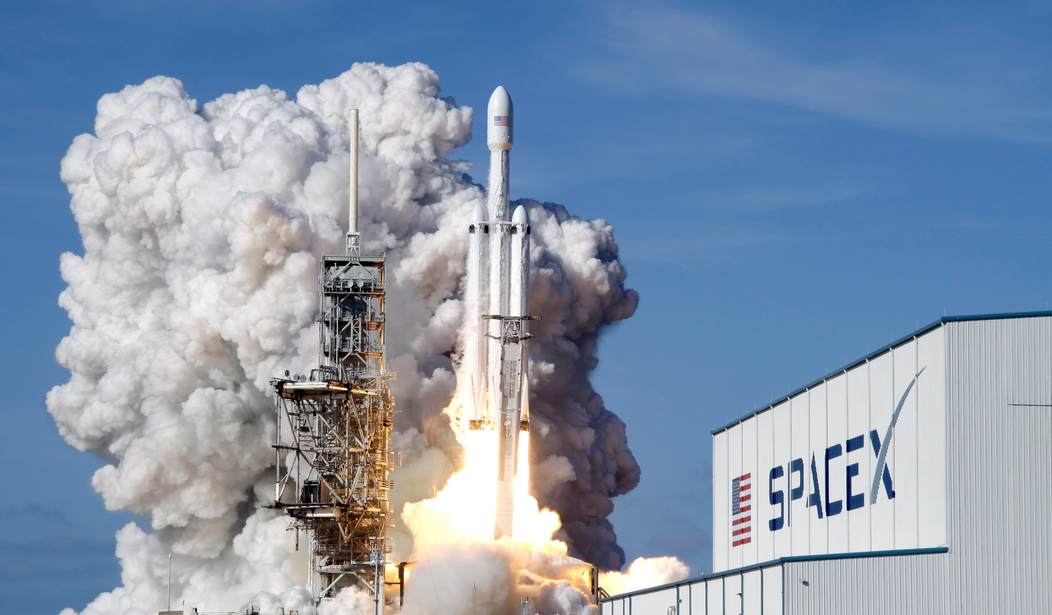
There are growing concerns about the ever-increasing numbers of rocket launches polluting the lower atmosphere. This isn't just some green scare tactic. The number of rocket launches carrying payloads to space has gone from 145 launches in 2021 to 330 launches in 2025. Also in 2025, a record 4,500 individual satellites were put in orbit.
I've written about the growing threat of "space junk" endangering other satellites and manned flights. Along with the toxic fumes from booster exhausts, the debris from spent boosters, and derelict satellites, there is reason to be concerned about the environmental impact of spaceflight.
It's not just the debris. Almost all of it is traveling at more than 17,000 MPH. That's the speed that anything in space needs to maintain to stay in orbit. At those speeds, even a fleck of paint can damage a spacecraft.
Some scientists fear the pollution could destroy the ozone layer, potentially expose some people to higher levels of ultraviolet radiation, or help further destabilize the planet during the climate crisis. The pollution could also end up back on Earth, and millions of satellites would create a major source of light pollution.
The petition submitted to the FCC calls for a pause on new licenses for space data center projects, arguing that the plans “violate federal law”.
The datacenter companies “describe their plans in grandiose, civilization-changing terms”, the petition states. “But these same proponents have refused to embrace any inquiry into the impacts of their self-claimed epochal technology on the environment, science, economy, or other values.”
Bezos and Musk have probably refused to "embrace any inquiry into the impacts of their self-claimed epochal technology" because of arrogant little green luddites like these guys, who last supported technological advance when the saddle was invented.
Maybe the identity of the petitioners would explain their position.
"The petition was filed by the Public Employees for Environmental Responsibility (Peer) non-profit, the Earthjustice legal non-profit, and the DarkSky International non-profit, which works to protect the sky from light pollution," notes The Guardian.
I don't know if Musk and Bezos were trolling us with talk of a million data center satellites. Steve notes that the cost would be eye-popping. "The median scenario is $3.45 trillion dollars, or roughly 70% of what the U.S. spent waging World War II."
More likely, they will launch enough satellites to begin making money on the venture and then see how much farther they can go. It's an intriguing idea with a lot of flaws and unknowns.
Isn't that how the human species has always advanced?
Also for our VIPs: Great News for Coffee Addicts! Five Cups a Day Can Save Your Life!