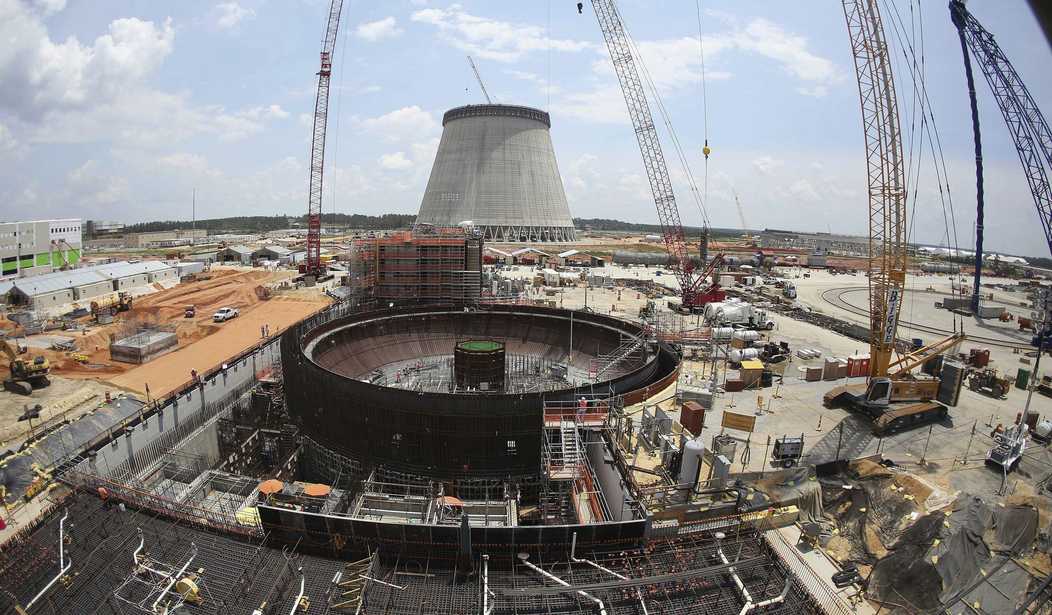

In 1957, the world's first commercial nuclear reactor began operating along the Ohio River near Shippingport, Ohio. The plans were drawn up in 1954, and the plant began supplying Pittsburgh with electricity in 1957.
It took three years from the plans to the beginning of operations. It took the company three years just to get the design approved by the Nuclear Regulatory Commission (NRC).
This was a time when the sky was the limit for nuclear.
Call it "red tape." Call it "a regulatory quagmire." Call it "administrative hurdles." The NRC has a carefully cataloged list of terms that describe its ludicrous roadblocks put in the way of anyone in private industry wanting to do something nuclear. I'm sure the list is locked in a safe somewhere in Washington.
But there's a new sheriff in town, and the NRC has been put on notice that business as usual is no longer good enough.
Donald Trump has changed the entire dynamic in the government and its outlook on nuclear power. Last week, the Trump administration approved the first part of a broad regulatory scheme that will revolutionize the nuclear industry in America and alter the way we are electrified.
The new rules will change how the NRC approves new projects for so-called “microreactors,” which are "small-scale atomic power plants that, rather than powering a whole region, are small enough to power things like a military base or remote area," according to Emmet Penney writing in The Free Press.
The smaller reactors are a good place to start. They have numerous applications and are easier to find a home for.
"When the exhaustive regulatory overhaul is done, there should be a lot more nuclear plants, and they should be built safely and quickly," writes Penney. "The result could be a revolution in American energy that fundamentally changes our conversations about climate and energy, and even our geopolitical relationships."
Regulations can be changed. Unfortunately, the anti-nuclear crowd is not going away. And there are plenty of courts willing to grant stays and injunctions that would throw a monkey wrench into Trump's plans.
Those fights are in the future. Perhaps most encouraging is that, for once, many in the climate change crowd will be on our side.
That will take more changes than just making it easier to license microreactors. And those are coming. NRC chairman Ho Nieh, in an exclusive interview with The Free Press, said that the entire industry and the whole nuclear life cycle stand to gain from these new regulations. “We have proven that nuclear power is safe,” Nieh said, “but it needs to be safe and possible to build. Taking a smarter, more risk-informed approach is key for a successful nuclear regulator.”
The changes underway promise to unlock a new generation of nuclear power in America. They include making it easier to build all kinds of nuclear reactors; reducing operating costs for existing plants; solving the nuclear waste storage issue; and expanding the nuclear component supply chain.
"The nuclear renaissance would be a major win for climate hawks, China hawks, and everyone in between," writes Penney, optimistically. Again, waving the flag is nice, but obstacles could derail the best plans for nuclear expansion.
NRC Chairman Ho Nieh told The Free Press, “We have proven that nuclear power is safe, but it needs to be safe and possible to build. Taking a smarter, more risk-informed approach is key for a successful nuclear regulator.”
The arguments about safety are the same, but this time the technology has been proven. Fears of meltdowns and "another Chernobyl" ring hollow when placed against the safety record of the U.S. nuclear industry.
Nieh described the NRC’s previous approach to regulation as “overly conservative.” Regulatory efficiency was sacrificed on the altar of bureaucratic rigor. In effect, in the way in which we have regulated nuclear power plants until now, every nuclear reactor underwent a grueling vetting process—whether for design approval or construction approval—even if the reactor type was already in operation somewhere else. Now, the NRC will approve the design and then allow companies to build multiple models that match it. The general idea behind the new rules is to treat nuclear reactors the way the Federal Aviation Administration treats airplanes: license one, build many. More plainly, the NRC is trying to Make Nuclear Normal Again. Doing so will drop the approval time for license applications from several years down to 18 months at most.
Nieh understands his mission as fixing a broken system that wasted billions of dollars and didn’t make anyone safer, but did prevent Americans from having clean, cheap power. Before joining government, he worked at Knolls Atomic Power Laboratory as a civilian instructor, training nuclear submariners for the Navy’s nuclear power program. There, he and his students were deeply inculcated in the Navy’s culture of safety and excellence. “The Navy standards for safety are far beyond anything the commercial industry has to handle,” he explained. After all, the reactors on its submarines have to work deep under water, in close quarters with seamen, and operate in potential combat situations, all while maintaining safety. Few people know and respect the necessities of nuclear safety like Nieh.
Obviously, the NRC isn't going to rubber-stamp approvals for power plants. The key is going to be figuring out which stacks of paperwork are actually necessary for the safe operation of a power plant.
“We’re a safety regulator. Always have been, always will be,” Nieh said. “So, what we do isn’t changing, but how we do it is. Because we have to change if America is going to meet this moment.”
The most important legacy Trump can leave the nuclear industry is a bipartisan congressional consensus on nuclear power, so that future presidents and congresses of either party will maintain the momentum and bring America into a nuclear future that guarantees enough power for all of our needs.
Editor’s Note: Every single day, here at PJ Media, we will stand up and FIGHT, FIGHT, FIGHT against the radical Left and deliver the conservative reporting our readers deserve.
Help us continue to tell the truth about the Trump administration and its successes. Join PJ Media VIP and use promo code FIGHT to receive 60% off your membership.