
In 2023, Joe Biden's Surgeon General, Dr. Vivek H. Murthy, was apparently bored with scolding kids about vaping and adults about STD's and decided that "loneliness" was a national crisis and needed government resources to address it. She issued a communiqué, defining the issue of loneliness as a matter of life and death.
Murthy proclaimed that “interacting with people from diverse backgrounds can help to stimulate creative thinking and encourage the consideration of different perspectives, leading to better problem-solving and decision-making.”
“The nature, size, and diversity of these discussion networks,” the report continued, “are important to how individuals form opinions, attitudes, and awareness of differing perspectives. They ultimately foster political tolerance.”
(Head slap and lightbulb emoji lights up over my head): So that's why right and left are at each other's throats. Not enough diversity in our friendships!
"Murthy asserted that 1 in 2 adult Americans reported experiencing loneliness, which has been found to increase risks of all kinds of serious health conditions, such as heart attack, dementia, and even premature death (though some of these findings have since been thrown into doubt)," writes Nautilus's Kristen French.
Researchers are challenging the correlation between loneliness and serious illness and premature death, though other studies support the notion that loneliness can lead to dementia, a greater risk of cardiovascular disease, stroke, depression, and anxiety.
But the idea that loneliness is "life-threatening" simply isn't borne out by the research. Brendan Kelly, a professor of psychiatry at Trinity College Dublin, says that the proportion of people feeling lonely remains stable over time. “Loneliness is not a sudden crisis that needs a short-term fix. It is a long-term challenge that requires a sustained response," argues Kelly.
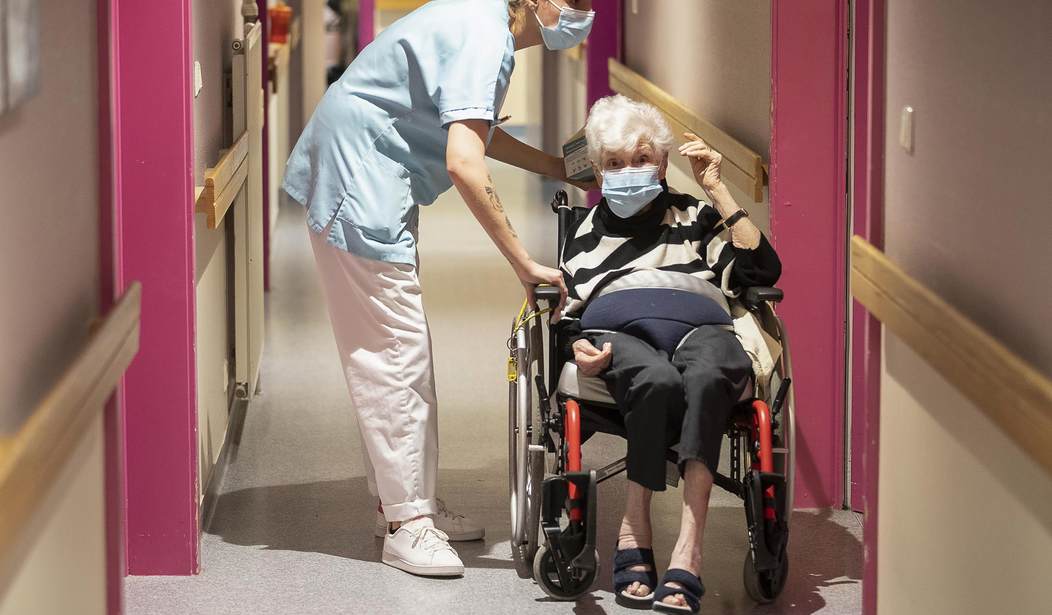
As for loneliness being deadly, a study by the University of Waterloo’s School of Public Health Sciences "has found that while loneliness is common among older adults receiving home care, it is not associated with an increased risk of death," reports Eurekalert.
“Our findings suggest that loneliness may not independently increase the risk of death after controlling for other health risk factors among older adults in home care,” said the study’s lead author, Dr. Bonaventure Egbujie, a professor in Waterloo’s School of Public Health Sciences. “This contradicts much of the existing literature based on the general population.”
The University of Waterloo study also found some surprising results about family, health, and caregivers.
Loneliness prevalence — defined as the number of people per 100 who report feeling lonely — ranged from 15.9 per cent of home care recipients in Canada to 24.4 per cent in New Zealand. Interestingly, people in better physical shape and who got less help from family or friends were likelier to feel lonely, suggesting a complex link between health status, caregiving needs, and social connection.
The study urges policymakers and health-care providers to treat loneliness as a quality-of-life issue rather than focusing solely on its potential link to mortality.
“Loneliness is a serious threat to psychological well-being. The mental health consequences of loneliness make it an important priority for public health, even if loneliness doesn’t kill you,” said the study’s senior author, Dr. John Hirdes, a professor in Waterloo’s School of Public Health Science.
“Home and community care services must play a protective role by supporting social contact for isolated people.”
So, loneliness is bad, but is it a "public health crisis"? Is it really an "epidemic"?
"Social connection is essential to well-being, without a doubt, but calling a phenomenon an epidemic when it isn’t one is not just misleading, it could undermine efforts to find real root causes and effective interventions," Kelly writes.
Kelly argues an epidemic is a "rapid increase in the number of people afflicted by a particular disease or condition within a specific community or region," according to Nautilus.
Some researchers have even found that the messaging around loneliness could increase the negative impact being alone has on our health, because how we feel about being alone can shape our experience of it. The authors of one 2024 study measured how lonely people felt over a two-week period along with how positive or negative their beliefs about loneliness were. Those with negative beliefs experienced a steep increase in loneliness after spending time alone in daily life, whereas those with positive beliefs felt less lonely after spending time in solitude.
In other words, Biden's attorney general may have actually made the problem of loneliness worse by elevating the issue to a "national crisis."
Most people probably aren't aware that they're particularly lonely. They have friends online, a spouse, and kids. Even if they don't interact with real people outside their familial circle, they probably don't feel the kind of social isolation that researchers define as "loneliness."
Being old almost defines loneliness unless you take proactive steps to alleviate it. Staying active is always a plus because you inevitably interact with other people when you're out and about.
We are members of a species that owes its incredible success to its social organization and our ability to work together to solve problems. Ironically, despite living and working alongside thousands of others, societal conventions and our own emotional instability prevent us from getting close to other human beings.
It's a problem that no government can solve. And trying to address it will only result in a gigantic waste of tax dollars.
Also for our VIPs: The AMA's Confusing Stance on 'Gender Affirming Care' Could Lead States to Take Legal Action