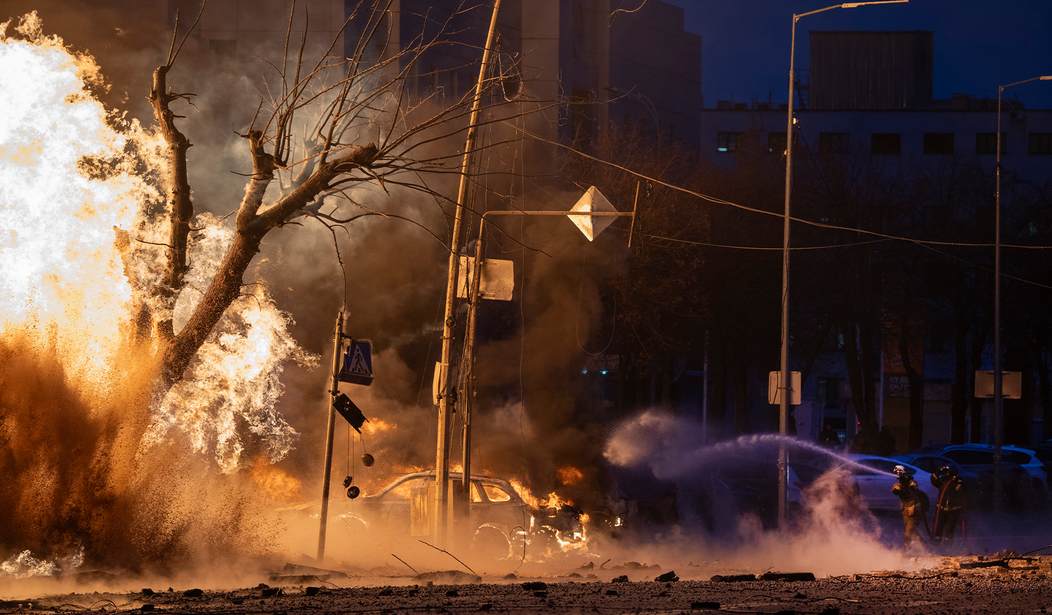
Tuesday, February 24, will mark the four-year anniversary of the war between Russia and Ukraine. It has been a bloody, brutal war with between 1.5 million and 2 million casualties combined on both sides.
Independent estimates and official reports indicate a staggering human cost. While exact figures are difficult to verify due to the fog of war and operational secrecy, several respected monitoring organizations and government agencies have provided the following estimates:
This makes Putin's stubbornness to end the war understandable. Russia needs warm bodies and doesn't have much time to get them.
With a shrinking economy, failing to employ soldiers coming home from the front has become a massive social problem.
Russian state media reported in January that there were currently about 250,000 unemployed veterans of the “special military operation” who had returned to Russia from Ukraine. Almost as soon as the news was published, the story disappeared, undoubtedly to prevent raising public anxiety. Many Russians remember the difficult return of Soviet-era war veterans from Afghanistan, which involved fewer people. Crime, drug use, and domestic instability surged. Some of those soldiers contributed to the growth of organized crime.
Putin can't quit fighting in Ukraine because post-war problems would be significantly more difficult to address than the problems he's facing now. Russia can absorb a few million casualties. They lost 20 million citizens in World War II, with a significantly smaller population.
Despite the casualties, the economic dislocation, and the civil liberties crackdowns, a majority of Russians still support the war and would back escalation if peace talks fail.
The Levada Center’s latest polling on Ukraine indicates a notable hardening of the Russian public’s attitude toward the war in Ukraine. While the poll indicates support for immediate peace talks remained higher than support for continued fighting, if peace talks fail, the balance could shift toward greater acceptance of escalation, according to the center’s January 2026 poll. At the same time, while confident in Russia’s victory, the majority of Russians believe the war will last another six months or more, according to the poll. Together, these trends point to possible further normalization of a long war and reduced public appetite for compromise in Russia.
Putin is still on solid ground with the Russian people.
Interestingly, perhaps, for the first time since the start of the conflict, the Levada Center asked its respondents how Russia should act if achieving peace is not yet possible: Should it make additional concessions or intensify attacks? In response, 5% said Russia should definitely make additional concessions and 16% said it should probably do so, while 28% favored probably increasing attacks and 31% favored definitely increasing them; 20% were unable to answer. Overall, a clear plurality favors escalation in such a scenario: 59% believe failure to achieve peace should be met with greater use of force, compared with 21% who advocate concessions.
Morale in Ukraine is flagging, although a healthy percentage of the population still expresses the desire to resist. Mostly, Ukrainians (like Russians) want peace.
A January 2026 survey by the Kyiv International Institute of Sociology (KIIS) found that 65% of Ukrainians are ready to endure the war for "as long as necessary." This figure has remained remarkably stable, actually showing a slight increase from 62% in late 2025.
President Volodymyr Zelensky isn't on as solid political ground as Putin, due to several scandals involving close associates, but since he canceled elections (with the approval of opposition parties) in 2024, he won't have to face the voters to test his popularity.
The peace talks in Geneva aren't going anywhere. Putin insists on being given territory in Eastern Ukraine, which he hasn't conquered, and Zelensky is still insisting on a return of all Ukrainian territory, including Crimea, which was conquered in 2014.
The two sides are nowhere near exhausted enough to end this war. It will continue as long as Putin draws breath, and who knows how long that will be.