





Australia began implementing a world-first ban on social media accounts for kids under 16 on Wednesday, as politicians and parents wonder how effective it can truly be.
The Associated Press (AP) reports that "Facebook, Instagram, Kick, Reddit, Snapchat, Threads, TikTok, X, YouTube and Twitch face fines of up to 49.5 million Australian dollars ($32.9 million) from Wednesday if they fail to take reasonable steps to remove the accounts of Australian children younger than 16."
“This reform will change lives. For Australian kids… allowing them to just have their childhood. For Australian parents, enabling them to have greater peace of mind. But also for the global community, who are looking at Australia and saying: well, if Australia can do it, why can’t we?" said Australian Prime Minister Anthony Albanese.
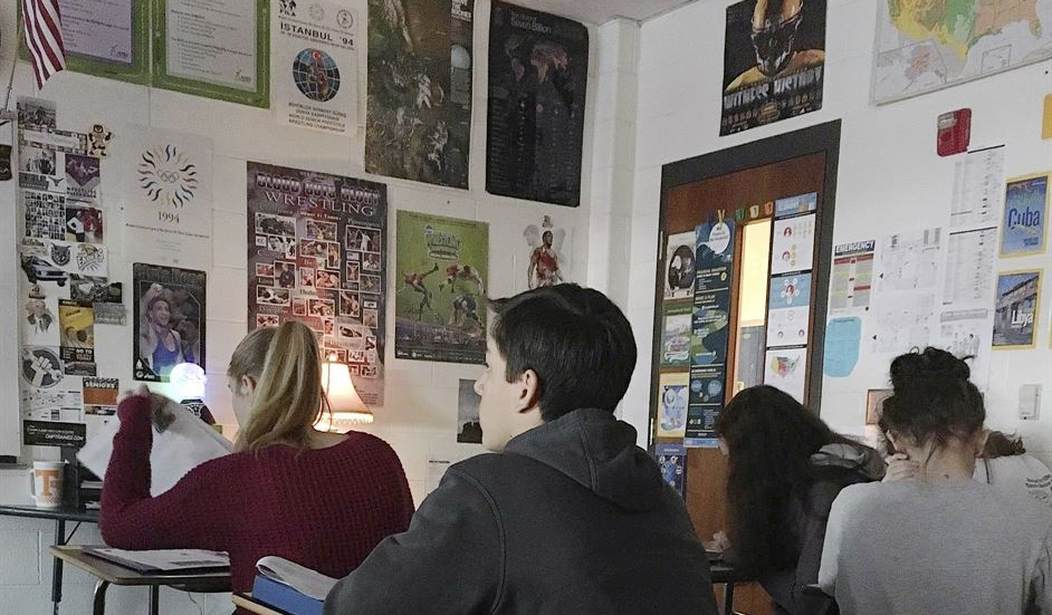
As of December, 35 states in the U.S. have passed laws banning or severely restricting cell phone use in schools. It's far too early to say whether student achievement scores are dramatically improving or kids are paying closer attention, although evidence from some teachers suggests they are. Students make more eye contact and have more conversations, and teachers observe increased engagement, says Knowledge at Wharton and University Hospitals.
"Many children posted farewell messages, while parents reported distraught children discovering they’d been shut out of platforms as the landmark law took effect," according to AP. This reaction demonstrates exactly why the ban was necessary. The addictive nature of social media requires close supervision of a child's use of these platforms, which many parents seem unwilling to provide.
It may be a good idea, but will it work? Unless you physically remove the phone from the child's possession, I don't think it's going to be very effective. Parents are loath to do that, given that a phone can be a lifeline in an emergency.
The ban will be enforced by Australia’s eSafety Commissioner Julie Inman Grant. She said the platforms already had the technology and personal data about their users to enforce the age restriction with precision.
She would send the 10 targeted platforms on Thursday notices demanding information on how the age restriction was being implemented and how many accounts had been closed.
“We will provide information to the public before Christmas on how these age restrictions are being implemented and whether preliminarily we see them working,” Inman Grant said.
“The responses to these notices will form the baseline against which we will measure compliance,” she added
"Members of Generation Z (born in and after 1996) are suffering from anxiety, depression, self-harm, and related disorders at levels higher than any other generation for which we have data," writes social scientist Jonathan Haidt, a leading advocate for limiting or banning cell phone use among young children.
Since 2018, Haidt has been researching "the contributions of social media to the decline of teen mental health and the rise of political dysfunction," as his website puts it.
The "teen mental illness epidemic began around 2012," Haidt asserts, presenting plenty of research to back it up. The smartphone was introduced in 2009, and Haidt chronicles the steep rise in teen mental health problems from that time.
The numbers started rising noticeably in 2010 — three years after the introduction of the iPhone.
Rates of depression and anxiety among U.S. adolescents were "fairly stable in the 2000s" but "rose by more than 50% in many studies from 2010 to 2019," Haidt writes in The Atlantic.
The suicide rate rose 48% for adolescents ages 10 to 19. For girls ages 10 to 14, it rose a staggering 131%.
The big picture: "The primary thing that we are trying to understand is why adolescent mental health fell off the cliff right around 2010," Zach Rausch, Haidt's research partner, tells Axios.
The evidence of the adverse effects of social media usage on children is substantial, but there is little agreement on what can be done about it. Some educators think that banning social media for school-age kids is a bad idea, since the potential for learning when it's used correctly can be off the charts. However, it requires exceptional and imaginative teachers — a commodity in short supply in American schools — to ensure the correct use of social media platforms.
Exclusively for our VIPs: The History of Experiences and Emotions: A Fascinating Look Into What It Really Means to Be Human
Teenagers, ever resourceful and practiced at getting around adult rules and regulations, will find ways to circumvent the ban in Australia. Already, there are reports of kids using makeup/disguises for facial scans, lying about ages, using VPNs, leveraging parents/siblings, and exploiting loopholes in platform age verification systems.
It's a no-brainer to predict the ultimate failure of the age restrictions on social media accounts. There are too many loopholes, too many opportunities for kids to circumvent the ban, for this law to become anything more than a noble experiment that failed.
Help PJ Media continue to tell the truth about the Trump administration's accomplishments as we usher in the Golden Era of America. Join PJ Media VIP and use promo code FIGHT to get 60% off your membership.

Join the Conversation
VIP members get the ability to comment on articles.