





In Hebrew, the word "dvarim" means both "words" and "things,” and it is a recognition that words have consequences; that they are real "things" and that the statement about "sticks and stones" is actually not true, words can cause harm, and can cause healing as well. It is why we should always be careful about what we say and how we say it.
We must assume that the words coming out of both Tehran and Washington have been contemplated and evaluated in terms of what actions they will lead to. And it seems as if we are starting to see the result of those words, especially the threatening rhetoric that is still coming from the Iranian leadership.
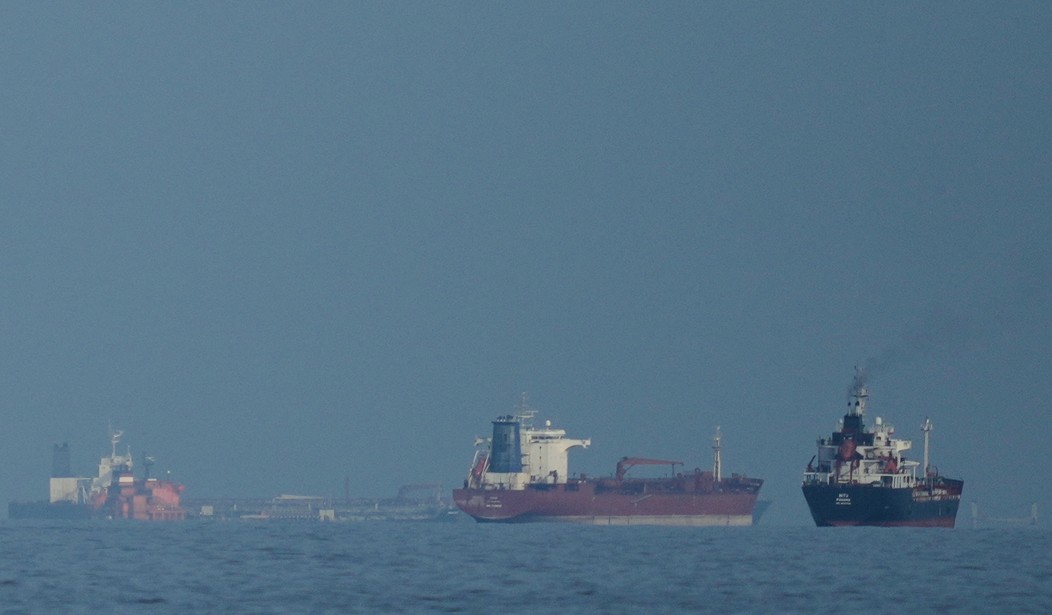
Washington made it clear before the "negotiations" that if they were not successful, all strategies would be available, including a blockade of the Strait of Hormuz. Trump has now ordered that blockade; CENTCOM has announced that it will begin today at 10 a.m. Eastern, and it will be implemented against all vessels departing from or entering Iranian ports. Other vessels will be allowed to move freely. In addition, the Wall Street Journal is reporting that (based on "two official sources"), Trump and his advisers are considering the possibility of resuming military strikes on Iran, in addition to the blockade, to leverage a re-starting of "negotiations.”
And as could be expected, Iranian words responded to this with more threats. Iranian spokesman Reza Talai said that "the Strait of Hormuz will remain forever under the control of Iran and the region." According to him, "Iran is stronger and more resilient today. The enemy has failed to overthrow our regime and divide the country." Ebrahim Rezaei, spokesman for the Iranian Parliament's National Security and Foreign Policy Committee, added more clarity about Iran's position. "If Trump implements his blockade, it will be considered warfare, and we will respond."
He also said: "We may reveal other cards that we have not yet used in this game. If you want to improve the situation, you must respect the Iranian people and accept your defeat." Iran's Chief of Staff responded to a blockade by saying, "It is illegal and constitutes piracy." He also said that Iran will implement "a permanent mechanism to control Hormuz due to the threats."
According to the words, Washington believes that Iran has been soundly defeated and is incapable of military action, and Iran's words express that they feel the same about the U.S. And the sad truth is that there is no way of knowing which is fully true, or if the truth is somewhere in between, although Israel's media seems to be the most honest by saying that Iran is severely damaged but not incapable by any means, and is still an existential danger.
In a completely different venue, the war in Iran is now also being fought in words between Washington and the Vatican. Pope Leo, who is the first American-born pope (born in Chicago), has been clear in his condemnation of America's war on Iran, especially this past weekend, when his words were directed at Trump. And so, more words became incendiary as President Trump wrote on Truth Social that "Pope Leo is weak on crime and terrible on foreign policy." Trump continued: "I don't want a Pope who thinks it's OK for Iran to have nuclear weapons. I don't want a Pope who thinks it's terrible that America attacked Venezuela." He concluded by saying, "Leo should get his act together as Pope, use Common Sense, stop catering to the Radical Left, and focus on being a Great Pope, not a Politician."
Public disagreements between sitting presidents and popes are not unique, but are rare. George W. Bush and John Paul (2002) and Woodrow Wilson and Benedict XV (1919) are the only two public conflicts I found, and again, these types of hurtful words between a president and a pope (and Leo's words over the weekend about Trump were equally disappointing and offensive) cause feelings and reactions that place wedges between Americans.
Israel is waiting for a green light from the U.S. to commence attacks on Iran, and according to Reuters, Iran has rejected the U.S. demand for Iran to stop funding Hamas, Hezbollah, and the Houthis, all of whom continue to attack Israel daily. The Department of Justice is attempting to help the war effort by striking Iran economically, and announced on Sunday that it will actively pursue criminal charges against anyone or any group that buys or sells Iranian oil.
So in a few hours we will see if a blockade actually happens or if at the last moment talks are restarted (or the blockade is "postponed"). We will see what the Iranian reaction will be if the blockade does start, and we will see how the world reacts.
But while all of this is about the Strait of Hormuz, one of the main passageways for oil for the world, let us always remember that we did not go to war for oil and not let it become about that. This war is because for 47 years, one of the most evil and dangerous regimes in history has been vowing to destroy first Israel, then the United States, and then all of Western culture; and that we cannot allow a fanatical regime like this to have nuclear weapons and the ballistic missiles to deliver them, God forbid.
May we always remember that priority: that long-term peace is the goal. For Israel. For the U.S. For the world.
Chazak u'Baruch
Rabbi Michael Barclay
April 13, 2026
26th of Nisan, 5786
11th day of the Omer
Editor’s Note: Do you enjoy PJ Media’s conservative reporting that takes on the radical left and woke media? Support our work so that we can continue to bring you the truth. Join PJ Media VIP and use the promo code FIGHT to get 60% off your VIP membership!

Join the Conversation
VIP members get the ability to comment on articles.