


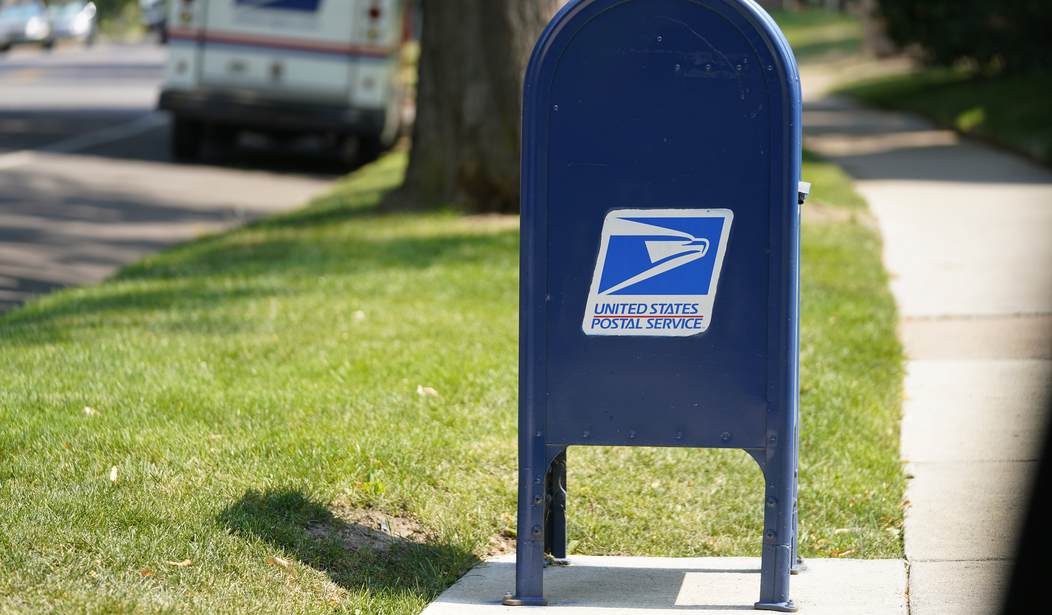
The United States Postal Service (USPS) is allowing itself to be distracted from its core mission of mail and package delivery. As a result, it is losing billions of dollars in the process, and now the USPS is asking for financial relief. It is a masterclass in bureaucratic waste, and American taxpayers are the ones being handed the invoice.
During a recent Senate subcommittee hearing, Chairman Rand Paul cut straight to the heart of the crisis. “The Postal Service is once again telling Congress that it’s out of money, running out of money, and once again, the answer seems to be, ‘Send the bill to the taxpayer. Just give us some more money,’” Paul observed. But before asking Congress for additional relief, the agency should demonstrate that it can protect the revenue it is already supposed to collect.
Under its current restructuring plan, the USPS has made the confounding decision to claw back work that it previously outsourced to efficient private-sector shipping and logistics companies. For example, the Postal Service has sought to create its own payment and software platforms, despite more secure and efficient technology already existing in the private sector. This has resulted in the Postal Service leaving billions of dollars on the table because of fraud, counterfeit labels, and weak payment controls due to its own technological failures.
Ignoring private sector solutions has also exposed the USPS to massive structural vulnerabilities. By attempting to replicate complex commercial logistics networks internally rather than focusing on its fundamental responsibility of universal mail service, it is inheriting rigid cost structures and a severe lack of specialized oversight. The operational math behind these decisions is baffling because, as Sen. Paul noted, “When a private partner can do the work for less, you don't keep the work in-house."
The consequences of this operational overreach are now laid bare in a series of failing-grade reports from the USPS’s own Office of Inspector General (OIG). The OIG recently issued urgent warnings highlighting that the Postal Service has insufficient controls in place to detect counterfeit package labels and to prevent Enterprise Payment Account (EPA) fraud. The financial hemorrhaging is catastrophic: the agency faced a jaw-dropping $9 billion loss in fiscal year 2025.
Compounding this crisis, the OIG warns that the agency is on a trajectory to run out of cash by early 2027. Despite claiming to have first identified EPA fraud in May 2025, the Postal Service's mitigation efforts through January 2026 have been lackluster. Without urgent and drastic intervention, the OIG estimates the agency will bleed an additional $1.3 billion in revenue over calendar year 2026 and the next due to EPA fraud alone. Simultaneously, suspected counterfeit labels used to ship packages without proper payment are rising rapidly, with unpaid labels doubling in late 2025.
It is worth considering these issues in light of the larger postal climate: as postal rates rise, the potential economic benefits of avoiding legitimate postage costs increase as well, underscoring the importance of robust fraud-prevention and revenue-protection measures.
This escalating fraud epidemic is a direct consequence of the Postal Service spending its scarce resources on distractions that go beyond its core mission of delivery in order to enlarge an already over-inflated agency. The private marketplace is inherently incentivized to eliminate waste and secure its infrastructure because inefficient, fraud-ridden companies go bankrupt. Government agencies enjoy a unique immunity from this pressure, allowing structural waste to compound year after year. Sen. Paul summarized this dynamic perfectly: “But what you’re ignoring is for every dollar you put into government, that dollar would have been spent much more effectively in the private marketplace.”
The path forward requires a radical rejection of the current insourcing ideology. Reforming these troubled operations through strategic outsourcing to specialized private partners could save the USPS an estimated $2 billion. More importantly, it would finally allow the agency to refocus on its core mission — serving every American household.
At a time when USPS is losing billions to counterfeit labels, payment fraud, and other avoidable losses, the solution is not more government expansion. Greater reliance on private-sector partners with the technology, expertise, and incentives that will protect revenue and stop the bleeding will help the USPS avoid a TKO.
Editor's Note: Do you enjoy PJ Media's conservative reporting that takes on the radical left and woke media? Support our work so that we can continue to bring you the truth.
Join PJ Media VIP and use promo code FIGHT to receive 60% off your membership.






Join the conversation as a VIP Member