


Greets and welcome to Thursday, Oct. 22, 2026. Grab the coffee; the calendar’s in a strange mood today.
The colors are changing around the Florack Word Ranch. This area is downright beautiful this time of year. The overnight temps have been in the low thirties for the last several days, and the geese are flying overhead, particularly in the early morning.
My calendar says it’s Color Day, Make a Dog’s Day, Nut Day, Tavern-Style Pizza Day, and Caps Lock Day. So rescue a mutt, order a square-cut thin crust with nuts on the side, and post your topping complaints IN ALL CAPS, in full color.
Today in History:
1746: New Jersey’s colonial government charters the College of New Jersey, later known as Princeton University.
1797: André-Jacques Garnerin makes the first recorded parachute jump, dropping from a hydrogen balloon over Paris.
1836: Sam Houston takes the oath as the first elected president of the Republic of Texas.
1844: Thousands of Millerites wait all day for the Second Coming; the no-show goes down in history as the “Great Disappointment.”
1883: The Metropolitan Opera House opens in New York with Gounod’s Faust.
1907: Depositors start a run on the Knickerbocker Trust Co., kicking off the Panic of 1907.
1926: A McGill University student punches Harry Houdini in the stomach in Montreal; Houdini dies of peritonitis nine days later.
1934: FBI agents shoot and kill bank robber Charles “Pretty Boy” Floyd near East Liverpool, Ohio.
1938: Chester Carlson makes the first xerographic copy in Queens, reproducing the words “10.-22.-38 ASTORIA.” Caps Lock Day salutes him.
1962: President John F. Kennedy goes on national television to reveal Soviet missiles in Cuba and announce a naval quarantine.
1964: Jean-Paul Sartre turns down the Nobel Prize in Literature.
1975: The Soviet probe Venera 9 lands on Venus and beams back the first images ever taken from another planet’s surface, in black and white. Color Day would have to wait.
1981: The Federal Labor Relations Authority decertifies PATCO, the air traffic controllers’ union.
2008: India launches Chandrayaan-1, its first lunar probe.
Birthdays Today include: Franz Liszt, composer and pianist (Hungarian Rhapsodies); Curly Howard, comedian (The Three Stooges); Joan Fontaine, actress (Rebecca, Suspicion); Timothy Leary, psychologist; Doris Lessing, novelist (The Golden Notebook); Christopher Lloyd, actor (Back to the Future, One Flew Over the Cuckoo’s Nest, Taxi); Derek Jacobi, actor (I, Claudius, Gladiator); Annette Funicello, actress and singer (The Mickey Mouse Club, Beach Party); Catherine Deneuve, actress (Belle de Jour, Indochine); Deepak Chopra, author (The Seven Spiritual Laws of Success); Jeff Goldblum, actor (Jurassic Park, The Fly, Independence Day); Bob Odenkirk, actor and comedian (Breaking Bad, Better Call Saul); Brian Boitano, Olympic figure skater; Shaggy, singer (“It Wasn’t Me,” “Boombastic”); Ichiro Suzuki, baseball player (Seattle Mariners); Zac Hanson, musician (Hanson, “MMMBop”); Jonathan Lipnicki, actor (Jerry Maguire, Stuart Little).
If today’s your birthday, too, happy birthday. You’re in strange company.
* * *
I’ve got a question for you today, and it's one that, actually, I’ve been chewing on for years. What, exactly, is a country? Is it, as some will tell us, simply a landmass with ill-defined borders, or is it a group of people who share a culture?
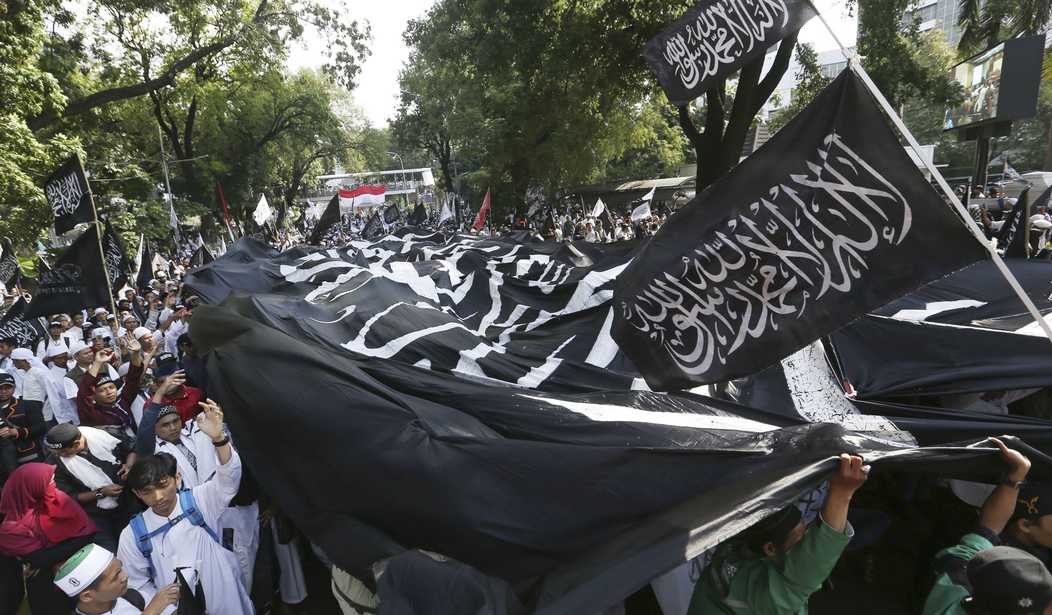
France is my example for this discussion, since it’s pretty high on the list of headlines these days. How many immigrants does it take to change what "French" means? Wrong question. France answered it 144 years ago, and the answer should terrify Paris far more than any headcount.
In 1882, Ernest Renan stood up at the Sorbonne and handed France the most generous definition of nationhood anyone ever wrote. A nation, he argued, isn't blood, language, or a line on a map. It's a shared memory of the past and a present will to keep living together — "a daily plebiscite." The Republic built itself on that idea. France still refuses to collect ethnic statistics on its own citizens, because officially there are no hyphens. There are only Frenchmen.
Lovely theory. And it actually worked when it was, in fact, true. Here's the catch nobody at the Élysée wants to say out loud: a plebiscite only works if people show up and vote yes. France spent half a century importing voters without ever asking whether they planned to actually become French. The results of that omission are what we see in today’s headlines.
Related: Riots Across France Scare Off American Media Covering Sunday’s NFL Game in Paris
Let’s look at what numbers are available. INSEE, France's national statistics bureau, dropped its latest figures on June 4, 2026: 8 million immigrants, 11.6% of the population. Fourteen percent of everyone living in France was born somewhere else. Foreign nationals alone now make up 9.1% of the population, up from 6.5% in 1975. The top country of birth among immigrants? Algeria — the former colony that spent eight years fighting a war to stop being French.
And those figures skip the people who matter most in this argument: the French-born children and grandchildren of immigrants. That's where the plebiscite actually gets decided.
Give the other side its due, because its case isn't stupid. France has done this before. Italians, Poles, Spaniards, Portuguese, and Armenians all arrived as foreigners the natives swore would never fit in. Their grandkids now complain about Parisian traffic like everybody else. Historian Eugen Weber went further in Peasants into Frenchmen: As late as the 1870s, huge swaths of rural France didn't even speak French. The Republic manufactured Frenchmen — with schoolteachers, conscription, railways, and a flag nobody apologized for.
Then as the Left grew in strength, France’s dedication to the culture fell by the wayside. The Republic ended conscription in the late 1990s. Its schools traded confident instruction in French history for a curriculum that treats that history mostly as a crime scene. Its political class now treats the word "assimilation" the way the Victorians treated a dropped napkin. You can't run a daily plebiscite while the government campaigns against its own proverbial ballot measure.
Scale and geography matter, too. An Italian bricklayer who settled in a village of Frenchmen had no choice but to become one. A newcomer who lands in a suburb where the neighbors, the butcher, the satellite dish, and the mosque all point back to the old country faces no such pressure. Concentration doesn't assimilate people. It builds a second country inside the first one.
Look at the returns. The banlieues burned in 2005. They burned again in 2023, after police shot a 17-year-old at a traffic stop in Nanterre, and rioters torched schools, libraries, and town halls — the very institutions that once turned peasants into citizens. In 2020, an 18-year-old Chechen refugee beheaded schoolteacher Samuel Paty for showing his class cartoons of Muhammad. In 2023, the government had to ban the abaya in public schools because a growing number of students treated the classroom as a place to display their primary allegiance, and it wasn't to the Republic.
None of that means the model always fails. It obviously doesn't. Plenty of immigrants' kids vote yes every single day — they serve in the army, staff the hospitals, and one of them captains the national soccer team. That's the point. Renan's France works beautifully for people who want to be French. It has no answer at all for people who don't, and it has stopped insisting on the difference.
So forget the headcount. The real issue is this: France can absorb any number of newcomers who want to become French. It cannot absorb any who don't, especially while its own ruling class apologizes for using the word “assimilation.”
Renan's generous definition carries a warning label the French leftists never bothered to read. If a nation exists only because its people choose it every day, then a nation can also stop existing the same way. No invasion required. No treaty, no surrender, no shot fired. Just enough people, on enough days, declining to vote yes.
With tongue in cheek, I ask you: How much cyanide do you want in your wine? Don't worry, it's mostly wine.
But now, the root of this piece, and the reason behind my line of questions: How does all this translate to America?
Samuel Huntington’s Who Are We? (2004) argued that the American creed didn’t come from nowhere. It grew out of a specific Anglo-Protestant culture: the English language, dissenting Protestant religion, common law, and individualism. In his view, cut the creed off from that culture and it eventually withers. That’s Herder versus Renan again, this time over Philadelphia. I’ve often written about Russel Kirk’s 1974 work, The Roots of American Order, which is largely echoed by Huntington’s work. I wrote back in 2017 about Kirk’s book, saying in part:
In that work, Kirk, who is as much a philosopher of history as anything else, suggests that our Roots can be drawn directly to five different cities… Jerusalem, Athens, Rome, and London and Philly.
As Russell Kirk himself summarizes it, it is a story of five cities. Jerusalem for the revealed source of order … The concepts of the sacredness of Life, the sacredness of property, and so on – Athens for arts and science — Rome for government — London where these influences grew and coalesced — and of course Philadelphia.
Kirk looks at all of this and makes the observation that…
“… the imprints of Athens, Rome, and London are still upon us. But the all-important endowment of Jerusalem has been tossed to the winds.”
Now, keep in mind this is 1974. We have progressed somewhat down the road since then.
Western philosophy has always had the Judeo-Christian mindset at the root of it. That mindset informed us of the value of the individual. That the rights of the individual are paramount because of that worth. It is the foundation of our very way of thinking in the West.
It is no accident, then, how anti-Semitism has been given such a rise of late by those seeking to tear down the West. The dangers of refusing to culturally assimilate newcomers to the country are, if we take France as the example, obvious.
There’s a difference here that's worth noting: While France’s debate is mostly about legal immigrants and their kids, a large share of America’s recent growth came through the open border policies of Obama/Biden and/or visa overstays. These folks carrying the flag of their former nation have no plans to become Americans culturally.
If France’s plebiscite is metaphorical, America’s is literal. It’s written down, signed, and taught in civics class (well, it used to be, anyway). That cuts two ways. A written creed is harder to lose than an inherited culture. But if the creed is the only thing holding America together, the nation is exactly as strong as the willingness of its schools and its elites to teach it.
I’ll leave the implications of that one to you, since, as longtime readers will know, I address that point with some regularity, calling for our education system to be removed from the hands of the government because of the lack of willingness to teach it.
This piece is already a little long, and frankly I could make another half dozen columns and still not fully examine the topic. But I hope I've given you something to think about.
= = =
Thought for the Day: A nation that stops teaching its creed shouldn’t act surprised when its children stop reciting it.
VIP members: Time for you to chime in with your thoughts.
Take care today, gang. Let's plan on doing this again tomorrow, OK?
Editor's Note: The mainstream media continues to gaslight, spin, and lie about President Trump, his administration, and conservatives.
Help us continue to expose their left-wing bias by reading news you can trust. Join PJ Media VIP and use promo code FIGHT to receive 60% off your membership.


Join the Conversation
VIP members get the ability to comment on articles.