





A happy Tuesday, Sept. 29, 2026, to you. Somewhere out there, someone's third cup is already brewing, and today, that's practically a civic duty.
My calendar says it's Coffee Day, VFW Day, Urban National Wildlife Refuge Day, and Silent E Day. Pour yourself a cup, thank a VFW member for their service, appreciate a patch of green space tucked inside a city, and spare a thought for the silent E, quietly turning "cap" into "cape" without ever getting credit for it. I note I probably should have held off on my coffee column from last August until today. Who knew?
Today in History:
1789: Congress officially establishes a regular army under the Constitution, on the final day of its first session.
1916: Newspapers report that John D. Rockefeller has become the world's first billionaire, as a sharp rise in his oil holdings pushes his fortune past the mark.
1938: British, French, German, and Italian leaders sign the Munich Agreement, ceding Czechoslovakia's Sudetenland to Nazi Germany in a failed bid to avert war.
1954: New York Giants outfielder Willie Mays makes "The Catch," an over-the-shoulder grab in Game 1 of the World Series regarded as one of the greatest plays in baseball history.
1957: Twelve European governments establish CERN, the European Organization for Nuclear Research.
1962: Canada launches Alouette 1, its first satellite, becoming the third nation to reach orbit.
1965: President Lyndon Johnson signs the act creating the National Endowment for the Humanities and the National Endowment for the Arts.
1982: Cyanide-laced Extra-Strength Tylenol capsules claim the first of seven victims in the Chicago area, a case that reshapes product-safety packaging nationwide.
1990: Construction concludes on Washington National Cathedral, 83 years to the day after its foundation stone was laid.
1994: The passenger ferry MS Estonia sinks in the Baltic Sea, killing more than 800 people in one of the worst peacetime maritime disasters of the 20th century.
2005: John G. Roberts Jr. is sworn in as the 17th chief justice of the United States.
Birthdays Today include: Enrico Fermi, physicist and Nobel laureate who directed the first controlled nuclear chain reaction; Lech Wałęsa, Nobel Peace Prize laureate and former Polish president; Jerry Lee Lewis, rock and roll pioneer known for "Great Balls of Fire"; Ian McShane, actor from Deadwood; and Silvio Berlusconi, the late Italian media magnate and prime minister — if today's your birthday too, happy birthday.
* * *
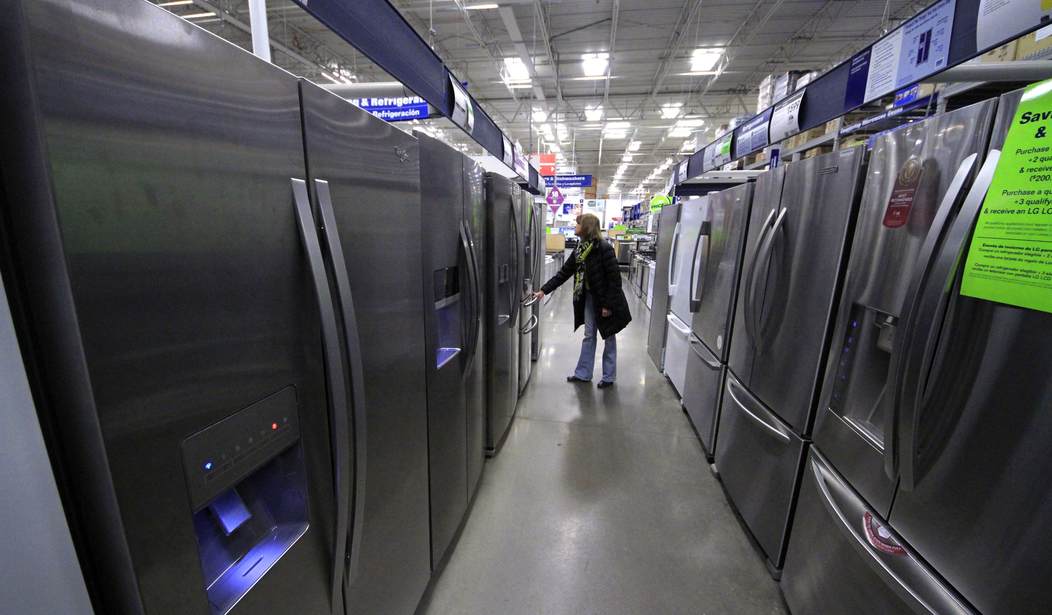
What to write about today? That's a question I face every single day. Sometimes the answer is harder to come by than other days, and that's when I march off into the weeds. Well, today is such a day. Let's get a bit offbeat, and talk about the dangers of internet-enabled refrigerators.
Refrigerators? Yes, refrigerators. That sounds kind of innocuous, doesn't it? But no, there are real problems involved.
That sounds kind of strange for me to say, I'm sure, since anyone who's read this column for any length of time knows I run a highly connected house. Lights, music, flat screens, door locks, HVAC, and alarm systems are all tied to the net. I've spent the last year arranging this techno-monster, and I've written extensively about AI and how it should be handled.
All that said, my refrigerator isn't on that list. First, because the place I bought came with a functional fridge, a few years old and showing no signs of imminent passage to that great kitchen in the sky. But even had I needed to buy one, I'd have made the conscious choice to avoid buying one that ties into my network and, ultimately, the internet.
That choice means I won't be bombarded with messages about freshness dates for the items inside my fridge, how much energy the thing is gobbling up, or interaction with my grocery list. Those things all fall under the category of "nice to have," I guess, but none of them rise to "gotta have."
Supposedly one of the other features is a shared calendar for the whole family. I've already got my calendar tied to my Alexa system, which does an admirable job managing that. Similarly, Alexa handles my grocery list and, in some cases, automatic reordering of items I use regularly. Why I might need a web browser on my fridge door escapes me. Granted, with the high-powered desktops I run here at the Florack Word Ranch, I'm better equipped for hitting the net than a lot of homes — I'd even daresay better than most — but I simply cannot see a browser hanging off my fridge like a magnet-secured note being any serious addition to my life.
Then there's the cost. These things usually run $500 to $2,000 over the price of their less networked cousins. None of this is worth that much hard-earned cash, to me.
Then, too, there's network security. On March 23, 2026, the FCC did exactly what you'd expect a security-minded agency to do — banned the import of foreign-produced consumer wireless routers, a move aimed squarely at Chinese-linked firms like TP-Link, which had come to hold roughly 65% of the US home-router market before the crackdown started. The FCC's own national security determination cited routers as a "supply chain vulnerability that could disrupt the US economy, critical infrastructure and national defense," and the agency specifically named three Chinese state-sponsored hacking campaigns — Volt Typhoon, Flax Typhoon, and Salt Typhoon — that exploited foreign-made routers to burrow into American networks. That ban didn't come out of nowhere. Investigators at Commerce, Defense, and Justice had all opened probes into TP-Link specifically back in 2024, and Microsoft had already reported that a Chinese hacking group called Storm-0940 controlled a network built largely out of compromised TP-Link routers.
So when I ask whether I trust every chip in a network-enabled kitchen appliance to be clean, that's not paranoia pulled from thin air — it's the same supply chain logic the federal government just applied to routers, extended one room over to the refrigerator. Some of the more tech-minded readers of this column will understand why: imagine a denial-of-service attack quietly built into refrigerators all over the country, ready to be keyed up from somewhere it shouldn't be. Better not to imagine it too hard.
But even setting security aside, consider, as a parallel point, how complex cars and trucks have gotten over the last few years. There's hardly a car out there that doesn't have Apple CarPlay or Android Auto. I have a car with both, and they are useful. But similarly equipped cars from just a few years back are already running into compatibility issues as phones get replaced with newer models. Taking full advantage of what your new phone can do in the car depends on a system that hadn't been invented yet when the car was built. And updates to the car's equipment are often not to be had. That tends to put you in the same position as the permanently mounted 8-track player in a classic car. It doesn't take a genius to see the same thing happening to the firmware mounted in your new icebox in a few years.
Then there's the problem that popped up on September 22, when Samsung accidentally pushed a SmartThings firmware update meant for internal testing out to real customers' Bespoke AI 4-Door Refrigerators. The affected units shut down cooling and freezing functions, went dark, and became unresponsive at the touch panel. Samsung confirmed the mistake the next day, halted the rollout, and dispatched service technicians targeting a September 24 fix deadline. By then, a lot of food had already gone bad, and that's assuming they managed to get everything working again by the 24th. In fairness, the damage was limited to units deployed in Samsung's native South Korea. In other words, the rest of us got lucky.
This push to make everything internet-enabled needs to be addressed, in my view, in the framework of a cost/benefit scenario. Frankly, by just about any reasonable measure, plugging my fridge into my network doesn’t get by that measurement. Sorry, it just doesn’t. Add it up: freshness alerts and a browser you'll never use on one side of the ledger, a few hundred to a couple thousand dollars, a fresh entry point on my already overly noisy home network, and the very real chance a bad firmware push turns your fridge into an expensive unpowered cooler on the other. That's not a close call. That's the whole point of doing the cost/benefit math in the first place — it tells you when to say no, even to something with "smart" printed right on the box.
With apologies to Star Wars fans, I envision Darth Vader: "Don't be too proud of this technological terror you've constructed. The ability to monitor and refrigerate a week's worth of food is insignificant next to the power of the Force."
Thought of the Day: Back in 1938, the Munich Agreement was sold as the deal that avoided a war — proof that "peace in our time" is one of history's most expensive phrases, and that the people cheering loudest for a deal are rarely the ones who end up paying for it. The exception in this case was Neville Chamberlain.
VIP members: Dive in. You know how. Your voice matters. Oh, and if you already have one of these internet-connected boxes, tell us your experiences with them.
Take care today, gang. You being here means a lot to us. Let's plan on you being here tomorrow.
Editor’s Note: Democrat politicians and their radical supporters will do everything they can to interfere with and threaten ICE agents enforcing our immigration laws.
Help us hold these leftists accountable and expose their obstruction. Join PJ Media VIP and use promo code FIGHT to receive 60% off your membership.


Join the Conversation
VIP members get the ability to comment on articles.