An article in the New York Post grabbed my attention yesterday afternoon — and it confirmed what's been staring everyone in the face for weeks: The Iranians can't even agree with themselves.
The reasons need some examination if we are to understand the real peace process happening there.
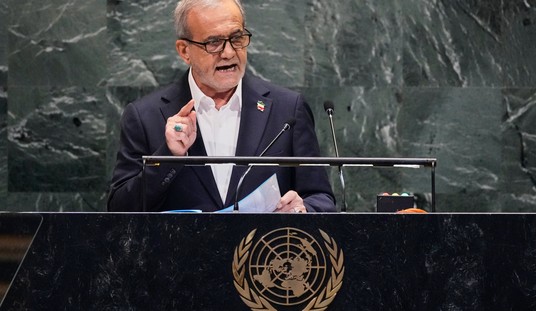
"The armed forces of Iran, in accordance with the memorandum of understanding [MOU] to end the war dated June 18, 2026, have taken the necessary measures to ensure the safe passage of commercial vessels through the Strait of Hormuz, and shipping in this route is currently underway," Iranian Foreign Ministry spokesman Esmail Baghaei said Friday, according to Iran's Fars News Agency.
That statement landed just hours after the IRGC broadcast a completely different message over maritime radio channels — warning vessels away from the strait on the grounds that the U.S. had violated the very same MOU that President Trump and Iranian President Masoud Pezeshkian signed Wednesday. Their complaint was the attacks on the IRGC's lackey group, Hezbollah. Understanding the IRGC's link to Hezbollah is critical here.
Same country. Same waterway. Two flatly contradictory statements within hours of each other. One from the civilian government, one from the Islamic Revolutionary Guard Corps. That's today's thesis: two bodies, two agendas, zero coordination — and a masterclass in why every piece of "promising" news out of Tehran should come with a grain of salt the size of a shipping container.
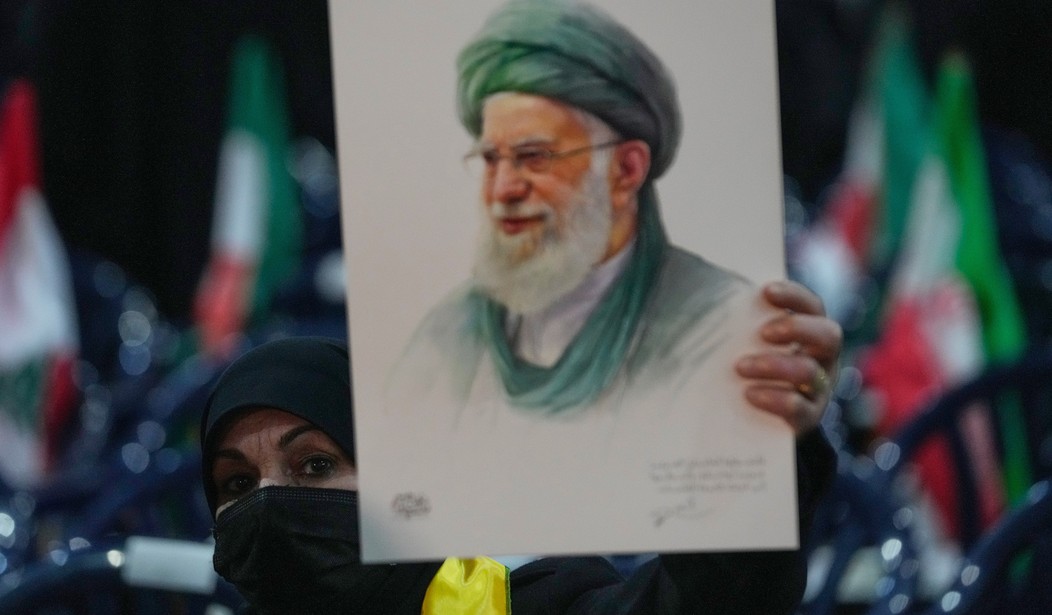
I covered this in April, but apparently it bears repeating. The IRGC's founders didn't build it in 1979 to defend Iran's borders. They built it to protect and promote the Islamic Revolution, crush internal dissent, and project revolutionary power across the region.
The BBC labeled it a "business empire" back in 2010 — and that description hasn't aged a day. The IRGC answers to no elected official. It reports directly to the Supreme Leader, bypassing the defense ministry and the civilian government entirely. Completely. As if they don't exist.
The IRGC commands land, naval, and missile forces, plus the Quds Force — the arm that funds, arms, and directs allied militias like Hezbollah and the Houthis. It also controls the Basij, the paramilitary force whose only job is keeping Iran's civilian population terrified and in line. All those videos of Iranian security forces gunning down civilians in the streets? That's the Basij clocking in. And here's the detail that matters most: the IRGC's entire reason for existing is permanent resistance to the West — which means the United States and Israel, by definition. Negotiate that away, and the IRGC doesn't have a reason to show up for work. They know it. We should, too.
So when the civilian government signs a deal and the IRGC keeps fighting, that's not a glitch. That's the feature. The hardliners who executed the Islamic Revolution in 1979 designed this system on purpose.
This dynamic has real-world confirmation. The Jerusalem Post reported on March 28: "Iran's President Masoud Pezeshkian is reportedly clashing with Islamic Revolutionary Guard Corps (IRGC) chief Ahmad Vahidi over the economic and social impact of the war with the United States and Israel, Iran International reported on Saturday, citing Iranian sources."
U.S. officials chose Parliament Speaker Mohammad Baqer Ghalibaf as their main interlocutor — the one who could supposedly close a deal. His résumé straddles the IRGC and civilian institutions, which made him look like a bridge-builder. He wants a deal. Too bad he doesn't run the country.
So who does?
The Critical Threats Project and the Institute for the Study of War (CTP-ISW) — two Washington think tanks that co-publish rigorous open-source analysis drawing heavily on Iranian state media, Fars News, Tasnim, and regional reporting — assess that IRGC Commander Ahmad Vahidi and his inner circle hold the real power.
Vahidi's crew is the one that canceled negotiations on June 1 and has driven the verbal sparring ever since. Their calculation is simple: the current limbo suits them perfectly. No concessions. No full-scale war. Nuclear program intact. Grip on the Strait of Hormuz is maintained. That's why every agreement the Iranian civilian government signs gets immediately undermined by the IRGC. They're not rogue actors. They're the actual decision-makers.
A note on Vahidi's title: his predecessor, Mohammad Pakpour, died in the joint U.S.-Israeli strikes of February 28 — the same strikes that killed Supreme Leader Ali Khamenei. Vahidi stepped into the top job mid-war, mid-chaos, and outlets can't agree on whether to call him commander or deputy commander. The IRGC has always kept its command structure deliberately murky, and a decapitation strike in the middle of an active war didn't exactly bring clarity.
Meanwhile, elected President Pezeshkian — the "pragmatist," bless his heart — watches from the sidelines while the hardliners bet that defiance advances their goals better than any signed piece of paper ever could.
Here's the core absurdity: the civilian and reformist side can signal flexibility and call it progress, but they don't control the nuclear program or the military. The IRGC does. So Iranian diplomats tell reporters a deal is "just inches away" while the IRGC shoots down American drones and threatens shipping the same week. The Foreign Minister complains about U.S. "maximalist demands" while the head of Iran's Atomic Energy Organization flatly declares Iran won't accept any limits on enrichment. Both men speak for Iran. Neither speaks for the other. Pick your Iranian official, pick your reality.
Above all of this sits the new Supreme Leader, Mojtaba Khamenei — son of the now-deceased Ali Khamenei, reportedly wounded in the February strikes, operating from hiding. Available intel suggests he's letting the IRGC set the ceiling on what's negotiable rather than pushing back against them. That's not a shock if our understanding of how badly he was wounded in the attack that killed his father holds any water. His power is further limited by the constant reports of his being homosexual. You can imagine where that point is a liability in a strictly Islamic society.
Anything the foreign ministry calls "progress" is essentially a press release from the faction that lost the internal argument. Real progress requires either IRGC buy-in or Khamenei overruling them. Neither has happened with any consistency — which raises an uncomfortable question about whether the man nominally running Iran actually has the capacity or authority to run anything.
Which brings us to the Axis of Resistance — and its fatal design flaw.
Iran's proxy strategy always ran on strategic depth, with the IRGC holding the leash. Keep Hezbollah on Israel's northern border, Hamas in Gaza, the Houthis in Yemen, and Shia militias in Iraq — simultaneous pressure points, cheap and deniable, forcing adversaries to fight on multiple fronts at once. Notice that the most recent pretext for closing the Strait was Israel attacking — not Iran, not Iranian civilians, but Hezbollah in Lebanon. That tells you everything about whose interests the IRGC is actually defending.
Israel has been systematically dismantling that architecture in Lebanon. Hamas is devastated. Assad's fall closed the Syrian corridor that moved Iranian weapons to Hezbollah. The Houthis are degraded. Hezbollah itself took catastrophic losses — leadership killed, missile stocks depleted, southern Lebanon operations gutted. Every one of these was an IRGC instrument, and Israel took them apart one by one. That's why Hezbollah's fate lands like a personal affront to the IRGC — because it is one.
This is why the IRGC fights so ferociously against any deal that touches Hezbollah. Defending Hezbollah isn't mere sentimentality — it's the only path back to strategic leverage against Israel that doesn't require Iran to fight directly, which, at the moment, their ability to do so is seriously limited, to say the least. Ask the IRGC to permanently sever that relationship, and you're asking them to amputate a limb. They'll never do it. Not while the IRGC exists as an institution.
But here's the thread running through all of it and the fatal flaw I mentioned: money. The entire Axis of Resistance model is expensive. Hezbollah alone historically costs Iran an estimated $700 million to over $1 billion annually. Add Hamas, the Houthis, and Iraqi militias, and Iran runs a regional military empire on a sanctions-squeezed budget, funded largely through oil smuggling, front companies, and enforcement gaps.
The IRGC's defiance only stays sustainable as long as the money holds. Sanctions and military action bleed Iran — and the proxy architecture degrades in lockstep with Iranian finances. The honest caveat: estimates of Iran's actual cash reserves remain all over the map, making it genuinely hard to say how much it has left.
But Trump's strategic logic holds: squeeze the money long enough, and the empire the IRGC built starts running on fumes. And empires running on fumes don't negotiate from strength. They just pretend to. We saw that act with Saddam and his lackeys like Muhammad Saeed al-Sahhaf, AKA "Baghdad Bob." Remember him? He’s the one who proclaimed, "Baghdad is safe. The battle is still going on. Their infidels are committing suicide by the hundreds at the gates of Baghdad. Don't believe those liars". As he said those words, Iraqi soldiers were running for cover nearby, and American tanks were rolling by in the background of the shot.
At the moment, that’s where things stand with the IRGC. The money is the key here, and the IRGC is finding less and less of it available.
So now we see the question being asked about the proposal to allow Iran to sell its oil again. Critics complain this will allow Iran to rebuild its military and its proxies in the region. Vice President Vance addressed that yesterday:
Understanding Vance’s point is key to making sense of all of this. Tracing the movements of money, where it comes from and where it goes, is vital to the effort of bringing Iran to heel. The White House understands that choking the IRGC is the path to peace not only in Iran itself but also in the whole of the region.
Our efforts in Iran are kind of like a duck. There's a lot of paddling going on under the surface. Critics would be advised to sit back and await developments.