
Our actions in Venezuela and in Ukraine, and now in Iran, have revealed something critical about China and Russia, and their military ambitions. I'm going to get all analytical on you to make the point, because there's really no other way to do this.
Let’s break down all the known figures, and see if we can detect a pattern. We’ll look at Russian and Chinese weapons that Venezuela and Iran use, and in the case of Ukraine, we’ll examine weapons and tactics that the Russians have used in that conflict.
Let’s take Russian weapons in Iran first:
Aircraft: Iran operated Soviet/Russian-origin jets, including MiG-29 fighters and Su-24 strike aircraft, acquired in the early 1990s.
Air Defense: Iran purchased the S-300PMU-2 long-range surface-to-air missile system from Russia, delivered in 2016 after years of delays due to sanctions.
Helicopters: Iran has had various Soviet-era helicopters, including Mi-8/Mi-17 transport helicopters.
Tanks: T-72 and T-54/55 tanks form part of Iran's armored forces.
Naval: Some Soviet-era submarine and surface technology influenced Iran's fleet.
Now let’s look at Chinese weapons in Iran:
Anti-ship missiles: China supplied Iran with the C-802 (Noor) anti-ship cruise missile, which Iran later reverse-engineered and produced domestically.
Aircraft: Iran received F-7 fighters (a Chinese copy of the MiG-21) in the 1980s and 1990s.
Tanks: The Type 69 tank was supplied to Iran.
Naval vessels and missile boats: China provided fast-attack craft and related technology.
Anti-tank missiles: Various Chinese-origin ATGMs entered Iranian service.
Important context:
Due to decades of international sanctions, Iran has heavily invested in domestic defense production, reverse-engineering and improving many of these foreign systems.
Iran has also developed its own missiles, drones (such as the Shahed series), and armor, sometimes using Russian and Chinese designs as a starting point.
More recently, Iran has supplied Russia with drones (Shahed-136) for use in Ukraine — a reversal of the traditional arms flow direction.
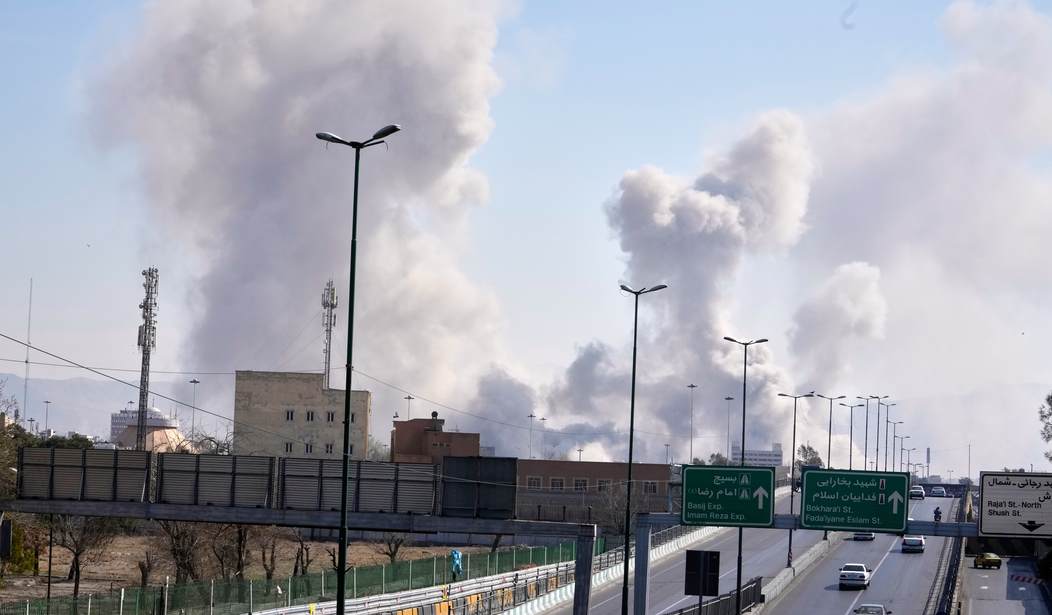
So in short, both Russian and Chinese hardware have played significant roles in shaping Iran's military capabilities over the decades. Capabilities, I hasten to point out, that were essentially wiped off the map in less than 48 hours.
* * *
Let’s move on to Venezuela, which has had both Russian and Chinese weaponry in its arsenal, particularly under the government of Hugo Chávez, who dramatically shifted arms purchases away from the U.S. and toward Russia and China in the 2000s. (Gee, big shock.)
Russian weapons in Venezuela:
Aircraft: Venezuela acquired Su-30MKV Flanker multirole fighters — among the most advanced Russian jets exported at the time — which were delivered starting in 2006. It has also operated Mi-17 and Mi-35 helicopter gunships.
Air Defense: Venezuela purchased S-300VM (Antey-2500) long-range surface-to-air missile systems, as well as Buk-M2 and Tor-M1 shorter-range systems, giving Venezuela one of the more sophisticated air defense networks in Latin America.
Small Arms: Venezuela bought large quantities of AK-103 Kalashnikov rifles and even licensed domestic production of them.
Tanks: Venezuela acquired T-72B1V main battle tanks.
Artillery: Venezuela received Msta-S self-propelled howitzers and BM-21 Grad multiple rocket launchers.
Naval: Venezuela purchased upgrades and equipment for its navy with Russian assistance.
Chinese weapons in Venezuela:
Radar systems: China supplied Venezuela with air surveillance and radar equipment.
Vehicles and transport: Venezuela also received various military trucks and logistical vehicles from China.
Training aircraft: Venezuela has used some Chinese-origin aircraft for training purposes.
China's role has been more in dual-use technology, surveillance systems, and infrastructure, rather than heavy front-line weapons.
A bit of background will be of some use here:
Hugo Chávez spent an estimated $4–5 billion on Russian arms between 2005 and 2012, making Venezuela one of Russia's top arms customers globally during that period.
Ideology and a desire to reduce dependence on the U.S. largely drove the purchases. The U.S. had cut off arms sales to Venezuela in 2006.
Maintenance and readiness of this equipment has reportedly declined significantly under Nicolás Maduro, due to Venezuela's economic collapse and a lack of funds for spare parts and upkeep.
The U.S. has sanctioned Venezuela, making Western military equipment essentially inaccessible.
So Venezuela built a substantially Russian-equipped military under Chávez, with China playing a secondary but growing role, particularly in technology and surveillance, mostly because the Chinese were interested in an oil deal. Here, too, the outcome of challenging Venezuela turned out to be no challenge at all, with United States forces capturing Maduro and basically blowing Venezuela’s Chinese- and Russian-built military capability away too, in less than 24 hours.
* * *
Then, finally, let’s move on to the Ukraine, where from the start of the war there until now, Ukraine has managed to keep Russian President Vladimir Putin at bay with a far smaller force. Throughout the war in Ukraine (beginning with the full-scale invasion in Feb. 2022), Russia has consistently fielded a larger number of troops than Ukraine. Here's a breakdown:
Russia in Ukraine:
Launched the initial invasion with an estimated 150,000–200,000 troops along multiple fronts.
After early setbacks and withdrawals (notably from around Kyiv), Russia reorganized and announced a partial mobilization in Sept. 2022, calling up around 300,000 reservists.
By 2024–2025, estimates suggested Russia had committed anywhere from 500,000 to over 600,000 troops in and around Ukraine, including contract soldiers, mobilized reservists, convicts recruited through the Wagner Group and later directly by the military, and — notably — North Korean troops, estimated at around 10,000–12,000 soldiers sent to assist Russia.
Russia's total active military personnel (globally) is estimated at around 1 million+.
As for Ukraine:
Prior to the Russian invasion, Ukraine's active military was around 200,000 troops.
After the invasion, Ukraine mobilized massively — estimates suggest Ukraine expanded its forces to somewhere between 700,000 and 1 million total personnel across all branches and territorial defense units by 2023–2024.
However, not all of these were front-line combat troops — many were in logistics, territorial defense, training, etc.
The Nuance
Raw troop numbers can be misleading. Ukraine, fighting a defensive war on home territory, benefited from strong motivation, knowledge of terrain, and massive Western weapons and intelligence support. At the same time, Russian military strategy since the Second World War has always leaned toward using the foot soldier as cannon fodder, resulting in a far lower survival rate for its soldiers than nearly any other army in the world.
World War II: The Soviet Union suffered an estimated 27 million total deaths, including roughly 8-11 million military dead. Soviet commanders were often willing to send waves of troops into withering fire, partly out of ideological pressure and partly due to tactical doctrine. The phrase "quantity has a quality all its own" (often attributed to Stalin) captures this mindset.
Winter War with Finland (1939–40): The USSR suffered staggering losses against tiny Finland — estimated at 125,000-170,000 dead — due to poor leadership, rigid tactics, and underestimating the enemy.
Afghanistan (1979–89): Around 15,000 Soviet soldiers were killed, but the war also left a deep psychological scar and contributed to the USSR's collapse.
First Chechen War (1994–96): Russian forces suffered humiliating casualties, especially in the Battle of Grozny, due to poor coordination, low morale, and underpreparedness.
Why Has This Pattern Persisted?
Cultural and doctrinal acceptance of mass casualties: Russian military doctrine has historically prioritized mass, attrition, and overwhelming force over precision and troop preservation.
Centralized, top-down command: Junior officers have traditionally had little initiative or flexibility, leading to rigid and costly frontal assaults rather than adaptive tactics.
Political pressure over military logic: Commanders have historically feared reporting failures upward more than they feared losing men, creating perverse incentives.
Devaluation of the individual soldier: The Russian/Soviet system has often treated soldiers as expendable assets rather than investments to be preserved — a stark contrast to Western military philosophy, particularly that of the U.S. after Vietnam, which became highly casualty-averse.
Corruption: Siphoning of defense budgets means training, equipment, and logistics are often far worse in practice than on paper, leaving soldiers underprepared.
In the Ukraine War
This pattern has been dramatically visible. Russia has repeatedly used human wave tactics, particularly with convict recruits and poorly trained mobilized reservists, suffering enormous losses for modest territorial gains.
Western estimates of Russian casualties in Ukraine have ranged into the hundreds of thousands killed and wounded — extraordinary numbers for a modern conflict.
Russia's use of North Korean troops further underscores a willingness to expend lives rather than develop more sophisticated, casualty-conserving approaches.
Equipment losses have also been staggering — thousands of tanks and armored vehicles destroyed or captured.
The Counterargument
Some historians argue that Russia's acceptance of casualties reflects strategic pragmatism rather than callousness — that in existential conflicts, accepting losses to achieve victory is rational.
Russia has also shown it can absorb losses politically in ways that democratic governments cannot, since public opposition to casualties has less impact on leadership decisions.
And ultimately, the attrition strategy has worked for Russia historically — in World War II most notably, where absorbing horrific losses ultimately wore down Nazi Germany.
So Russia's historically lower survival rate for its own troops reflects a combination of doctrine, culture, political structure, and institutional corruption. The individual Russian soldier has consistently been valued less than the strategic objective — a pattern that continues visibly in bloodbath that is Ukraine today. It doesn’t seem sustainable to me, but then again, the Russians are kind of a funny bunch. What makes sense to you or me may not make sense to them. As in this case.
In Ukraine, while both sides fielded very large forces, Russia had the larger overall military, but Ukraine's mobilization was remarkable given its smaller population, and the war was far more competitive than Russia's raw size advantage would suggest. That’s aside from the advantages the weaponry we supplied the Ukrainians had, which is the point here.
The common denominator on each of the losing sides, is Russian and Chinese weaponry, which, it is now apparent, is not up to the levels the Russian and the Chinese figured it was.
Both Russia and China got a cautionary note from the Americans, in all three of these cases.
Be careful here. This isn’t macho chest-thumping or bragging, on my part; far from it. What it is is a tactical situation that translates to this: The Russians and the Chinese have far less of a chance of winning any war of conquest than they’d like to admit.
Clearly, there are issues with the Chinese weaponry, and the Russian as well. If it was just once, you might argue that it wasn't systems superiority. Twice, you'd have a bit more problems making that case. Third time? There's no chance anyone's going to make that argument at all.
The Russians also seem to want to ignore the costs in blood their ambitions have been creating. All this, in turn, puts these United States in a safer position than we’ve been in for many years, assuming we have learned the lessons shown us by the three conflicts discussed here.
There’s a lesson for the left here, in the U.S. as well.
Peace through strength actually works. I'll say it louder for the kids in the back rows:
Peace through strength actually works.
Just a guess, mind you, but we're going to see a lot of denial on that point as we move closer to the midterms. The left is going to be arguing that our actions in these matters wasn't the correct thing to do. Thing is, results matter.