




Politics makes strange bedfellows. It always has and always will.
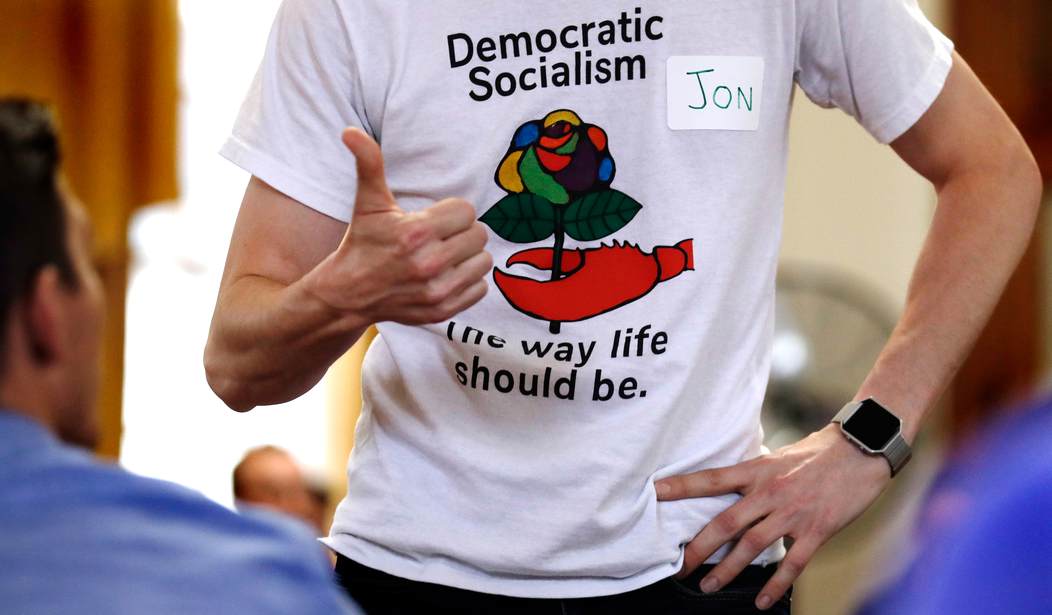
Nevertheless, even Machiavelli might have struggled to explain today’s increasingly visible alliance between immigration activists, Democratic Socialists, and Islamic political activism in America.
I’m convinced even great minds like Montesquieu (1689–1755),[1] Edmund Burke (1729–1797),[2] and Thomas Jefferson (1743–1826)[3] would be dumbfounded by something that looks very unholy, even to the person of no religion.
On one hand, there are those who want fewer immigration restrictions. On the other hand, there are advocates who want greater government control over economic life. On the third hand (and the third hand is deliberate because it looks abnormal), some seek greater influence for religiously informed political priorities, specifically Islam.
Bundled together as a three-handed alliance, their philosophies are not identical. Indeed, some are fundamentally incompatible. Yet they have discovered something remarkably convenient: political power.
And when political power becomes the common denominator, ideological contradictions suddenly become minor inconveniences. Islam despises homosexuality but will excuse it for the sake of power. Democratic socialists throw hissy fits over capitalism but personally make accommodations for all the benefits of capitalism. And there are those who want open borders for immigrants, again, for power.
Welcome to the modern American political coalition, where yesterday's contradictions become tomorrow's campaign slogans.
Consider the insufferable Mayor Zohran Mamdani.
He’s a devoted Muslim and a self-described democratic socialist. His election in 2025 was not a landslide by far, but the political significance extends far beyond his biography.
In June 2026, candidates supported by Mamdani achieved significant primary victories, demonstrating the growing electoral influence of Democratic Socialism and progressive activism. The campaigns also revealed how immigration, economic inequality, and the Israeli-Palestinian conflict increasingly intersect in Democratic politics.
This is what I find is the most extraordinary part: constituencies that disagree profoundly on capitalism, religious morality, sexuality, and the proper role of government can nevertheless march beneath the same political banner.
That is their democratic right. But Americans should examine what that banner actually represents, and it’s something that troubles me.
Let’s look at the first aspect of this unholy alliance: immigration.
America is a nation enriched by immigration. I know something about that journey. I came to the US legally, became a permanent resident, and eventually took the oath of American citizenship. Citizenship was not merely receiving a document. It was accepting a responsibility.
Yet today's immigration debate increasingly confuses compassion with political strategy that wants the abandonment of enforcement immigration policy.
In October, Mamdani joined more than 100 Democratic officials in asking New York property owners not to make their facilities available as staging areas for federal immigration operations. Supporters framed the effort as protecting communities, when in reality, it is a request to abandon immigration policy.
But immigration policy must serve the nation, not the electoral ambitions of political movements. A country that cannot distinguish between welcoming newcomers and enforcing its laws is confusing hospitality with surrendering responsibility. Again, this troubles me.
Now, let’s turn to the second aspect: socialism
Socialism's political appeal is understandable to the politically homeless, yet rather stupid[4] to the average American who understands and carries out their responsibilities and obligations as a citizen of the US. Who doesn't want affordable housing, accessible healthcare, and economic security? The disagreement between the understandable and stupid concerns how those objectives are achieved.
Democratic socialists argue that government intervention and public ownership can produce a fairer society. I would argue that excessive government control threatens the very economic opportunity that has made America attractive to generations of immigrants.
There is a remarkable irony in campaigning against capitalism in a country whose economic freedoms have attracted millions seeking better lives. But of course, democratic socialism is not identical to Soviet communism. But its proposals still deserve rigorous examination.
Who pays? Who decides? What happens to private enterprise? And when government promises everything, how much individual independence remains? The American Dream was built around the opportunity to succeed, not the promise that government would manage everyone's success.
Now, to the third and most troubling aspect of this unholy alliance: political Islam
Here we must make an important distinction. Not all Muslims are a political monolith. Many are patriotic Americans, successful entrepreneurs, military veterans, and defenders of constitutional liberty.
For example, some Muslim voters in New York are considerably more conservative on education, policing, and business regulation than Mayor Mamdani.
Nevertheless, Muslim political engagement has become increasingly influential in progressive electoral coalitions. Recent reporting describes immigrant voters mobilizing around Mamdani, immigration enforcement, affordability, and political representation.
The question is not whether Muslims should participate in American politics. The question is whether religiously informed political movements and secular socialist movements can maintain a principled alliance when their fundamental values collide.
Consider religious freedom, women's equality, freedom of expression, and the rights of individuals to leave or criticize a religion. These principles must apply equally to everyone. Any political movement, whether Christian, Muslim, socialist, or secular, that seeks special exemptions from constitutional principles deserve absolute scrutiny.
America guarantees freedom of religion. It does not guarantee any religion the freedom to govern everybody else.
Let me conclude by highlighting the contradiction in this unholy alliance that nobody wants to discuss. The most fascinating feature of this coalition is its internal contradiction. Socialist activists often embrace progressive positions on sexuality, gender, and secular government. Socially conservative religious voters may reject those very positions.
Immigration activists emphasize inclusion, while some political movements place strong demands on cultural identity and ideological conformity. For now, shared opposition to immigration enforcement and established political power structures can conceal these disagreements.
But political alliances built primarily around what they oppose eventually confront the uncomfortable question of what they actually believe. And that question cannot be answered indefinitely with slogans.
I say that America must remain America. The US is not strengthened by treating every immigrant as a socialist, every Muslim as a political Islamist, or every progressive as an enemy of freedom. It is strengthened by insisting that everyone, regardless of origin or belief, respects the same constitutional framework.
We need lawful immigration, economic opportunity, freedom of religion, freedom of speech, and equal protection under the law. Those principles are not obstacles to America's future. They are its foundation.
My concern is not that newcomers are changing America because newcomers have always helped shape America. My concern is that political movements may exploit immigration, religious identity, and economic frustration to advance agendas that weaken the freedoms that made America worth coming to in the first place.
America can welcome the world without surrendering the principles that made the world want to come here.
And if an alliance demands that America abandon those principles in the name of progress, we should have the courage to ask one final question: If your political revolution destroys the American Dream, what exactly have you liberated?
[1] Developed the influential theory of separation of powers among legislative, executive, and judicial institutions.
[2] Associated with modern conservatism. Defended inherited institutions, tradition, gradual reform, and the importance of social continuity.
[3] Articulated natural rights, religious liberty, and government by consent. Principal author of the Declaration of Independence, although his commitment to liberty stood in contradiction to his ownership of enslaved people.
[4] I use the word ‘stupid’ as Dietrich Bonhoeffer used it: the abdication of moral responsibility.
Editor's Note: Do you enjoy PJ Media's conservative reporting exposing the radical left and woke media? Support our work so we can keep bringing you the truth.
Join PJ Media VIP and use promo code FIGHT to receive 60% off your membership.
Join the Conversation
VIP members get the ability to comment on articles.