





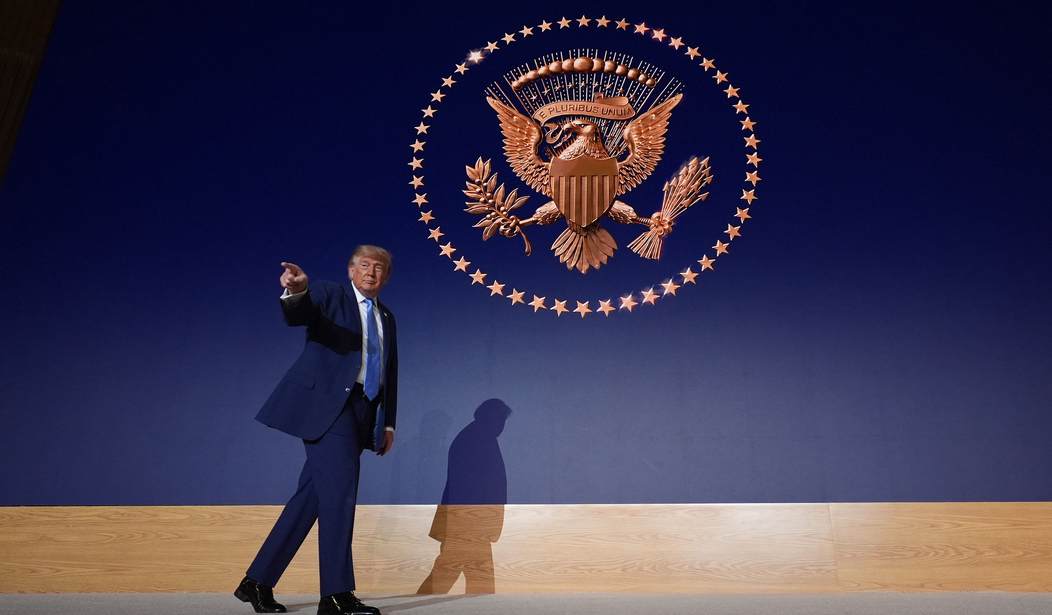
Diesel at $6.28 a gallon changes the math for a Wisconsin farmer bringing in the harvest and for a trucker hauling that crop to market. A year ago, the national average was $3.68; the extra cost follows food and freight through the economy, and President Donald Trump is now looking for an unlikely supplier for relief: Russia.
On Friday, Trump announced that Russian President Vladimir Putin agreed to supply more than 300,000 metric tons of diesel to American and global markets immediately, another 500,000 tons in November, and 1 million tons soon afterward.
Trump also said Russia would deliver an additional 3 million tons, depending on the condition of its refineries. Those are announced quantities, not verified deliveries.
Yet.
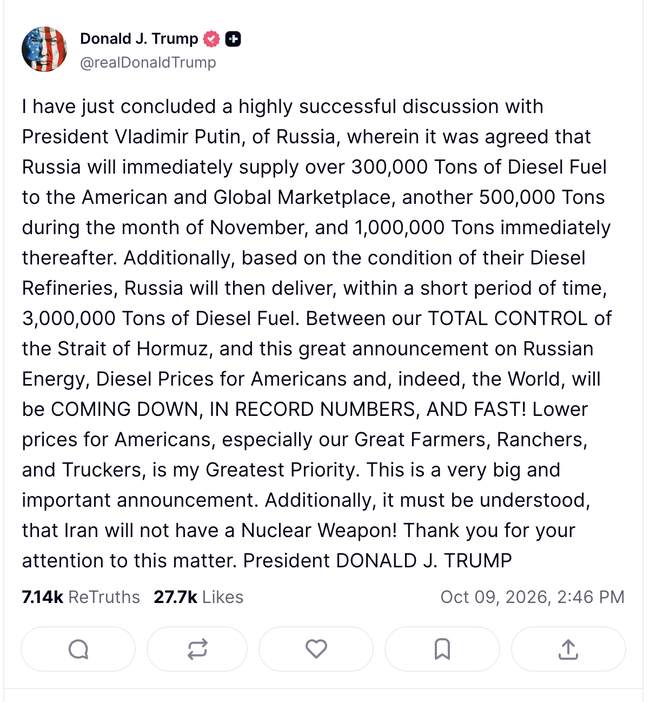
Trump followed the announcement with action. Treasury’s Office of Foreign Assets Control issued General License 135, permitting transactions involving the sale, delivery, offloading, and importation of Russian-origin diesel, including into the United States, through April 7, 2027. The license excludes debits to certain accounts held for Russia’s central bank, national wealth fund, and finance ministry. Other sanctions remain in place.
The administration is responding to a severe shortage, not a typical seasonal price bump. Fighting involving Iran has disrupted critical energy flows, while the Ukrainian attacks have damaged Russian refineries. American diesel prices have risen about 70% since the U.S.-Israeli war with Iran began in February. Earlier administration efforts, including emergency stockpile releases and permission to use tax-exempt dyed diesel on highways, have produced little visible relief at the pump.
From Reuters:
The administration's other major initiative, an executive order allowing red-dyed diesel on public ?roads through year-end, has drawn limited industry uptake. The fuel is chemically identical to what trucks normally burn but is tinted to show it is exempt from the 24.4-cent-per-gallon federal highway tax.
The order defers the federal tax and waives penalties for burning off-road fuel on highways. But major retailers and marketers remain wary of selling it because of unclear tax liabilities, logistical hurdles and the risk of fines when trucks cross state lines.
The tax savings are relatively small with diesel prices above $6 a gallon.
Trump singled out farmers, ranchers, and truckers in his announcement. They are the Americans who can’t simply wait for favorable prices before filling a tank. Harvest machines burn diesel, commercial trucks burn diesel, and freight charges reach customers who never drive anything larger than a family car. Higher diesel bills squeeze farm margins long before consumers notice higher prices on store shelves.
The new supply sounds substantial, but its scale deserves attention. The initial 300,000 tons equal roughly 2.25 million barrels. America’s diesel economy moves millions of barrels daily, and Trump described the arrangement as serving global markets, not exclusively American buyers. Oil traders briefly pushed diesel futures lower after the announcement.
Recommended: Trump’s DOJ Wanted State Voter Rolls, but a Judge Said Congress Never Authorized It
However, futures falling on Friday don’t prove that a truck stop cuts prices next week.
The United States still exports about 1.5 million barrels of diesel daily. The shortage reflects a global market with disrupted refining and shipping, not an absence of American production. Trump is also considering using the Defense Production Act to expand domestic energy capacity, but new refining equipment doesn’t appear overnight.
A lasting answer requires more than one foreign supply agreement.
An answer, like, I dunno, maybe push the enviro-weenies away and start construction on much-needed domestic refineries?
Russia brings another complication. American sanctions target revenues that help finance Putin’s war against Ukraine, and Trump signed further sanctions legislation last month. Ukrainian President Volodymyr Zelenskyy condemned the decision on Friday, warning that additional Russian income could prolong the fighting. Nebraska Republican Rep. Don Bacon also criticized easing pressure on Moscow. Those objections concern a real cost of the arrangement, not merely the politics of diesel prices.
From the Associated Press:
“I believe our team is simply being used as a smokescreen. And that is certainly not fair. It is certainly not how partners should treat each other,” Zelenskyy said.
Trump’s move casts doubt on the likelihood of the White House imposing new sanctions on Russia, given that the law that passed overwhelmingly by Congress directs the administration to target countries that purchase Russian oil and gas.
Senate Democratic leader Chuck Schumer, along with Sen. Jeanne Shaheen, who is the top Democrat on the Foreign Relations Committee, and Sen. Elizabeth Warren, the ranking Democrat on the Banking Committtee, called Trump’s announcement a betrayal of Ukraine, the European allies and U.S. national security.
“Enough is enough,” the senators wrote. “The President must end his war with Iran instead of funding Russia’s war machine.”
Practical questions remain unanswered, too. The White House hasn’t disclosed who will pay for the fuel or exactly when shipments might arrive. Russia restricted diesel exports earlier this year as it struggled to meet domestic demand, and damaged refineries make its additional promises uncertain. The temporary license opens a legal door; it can’t rebuild equipment, charter tankers, or manufacture diesel.
Trump deserves scrutiny for both parts of the decision: his effort to lower costs for working Americans and his willingness to relax economic pressure on Russia. The administration can demonstrate whether this trade succeeds by showing actual deliveries, sustained reductions in diesel prices, and what Moscow received in return.
Farmers and truckers need the relief now. The American public needs to know what it costs.
Fuel prices, foreign policy, and Washington’s decisions hit Americans where it hurts most: their wallets. PJ Media follows the facts and examines the consequences behind the headlines. Support independent journalism and get 60% off PJ Media VIP with promo code FIGHT.


Join the Conversation
VIP members get the ability to comment on articles.