Earlier today, I wrote about finding my dad somewhere between Wisconsin and the forests around Foy while watching Band of Brothers for approximately the 9 millionth time.
I didn't expect World War II to come looking for me again quite so soon.
His name was Howard Krapf.
Krapf was a private first class in Company B, 1st Battalion, 12th Infantry Regiment, 4th Infantry Division. On Nov. 8, 1944, his unit attacked German positions during the Battle of the Hürtgen Forest.
His platoon later reported that German machine-gun fire killed him. The fighting was so fierce that his fellow soldiers couldn't recover his body.
From the Digital Visual Information Distribution System:
Krapf entered the service from Pennsylvania and served in Company B, 1st Battalion, 12th Infantry Regiment, 4th Infantry Division.
On Nov. 8, 1944, his unit participated in an attack on enemy positions during the Battle of the Hürtgen Forest.
He was reported missing during the engagement, but members of his platoon later reported that he was killed by enemy machine gun fire. Circumstances of the battle prevented the recovery of his remains at the time.
In April 1948, a German demining team working in the forest west of Hürtgen found a set of unidentified remains, later designated X-7433 Neuville, which were eventually interred at the Ardennes American Cemetery in Neupré, Belgium.
Howard Krapf disappeared into the forest.
If Normandy occupies one of the largest rooms in America's memory of World War II, the Hürtgen Forest seems to live down the hallway with the door half closed. American forces fought there for months, often through dense woods, mud, snow, artillery fire, mines, and prepared German defenses.
The casualties were staggering. And somewhere inside of it was Howard.
The war moved on, Germany surrendered, soldiers came home, and families waited at stations and kitchen tables.
Howard didn't.
Then, in April 1948, a German demining team working in the forest west of Hürtgen found human remains, and they were American.
Unfortunately, nobody could identify them.
Recommended: Somewhere Between Foy and Wisconsin, I Found My Dad Again
So Howard Krapf, a son from Pennsylvania who had crossed an ocean to fight for his country, became something terribly important.
X-7433 Neuville.
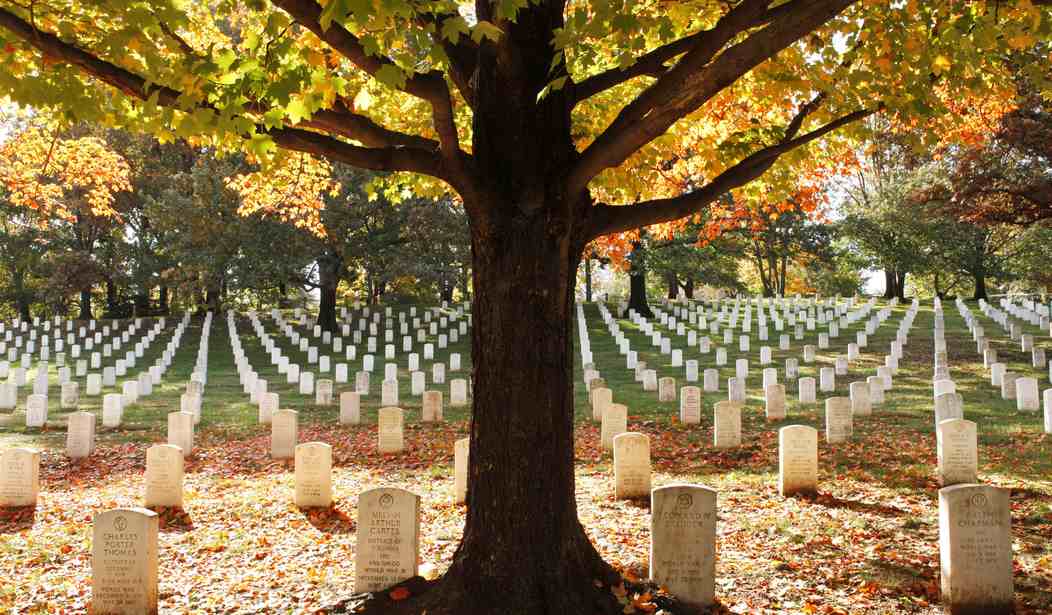
His identified remains were eventually buried at the Ardennes American Cemetery in Belgium. Think about that for a second.
X-7433. A human life reduced to a filing system because nobody yet possessed the means to give the man beneath the marker his name back.
But somebody kept the file, and America kept looking.
In July 2023, the Department of Defense and American Battle Monuments Commission exhumed X-7433. The remains went to the Defense POW/MIA Accounting Agency laboratory, where scientists used modern forensic methods to solve a mystery the technology of 1948 couldn't.
On June 11, 2026, X-7433 disappeared, and Howard Krapf came back.
I keep thinking about the people involved in work like this.
Howard couldn't have known them; they weren't alive when he died, and some probably weren't alive when his remains were discovered in 1948.
Yet somebody opened the old records. Somebody examined the evidence, somebody worked in a lab, and somebody found the family members needed to complete the identification.
People born decades after Howard died finished a job begun by men who fought beside him. There's something profoundly American in that.
On Sept. 21, Howard Krapf was finally laid to rest at Fairview Cemetery in Whitehall Township, Pa. Eighty-two years had passed since the forest swallowed him.
Today's column was about the things one generation quietly hands to another: a father teaches his sons something, and the sons grow older and discover they're still carrying it.
Howard's story feels like the other side of the same idea. Sometimes, what gets handed down isn't a lesson; it's an obligation.
His buddies couldn't carry Howard out of the Hürtgen Forest in 1944, so they handed the responsibility to us.
It took 82 years, but Howard finally came home.