





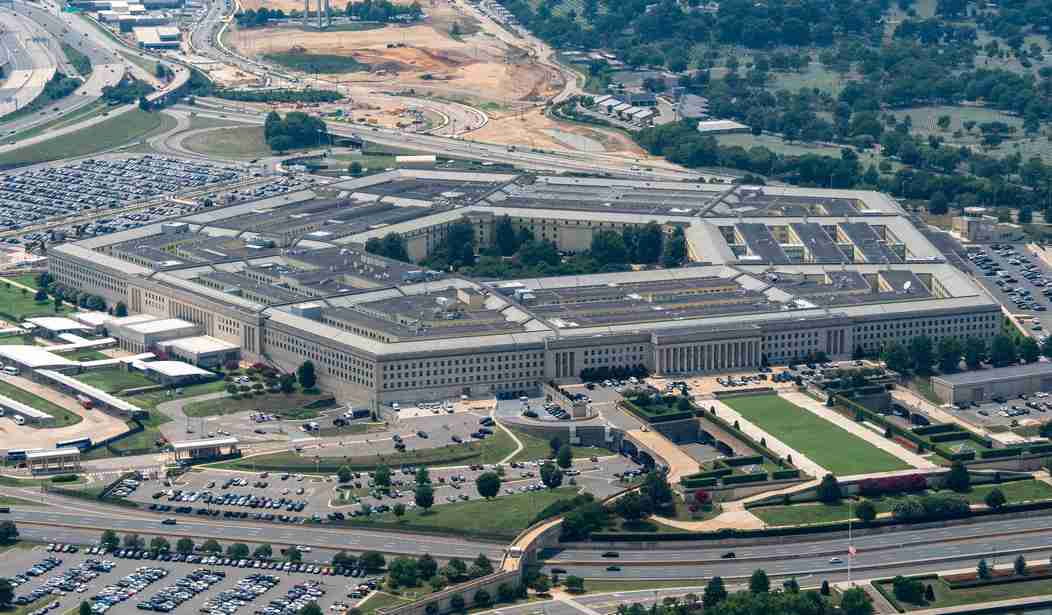
Six months ago, Anthropic appeared to have stopped the Pentagon's effort to push Claude out of military systems. The legal fight continued, and on Friday, the D.C. Circuit handed the Department of War a significant victory. The appeals court upheld the department's decision to exclude Claude from its supply chain under the Federal Acquisition Supply Chain Security Act.
Friday's ruling doesn't erase Anthropic's earlier victory in California. U.S. District Judge Rita Lin ruled in August that a parallel Pentagon designation under a different statute was unlawful. The ruling appears to remain in place for now, leaving two courts looking at related government actions through different federal laws.
From Bloomberg Law:
Anthropic “refused to relax contractual prohibitions on the use of Claude for lethal autonomous warfare or domestic surveillance,” Justice Karen LeCraft Henderson wrote for the majority. The Department of Defense “had ample support for its conclusion that the continued integration of Claude into the department’s information systems, by the department or its contractors, presented a statutorily covered national-security risk.”
However, an August order against the government by a federal judge in San Francisco in a separate but related lawsuit filed by Anthropic is still in effect. In that case, the judge concluded a ban on government use of the company’s technology wasn’t adequately justified under a law that narrowly defined a supply chain risk as an adversary that may sabotage or maliciously subvert government systems.
The fight began with two limits Anthropic refused to remove: the company wouldn't authorize Claude for mass domestic surveillance of Americans or fully autonomous weapons.
Anthropic argued that current frontier AI models aren't reliable enough to select and engage targets without human involvement, while large-scale AI surveillance could threaten Americans' privacy. Secretary of War Pete Hegseth wanted AI contractors to accept "all lawful uses."
The Pentagon's concern went beyond a philosophical argument about AI. The appellate record describes Claude refusing some government requests involving threat assessments, classified documents, and intercepted material describing violence.
Anthropic developed Claude Gov to handle more national security work, but its two restrictions remained. A later disagreement involving a sensitive overseas military operation further raised the department's concern that Claude might not perform when military officials expected it to.
That's where the dispute becomes more than an argument over corporate ethics. Pentagon officials weren't claiming Anthropic had secretly compromised Claude; they argued that its openly stated guardrails created operational uncertainty because commanders couldn't be certain the model would perform a lawful task when they needed it.
The majority accepted that uncertainty as a legitimate national security concern.
The legal question then became remarkably specific. A separate federal case examined 10 U.S.C. § 3252, where the definition of a supply-chain risk focuses heavily on adversarial or malicious conduct.
The D.C. Circuit instead considered 41 U.S.C. § 4713. Congress wrote that law more broadly: it covers actions by "any person" capable of denying, disrupting, or manipulating the operation of covered technology.
For the majority, Anthropic didn't need malicious intentions for the Pentagon to identify a supply chain problem. The department could reasonably worry that software built with contractual or technical restrictions might fail to perform a lawful military mission when needed.
The court also rejected Anthropic's First Amendment retaliation claim, concluding the exclusion resulted from the company's refusal to accept the Pentagon's requested contract terms rather than punishment for Anthropic publicly advocating AI safety.
Judge Karen Henderson dissented. She argued the majority stretched the word "manipulate" beyond what Congress intended. In her reading, surrounding words such as "sabotage" and "maliciously introduce" point toward deliberate subversion rather than a manufacturer openly designing limitations into its own product.
The 2-1 ruling also may not be the final word. Anthropic said Friday that it "respectfully disagrees" with the decision and is considering "all options, including further review."
The company specifically pointed to its victory in the parallel California case, so the Pentagon won an important round, but the litigation over Claude and military AI may keep going.
Nobody on the court declared autonomous weapons wise, nor did the judges give mass domestic surveillance a moral blessing. Anthropic remains free to maintain its restrictions, and Friday's ruling addressed who controls procurement under this particular federal law.
For Anthropic, the answer remains uncomfortable. A private AI company may decide what it allows its technology to do. The Pentagon may also decide it won't build military systems around software whose maker reserves the ability to prohibit uses the government considers lawful and necessary.
Yes, Claude kept its ethical limits, but the Pentagon kept the procurement decision.
Artificial intelligence is already changing warfare, government, medicine, education, and nearly everything else it touches. The difficult questions are arriving faster than Washington can answer them. PJ Media VIP helps us keep digging into the arguments, rulings, and consequences behind those headlines. Save 60% with promo code FIGHT.

Join the Conversation
VIP members get the ability to comment on articles.