





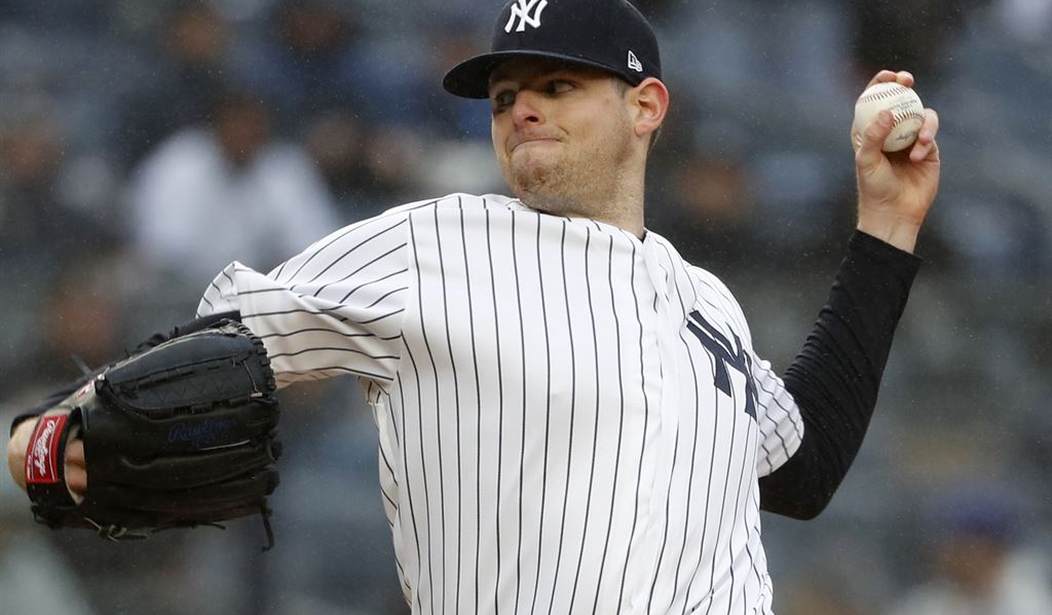
Tommy John won 288 major league games, pitched for 26 seasons, made four All-Star teams, and twice finished second in Cy Young voting. He died Saturday night at 83, yet baseball will remember his left elbow longer than almost anything he did with it.
The Associated Press:
The Yankees called John “a bedrock of our rotation during his time in pinstripes and a longtime favorite of Yankees fans.”
John was a four-time All-Star with a record of 288-231 and a 3.34 ERA during a career that stretched from 1963 to 1989. He pitched for Cleveland, the Chicago White Sox, the Los Angeles Dodgers, the Yankees, the California Angels and the Oakland Athletics.
“Tommy was an exceptional pitcher throughout his career in Major League Baseball, and his courageous role in becoming the first to have surgery that would go on to bear his name can’t be overstated,” Stan Kasten, Dodgers president and CEO, said in a statement. “His impact both on and off the field has been felt by ballplayers of all ages and will be for generations to come.”
The left-hander was 31 years old when he tore the ulnar collateral ligament in his pitching elbow in 1974, a death knell for pitchers’ careers to that point.
John allowed Dr. Frank Jobe, the Dodgers’ team physician, to replace the ligament with a tendon from his right forearm. Jobe gave the surgery 100-to-1 odds of being successful.
In 1974, John tore the ulnar collateral ligament in his pitching elbow. Dr. Frank Jobe offered an experimental reconstruction using a tendon from John's forearm. Jobe put John's chances of returning at roughly 1%, yet John took the chance.
He came back in 1976 and won 164 more games over 14 seasons. More than half his career victories came after an injury that once could've ended everything.
Baseball integration remains one of the defining achievements in sports history. Jackie Robinson's arrival opened MLB to an enormous pool of talent that racism had excluded.
John's operation changed the game in another fundamental way. A destroyed UCL stopped being an automatic career obituary.
A major study of 179 pitchers who underwent UCL reconstruction found 83% returned to the majors. Their average MLB career after surgery lasted another 3.9 years.
A total of 179 pitchers with UCL tears who underwent reconstruction met the inclusion criteria and were analyzed. Of these, 148 pitchers (83%) were able to RTP in the MLB, and 174 pitchers were able to RTP in the MLB and minor league combined (97.2%), while only 5 pitchers (2.8%) were never able to RTP in either the MLB or minor league. Pitchers returned to the MLB at a mean 20.5 ± 9.72 months after UCL reconstruction. The length of career in the MLB after UCL reconstruction was 3.9 ± 2.84 years, although 56 of these patients were still currently actively pitching in the MLB at the start of the 2013 season. The revision rate was 3.9%. In the year before UCL reconstruction, pitching performance declined significantly in the cases versus controls in the number of innings pitched, games played, and wins and the winning percentage (P < .05). After surgery, pitchers showed significantly improved performance versus before surgery (fewer losses, a lower losing percentage, lower earned run average [ERA], threw fewer walks, and allowed fewer hits, runs, and home runs) (P < .05). Comparisons between cases and controls for the time frame after UCL reconstruction (cases) or the index year (controls) demonstrated that cases had significantly (P < .05) fewer losses per season and a lower losing percentage. In addition, cases had a significantly lower ERA and allowed fewer walks and hits per inning pitched.
Conclusion: There is a high rate of RTP in professional baseball after UCL reconstruction. Performance declined before surgery and improved after surgery. When compared with demographic-matched controls, patients who underwent UCL reconstruction had better results in multiple performance measures. Reconstruction of the UCL allows for a predictable and successful return to the MLB.
Modern research has found return rates approaching 80% even as pitchers throw harder and place greater stress on their arms.
The financial consequences are staggering. Researchers examining 276 MLB UCL surgeries from 2014 through 2024 calculated $1.26 billion in salary paid while players recovered. Lost performance value may have exceeded $3 billion.
Those figures don't even attempt to calculate every dollar earned during the additional seasons surgery made possible.
I remember what baseball looked like before any of this became routine.
When I played Little League, pitchers weren't supposed to throw curveballs because the adults worried about our elbows. Guys threw them anyway.
I didn't complain. I crushed them.
Paraphrasing Conan the Barbarian, I crushed my enemies' curveballs, witnessed them driven far from me, and heard the lamentation of the opposing coaches and parents.
Later, Altoona had a pitcher with the greatest throwing arm I've ever seen. I caught him. His accuracy was pinpoint, and he simply overpowered hitters. City league or regional tournament, it didn't matter.
Then his elbow blew out.
In the mid-1980s, dreams could end right there. Years later, I played against him in softball. The arm had healed enough to be merely above average.
I still wondered what it might have been.
Today, even a second reconstruction doesn't necessarily end a career. Former Milwaukee Brewer pitcher Chris Capuano returned after two Tommy John surgeries and made 192 major league appearances after the second. Jason Isringhausen and Jonny Venters even returned to the majors after three.
We shouldn't celebrate UCL injuries. Young pitchers undergoing reconstruction in growing numbers should worry everyone who loves baseball. Surgery remains surgery, rehab is brutal, and a successful return isn't guaranteed.
Tommy John's legacy lies in what became possible afterward.
Cooperstown has debated whether 288 wins are enough for induction. He fell 12 short of 300, baseball's old passport to pitching immortality.
Maybe we're counting the wrong victories.
Dr. Jobe created the operation, and Tommy John supplied the damaged elbow and the courage to become the first man to trust his career to it.
The Hall of Fame already preserves artifacts from their medical breakthrough. It should go further and permanently honor John and Jobe together for changing baseball.
Tommy John didn't reach 300 victories.
He helped save thousands of careers.
I'd call that immortality.
Stories like Tommy John's remind us why history matters beyond politics. If you value independent writing that looks past today's headlines and asks what lasts, join PJ Media VIP. Save 60% with promo code FIGHT.


Join the Conversation
VIP members get the ability to comment on articles.