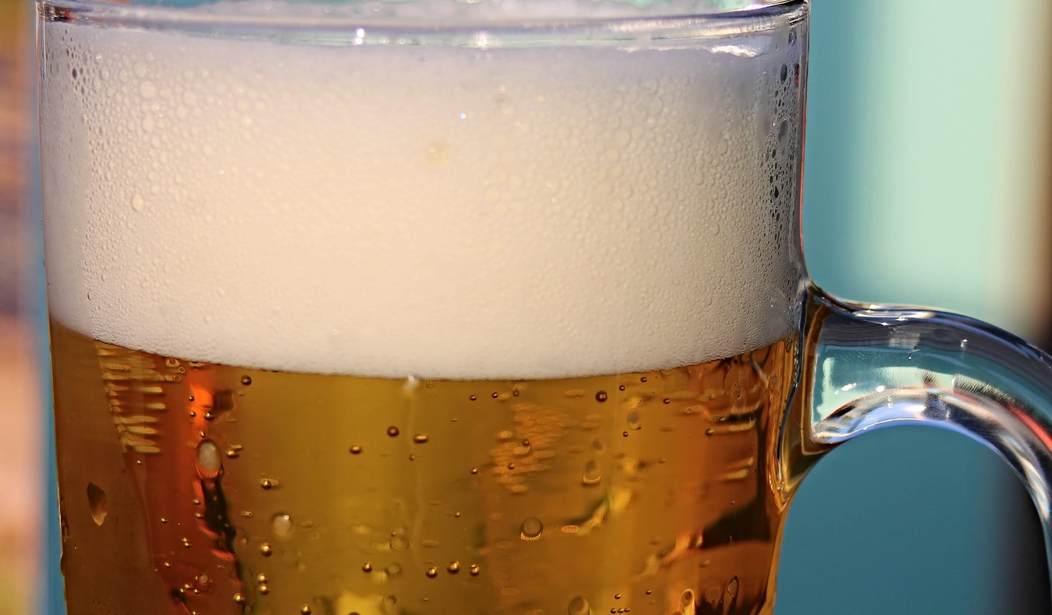

A Wisconsin homebrewer knows what beer is supposed to taste like before the first sip. Grain, water, yeast, patience, and pride; beer belongs to local hands, local tastes, and local loyalty.
It shouldn't take a watchdog report to remind Americans that one of the most familiar names in the cooler is controlled far from the corner tavern.
A new report from Consumer Action for a Strong Economy warns that Anheuser-Busch InBev, the world's largest brewer, has built a foreign-dominated grip on the American beer market while wrapping itself in American imagery. From Daily Caller:
The report, first obtained by the Daily Caller, focuses on global beer giant Anheuser-Busch InBev, “the world’s largest brewer.” InBev, a Belgian-Brazilian conglomerate, bought the iconic American company Anheuser-Busch for $52 billion in 2008. It is now headquartered in Belgium and boasts a massive portfolio of beer brands that includes Budweiser and Michelob ULTRA.
“AB InBev stifles the competition to advance its interests by combining sophisticated and well-funded political, lobbying, advertising machines,” CASE states, pointing to the millions spent on federal lobbying efforts and the company’s shift in marketing after the Bud Light boycott triggered by transgender influencer Dylan Mulvaney.
“Its long-running ‘Choose Beer Grown Here’ and ‘Made of America’ marketing campaigns, launched as part of an effort to rebrand in the aftermath of the Mulvaney debacle, have largely obscured the fact that the company’s corporate headquarters are located in Leuven, Belgium, not in middle America like their advertising would have you believe.”
The report says AB InBev controls nearly half the domestic beer market and uses political muscle, advertising power, and distribution pressure to protect its position against smaller U.S. brewers.
AB InBev isn't a mom-and-pop brewery with a flag on the wall and a mash tun in back. It's a publicly traded global giant based in Leuven, Belgium. InBev completed its $52 billion acquisition of Anheuser-Busch in 2008, renamed the company Anheuser-Busch InBev, and created the global leader in beer.
The danger isn't foreign ownership by itself. Americans buy foreign cars, use foreign tools, and drink foreign beer by choice. The danger grows when a foreign-headquartered conglomerate can use scale to crowd shelf space, squeeze tap handles, influence tax policy, and make it harder for independent brewers to reach customers.
Choice means little when the road to market runs through gates controlled by giants.
The federal government saw part of the problem years ago. In 2013, the DOJ allowed AB InBev's Grupo Modelo deal to move forward only after requiring Modelo's entire U.S. business to be divested to Constellation Brands.
The department warned that the original deal could mean higher beer prices and less innovation. That settlement protected competition, but it didn't solve distribution power for small brewers trying to get their products in front of regular customers.
The Treasury Department later put the larger market concern in black and white. Its 2022 competition report found that two brewers had dominated the U.S. beer market since 2008 and together accounted for an estimated 65% of the market by revenue.
The report also warned that consolidation in distribution can block new entrants and limit the ability of smaller producers to compete.
Small brewers aren't asking Washington to pick winners; they're asking for a fair shot at the shelf, the tap line, and the distributor relationship. The Brewers Association reported that small and independent craft brewers produced 22 million barrels in 2025, held 13.4% of the U.S. beer market by volume, and generated $28 billion in retail dollar value. Even during a rough year, craft outperformed the overall beer category by volume.
Wisconsin understands beer as work, not branding copy. Brewers rise before dawn, clean tanks, worry over margins, hire neighbors, sponsor softball teams, and fight for loyalty one pint at a time. When a global giant markets itself as local while using size to shape the market, Americans should look past the label.
Beer is part of American culture because it has always been close to the people who make it and drink it. President Donald Trump and Congress should be careful before letting tax favors or weak antitrust enforcement reward a foreign-headquartered colossus at the expense of American brewers.
The cold one in your hand right now may still taste familiar, but the power behind it may not belong anywhere near home.