





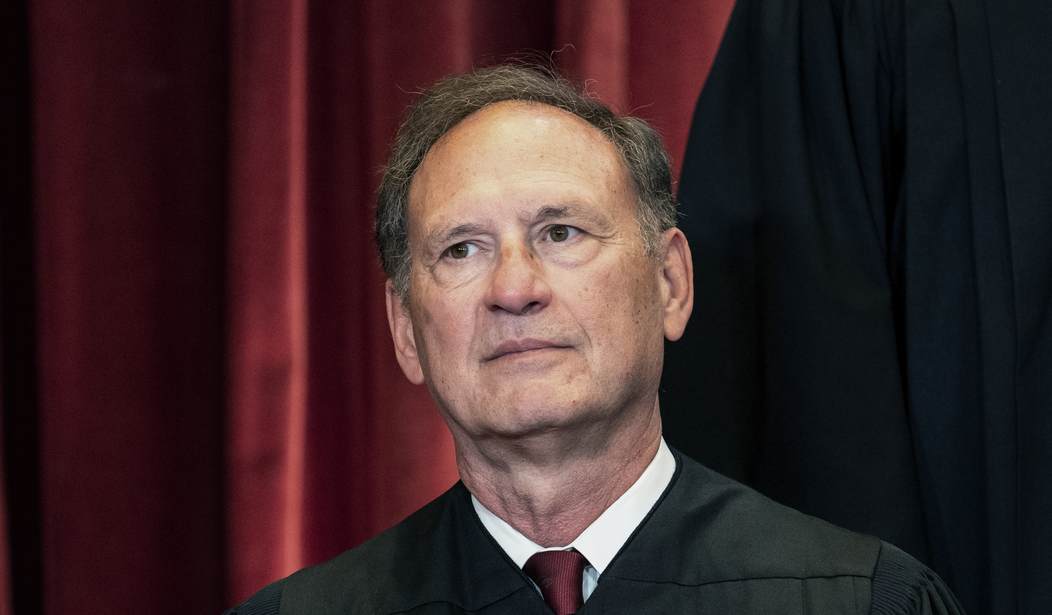
Associate Justice Sonia Sotomayor wanted a moral thunderclap, so Associate Justice Samuel Alito gave her a map.
In Mullin v. Al Otro Lado, the Supreme Court held 6-3 that a migrant standing in Mexico hasn't “arrived in the United States” under the asylum provisions of federal immigration law.
Learn More: When Does an Immigrant 'Arrive' in the U.S.? The Supreme Court Ruled on That Question.
Alito wrote the majority opinion for Chief Justice John Roberts and Associate Justices Clarence Thomas, Neil Gorsuch, Brett Kavanaugh, and Amy Coney Barrett. Sotomayor was joined in her dissent by Associate Justices Elena Kagan and Ketanji Brown Jackson.
The case centered on “metering,” the border practice of limiting how many asylum seekers are processed at ports of entry when the government says capacity is strained.
The question was narrow, even if the surrounding emotions weren't. Can somebody blocked on the Mexican side of the border claim the same asylum-processing rights as someone already inside the United States?
As the New York Post shares, Alito's answer was simple and concrete.
NO.
Conservative Supreme Court Justice Samuel Alito could barely contain himself Thursday after liberal Justice Sonia Sotomayor opted to read her full dissent in an immigration case from the bench, a rare rebuke of her colleagues.
Alito began by briefly summing up his majority opinion in Mullin v. Al Otro Lado, in which he held that the government has the right to turn back migrants stopped at the US border before giving them a chance to apply for asylum.
As Sotomayor read her 35-page dissent, Alito — never known for his poker face — began rocking back and forth in his chair before leaning forward, propping his chin in his hands and staring at the ceiling while his colleague described the majority opinion as “egregiously wrong,” according to The Hill.
After Sotomayor finished, a scowling Alito tersely said that had he known she would deliver her dissent in full, “there’s much more I would have added” to his own comments.
Sotomayor's dissent did what her immigration dissents often do; it quickly moved from law to warning flare. She said the ruling lets the executive branch “slam the door shut” on people fleeing persecution and warned that more people would face danger along the border. Near the end, she wrote that more people would turn back and face violence because of things like race, religion, nationality, or political opinion.
Sotomayor read the dissent from the bench, a rare move meant to show deep disagreement. The moment reportedly turned tense; Alito had already summarized the majority opinion, but after Sotomayor finished, he said he would've added more had he known she planned that kind of dissent aloud.
Nobody should pretend asylum law is emotionally sterile; people fleeing real persecution exist; evil regimes exist, and so do cartels. Human beings get crushed in the machinery of borders and bureaucracy. A judge can see all of that and still have one duty: read the statute as written.
Alito's majority opinion kept returning to the same point. A person arrives in a country when he enters it. Federal law doesn't require immigration officers to inspect someone still standing in Mexico, and it doesn't give that person the right to apply for asylum from Mexican soil simply because he's near a port of entry.
Sotomayor sees the issue through consequence, while Alito sees it through authority. Congress writes immigration law; the executive enforces it, and courts interpret it. When judges turn every hard policy result into a legal command, they stop judging and start governing from the marble bench.
The strain between Sotomayor and the Court's conservatives no longer looks like ordinary disagreement. We can't know the private relationship inside the Court, and we shouldn't pretend otherwise.
The public record is enough.
In April, Sotomayor issued a rare apology to Kavanaugh after making personal remarks about him during a public discussion of an immigration enforcement case. She said the remarks were inappropriate, hurtful, and something she regretted. From ABC News:
Supreme Court Justice Sonia Sotomayor issued a rare public apology Wednesday over what she called "inappropriate" remarks aimed at Justice Brett Kavanaugh for his vote last year to allow aggressive Trump administration immigration enforcement tactics, which critics had called racial profiling.
“I had a colleague in that case who wrote, you know, these are only 'temporary stops,'” Sotomayor said at the University of Kansas School of Law last week, referring to Kavanaugh's concurring opinion in the case. “This is from a man whose parents were professionals. And probably doesn’t really know any person who works by the hour.”
While the Court's majority did not formally explain its decision to lift a restraining order against the ICE strategy for targeting suspected unauthorized immigrants in California, Kavanaugh wrote separately to explain his view that "apparent ethnicity" could be a "relevant factor" in determining probable cause to detain a person.
"We should not have to live in a country where the Government can seize anyone who looks Latino, speaks Spanish, and appears to work a low-wage job," Sotomayor wrote in her dissent. "Rather than stand idly by while our constitutional freedoms are lost, I dissent."
The unusually personal criticism leveled in public by Sotomayor drew significant attention in legal circles, with some Kavanaugh allies calling for an apology.
Pfft!
Now came Alito, another immigration case, another heated dissent, another moment where Sotomayor's politics seemed to shout from the page louder than the legal argument.
I haven't seen the written dissent, but based on the anger in the wise Latina's mouth, she must have used bold many times on that paper.
Her defenders will call it compassion, while her critics will call it activism with a robe on. The problem isn't that she cares about suffering; the problem is that her dissent too often treats care as a substitute for command.
President Donald Trump's administration won because the Court refused to make Mexico part of America for asylum-processing purposes. Homeland Security Secretary Markwayne Mullin's name now sits on a case that may shape how border officials handle future surges at ports of entry.
The ruling doesn't settle every moral question at the border; it does settle one legal question: near the United States isn't the same as inside the United States.
A nation without a border becomes a suggestion, but a court that rewrites “arrives in the United States” to include people still outside the United States becomes a legislature with lifetime tenure. Alito didn't need thunder; he had the words on the page.
Sotomayor had fury; Alito had the statute. On Thursday, the statute won.
Dollars to donuts that Sotomayor's singing voice is still warming up.
The courts keep shaping President Trump’s second term, and PJ Media is staying on every fight that matters. Join PJ Media VIP today and use promo code FIGHT to get 60% off. Your support helps us keep covering the judges, rulings, and power plays the legacy press would rather frame for you than explain honestly.


Join the Conversation
VIP members get the ability to comment on articles.