





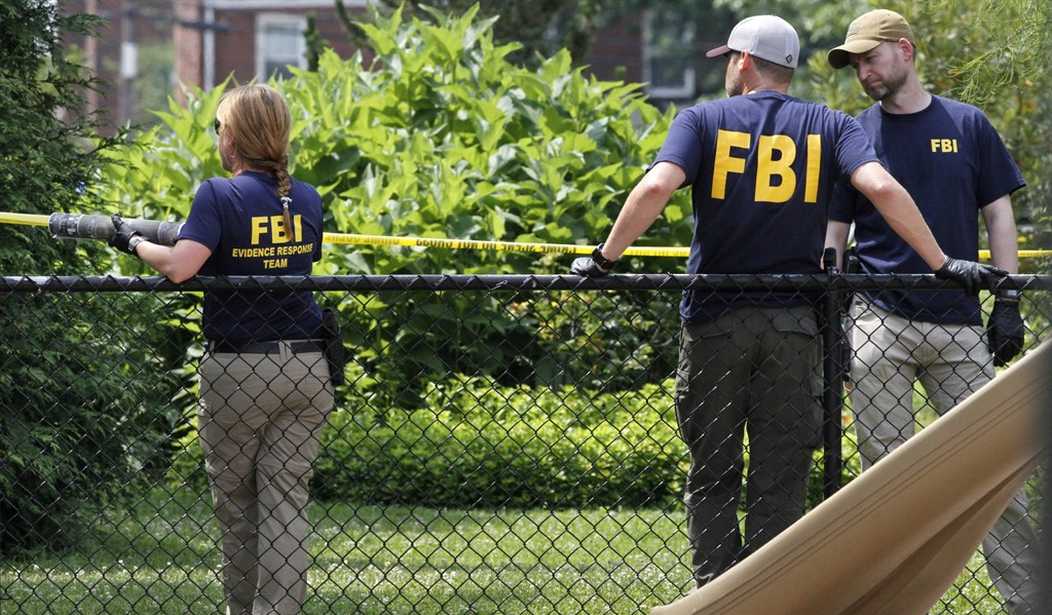
A war on children has moved through decades, administrations, technologies, and platforms. It didn't begin with President Donald Trump, and nobody should pretend one FBI director can wipe out every predator network by Friday afternoon.
Some evils grow dark for years, learning new tools, changing their names, moving across borders, and hunting wherever parents feel least prepared to fight back.
FBI Director Kash Patel has placed child exploitation near the center of the bureau's work, and the 764 network shows why. The group and its offshoots target children through gaming sites, social media, and online communities, then use trust, threats, shame, and blackmail to push victims into self-harm, sexual exploitation, and violence.
FBI Dallas Special Agent in Charge Joe Rothrock recently warned parents, guardians, and teachers that 764-style networks operate worldwide, including in North Texas, and share a common target: children and other vulnerable victims.
FBI Dallas is sharing information with parents, guardians, and teachers about violent online networks commonly referred to as "764," whose members often target minors through popular online gaming and social media platforms.
— FBI Dallas (@FBIDallas) May 13, 2026
Read an open letter from our Special Agent in Charge… pic.twitter.com/iNzCV5GlK7
Rothrock's warning pulls no punches: predators pose as friends, collect personal information, demand explicit images or videos, and use blackmail to force victims into worse acts. Some members livestream abuse, while others threaten swatting, doxxing, public humiliation, or harm to animals. Rothrock's letter brings the problem to North Texas.
Violent online networks such as 764 operate around the world, including right here in North Texas. Some are driven by hatred, sexual gratification, or a desire for chaos. Regardless of their motivation, they have a common target: children and other at-risk individuals. These networks use the trust they initially build to manipulate victims into harming themselves or others. They coerce victims into sharing personal information and explicit pictures and videos, which are then used to blackmail their victims into creating more content depicting escalating sexual and violent behavior. Members of these networks sometimes livestream this content. When victims refuse to comply, their pictures and videos are sent to family members or made publicly available online. They might further coerce their victims by swatting, doxxing, or vandalizing their homes.
The FBI is investigating more than 450 subjects who are tied to these violent online networks. We have worked with federal prosecutors who successfully prosecuted these predators and are tirelessly working to investigate others.
Here in North Texas, FBI Dallas is aggressively investigating violent online network members and working with prosecutors to hold these criminals accountable. We are leveraging our expertise in fighting crimes against children and partnering with other federal, state, and local law enforcement agencies, as well as our international partners, to tackle this growing problem. Last month, we announced a $25,000 reward for information leading to the arrest and conviction of Austin Jan Sy Yatco of Plano, Texas. He is accused of exploiting minors into creating child pornography of themselves, which he then distributed among a violent online network similar to 764.
The FBI now investigates more than 450 subjects tied to violent online networks, and Rothrock says federal prosecutors have already secured convictions while agents continue hunting others.
House Oversight and Government Reform Committee Chairman James Comer (R-Ky.) and Federal Law Enforcement Subcommittee Chairman Clay Higgins (R-La.) pressed Patel in February for a staff-level briefing on the FBI's ability to track and arrest 764 members.
Their letter described a decentralized online criminal network founded in 2021, with victims coerced into self-harm, child sexual abuse material, animal abuse, and suicide. The letter also asked for details on FBI resources, cooperation with prosecutors and child-protection agencies, platform problems, and legal barriers.
Patel's FBI also builds on a broader national crackdown. Then-Attorney General Pam Bondi and Patel announced Operation Relentless Justice in December after a two-week enforcement push located more than 205 child victims and arrested more than 293 alleged child sexual abuse offenders.
“Operation Relentless Justice shows no child will be forgotten and that all predators targeting the most vulnerable amongst us will be held accountable,” said FBI Director Kash Patel. “This year, the FBI has led multiple nationwide surges across the U.S. to find and arrest hundreds of child predators. We will not stop until every child can live a life free of exploitation. We will utilize the strength of all our field offices and our federal, state, and local partners to protect communities across the nation from such horrific crimes.”
Those arrested are alleged to have committed various crimes, including the production, distribution, and possession of child sexual abuse material; online enticement and transportation of minors; and child sex trafficking. Some of the alleged offenders include an airman out of Dallas, TX, who was arrested with his wife for producing child sex abuse material (CSAM), as well as a Police Officer from Raleigh, NC, who distributed CSAM to an undercover officer while discussing his interest in engaging in sexual contact with children. In another case involving enticement of a minor, the Miami Field Office arrested a Guatemalan national who was previously deported in 2011, and had previous arrests for battery, disorderly conduct, resisting arrest, and carrying a concealed weapon.
All 56 FBI field offices joined that operation, along with federal prosecutors and U.S. attorney's offices. Patel said the bureau had led multiple nationwide surges to find and arrest child predators, and he vowed to use every field office and law enforcement partner available.
None of this makes for an easy fight. Parents face predators who know how to sound like classmates, gaming friends, lonely teenagers, or harmless strangers. Kids live in a world where a phone becomes a trapdoor. A parent can check homework at 8:00 p.m. and miss a predator grooming a child at 8:15. The old warning about strangers in vans still applies, but many monsters now arrive through usernames, chat windows, private servers, and fake kindness.
Comer and Higgins deserve credit for treating 764 like a serious federal threat, not another committee talking point. Patel deserves credit for keeping pressure on networks that enjoy silence, confusion, and delay. Rothrock deserves credit for giving parents clear warning signs: sudden withdrawal, unexplained injuries, hidden body parts, strange gift cards, suspicious online contacts, and fear around pets or law enforcement contact. Parents need plain language because panic helps nobody, and denial helps predators.
No single arrest ends the war on children. No press release closes every private chat room. The FBI can't sit at every kitchen table, monitor every phone, or replace a parent's judgment.
Still, a serious country hunts the monsters who hunt children. Patel's FBI has put 764 and similar networks on notice. Parents, schools, prosecutors, and agents now need to keep pulling the threat until every name behind a screen learns that children aren't easy prey.
VIP members help keep work like this alive when major stories about children, crime, and accountability deserve more than a passing glance. Use promo code FIGHT for 60% off VIP access.


Join the Conversation
VIP members get the ability to comment on articles.