





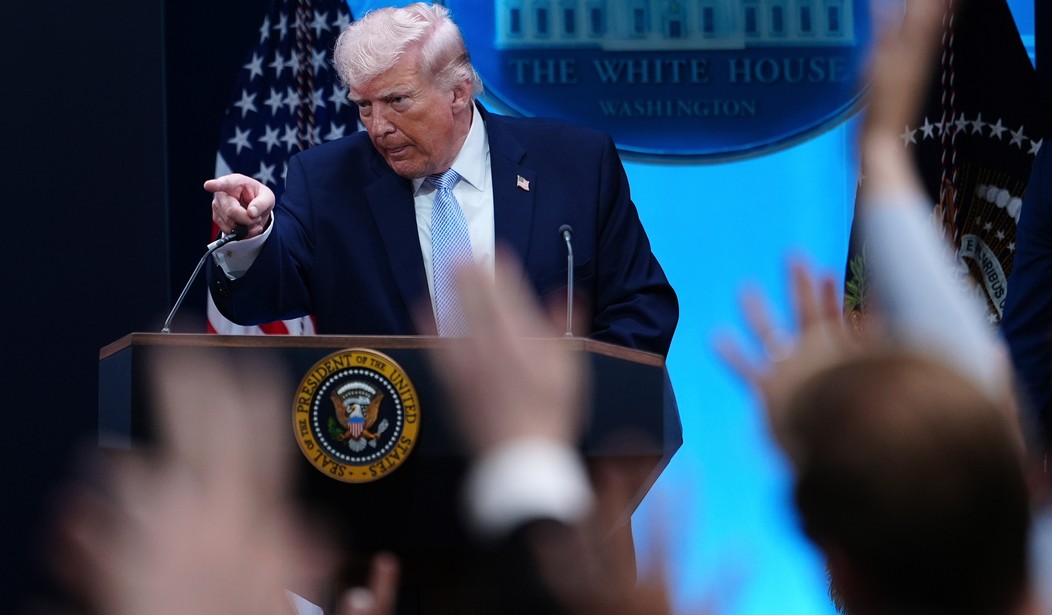
President Donald Trump didn't duck, didn't pretend he hadn't heard the noise, and didn't follow the old Republican playbook of politely smiling while critics on the right chip away.
He hit back.
Shocking, I know [/sarc]. I wasn't surprised at the fact that he struck back; I was surprised the man had time to do so. After all, he was in the middle of performing an act that the prior seven presidential administrations had promised, threatened, and even written those vaunted, strongly worded memos directed toward a cleric-led Iranian leadership that ran terror networks for decades. Before that, he cut the head off the snake that was Nicolás Maduro in Venezuela, and later, he applied pressure to the Cuban leadership to step away.
In short, he's a busy man. Well, he finally found some spare time.
Trump called out Tucker Carlson, the podcaster and former Fox News host. He named Candace Owens, the podcaster, and Alex Jones, broadcaster and conspiracy theorist, and described all of them as low-IQ grifters and blackpillers who lost touch with reality. His remarks followed their attacks on his Iran policy and their dramatic language about Operation Epic Fury.
Trump chose confrontation over the silence that President George W. Bush preferred, who often ignored critics within his own coalition. Trump refuses to, understanding that unchallenged narratives calcify.
If somebody using a large microphone claims that the movement has collapsed or lost its moral compass, silence invites repetition.
Carlson now calls Trump's rhetoric vile, Owens labels him a genocidal lunatic, and Jones pushes apocalyptic defeatism. We're not talking about minor disagreements about tactics; they framed the president as reckless and immoral while American forces engaged Iran.
It's a shift that hasn't gone unnoticed.
Scott Jennings, CNN senior political commentator and longtime Republican strategist, confronted the narrative on air. During a segment with CNN host John King, Jennings challenged the idea that these podcasters represent a credible conservative revolt. King attempted to frame the criticism as evidence of a serious MAGA fracture. Jennings pushed back and questioned why fringe voices suddenly qualify as representative of Republican voters.
Anyone, no matter how fringe, will be given a magical designation of "credible" by the left as soon as they start attacking President Donald Trump.
— Scott Jennings (@ScottJenningsKY) April 9, 2026
Opinions are fine, everyone's got them. Trump is still the undisputed leader of the Republican Party. pic.twitter.com/a2nTYs7tM1
Jennings reminded viewers that Republican primary voters returned Trump decisively to office, arguing that online personalities don't equal the party base.
Related: CNN’s Scott Jennings Torches His Network’s Fake News About MAGA on Air
The louder the critics shout, the more certain media figures declare Trump embattled, a storyline that writes itself. Find a dissenter with a podcast, amplify the clips, and present it as a crisis.
The problem is scale; social media noise doesn't automatically translate into voter revolt.
Operation Epic Fury intensified the divide, where critics focused on a downed aircraft, downplaying the broader strategic blows delivered to Iranian assets. They spoke as if American strength were reckless, not calculated, a framing that Trump rejected outright.
Carlson built his audience on America-First language. Owens gained prominence defending Trump's first term. Now, both broadcasters frame his Iran posture as a betrayal, a pivot that hasn't expanded their influence inside Republican primary politics. It has simply made for louder content.
As with everything Trump, his response wasn't delicate; it was direct, labeling the behavior as grifting. He accused them of chasing clicks, refusing to let the narrative hang unanswered. A response that matters.
Carlson, Kelly, Owens, and Jones currently host some of the most popular podcasts in conservative media and all have decidedly opposed the Iran war, despite their previously longstanding support for Trump himself.
Trump then took individual potshots at all four, referencing Carlson's termination from Fox News, Kelly's previous altercation with him during a 2016 debate, Owens's legal battles with the president of France and his wife, and Jones's defamation suit.
Political movements fracture when leaders allow internal attacks to fester. Trump calculates that counterpunching preserves clarity; he'd rather fight publicly than let doubt metastasize.
Jennings' incredulity during his exchange with John King captured the intention. Elevating Alex Jones as a credible voice of conservative conscience requires a suspension of seriousness; treating YouTube commentary as structural revolt stretches the definition of political reality.
The anti-MAGA critics insist they represent principle. Trump, however, insists they represent ego and resentment. Republican voters will decide which interpretation holds.
President Donald Trump isn't retreating, isn't apologizing, and isn't playing the elder statesman who shrugs at internal dissent. He's confronting it in real time.
The media calls it embattled.
I call it leadership.
If you value analysis that challenges the spin and names the dynamics others won’t, join PJ Media VIP today. Use promo code FIGHT to receive 60% off your membership and access exclusive reporting and deeper commentary.

Join the Conversation
VIP members get the ability to comment on articles.