





Some of you may have noticed I stepped away for a few days because an aunt on my mother's side passed. That side of my family isn't just close; it's woven together in a way that feels protective. My aunt wasn't my mother's sister; she was her closest friend.
After my brother visited her weeks before, he told me something that stayed with him: the physical resemblance between her and our mother was striking, startling him and me, too.
That's something grief does, rearranging what you thought you understood.
I'll admit something that feels selfish: I didn't have the heart to write. Words felt mechanical, and I needed a few days to sit with it.
It's been an interesting few days. On Easter Sunday, I rode with my friend Kevin Hanson, funeral director at Maurina-Schilling Funeral Homes, covering three central Wisconsin small towns, as he transported a decedent to O'Hare International Airport. She would be flown to Mexico City so that her family could receive her for burial.
At the airport, I watched a coffin inside a reinforced shipping container get moved into the holding area of a cargo hangar. There wasn't any ceremony or special recognition, and it wasn't mishandled. It simply became cargo.
That's when I realized how wide the distance is between death and burial.
The drive to Chicago from where I'm writing is four and a half hours one way. Kevin and I had such a wonderful conversation throughout the trip. One such topic was to explain what most families never see. International transport of a body requires several completed forms, many unique to whichever country the body is heading to.
That's only part of the process.
Embalming must meet foreign standards, consular approvals must align with airline regulations, and identification numbers must match across documents without error, where a mistake only delays release, perhaps even indefinitely.
Commercial airlines transport human remains daily. Major carriers classify them under strict cargo protocols. Tens of thousands of bodies move through American airports each year, while most passengers never realize someone below them is taking one final flight home.
The paperwork is relentless, but that's not what unsettled me: “When a person dies, they no longer have rights.”
Legally, that's correct in most jurisdictions, where authority transfers to the next of kin. Written wishes morally matter, but they're not always enforceable. Courts can intervene in disputes, yet families often decide.
That also creates a gap where funeral directors stand.
Among their tasks, they notify Social Security, coordinate with the Department of Veterans Affairs for burial honors and markers, secure transport permits and cemetery authorizations, ensure compliance with state regulations and federal reporting deadlines, and regularly consult attorneys when families disagree.
Kevin candidly spoke about disputes over cremation versus burial, estranged relatives trying to assert control, siblings arguing over locations, and situations where final wishes collided with family preference.
He didn't dramatize any of it, plainly describing it.
International shipments add another layer. Kevin has encountered reports in certain regions where families face additional unofficial demands before remains are released at foreign airports.
He was careful not to generalize, painting entire countries with a wide brush. Yet, the possibility exists, and families are vulnerable when navigating unfamiliar systems.
Then came Aunt Francis's funeral yesterday.
Knowing what I now knew changed how I saw everything. Body preparation requires skill and steadiness. Presentation deeply matters to families seeking one last peaceful image.
Beyond that lies coordination with clergy, cemetery staff, military honors if applicable, obituary deadlines, legal documentation, and scheduling transportation.
Those tasks are included in others, where funeral directors provide services that help the family with things they may have never considered. They seem obvious, but when feeling the pain of scheduling the funeral services of their loved one, those thoughts are secondary. Items like printing programs, portrait stands for photo collages, table coverings that provide a wonderful foundation for other memorabilia, and background music, all while standing in the background, ready to help the family with anything unexpected.
None of those efforts appear in the printed program.
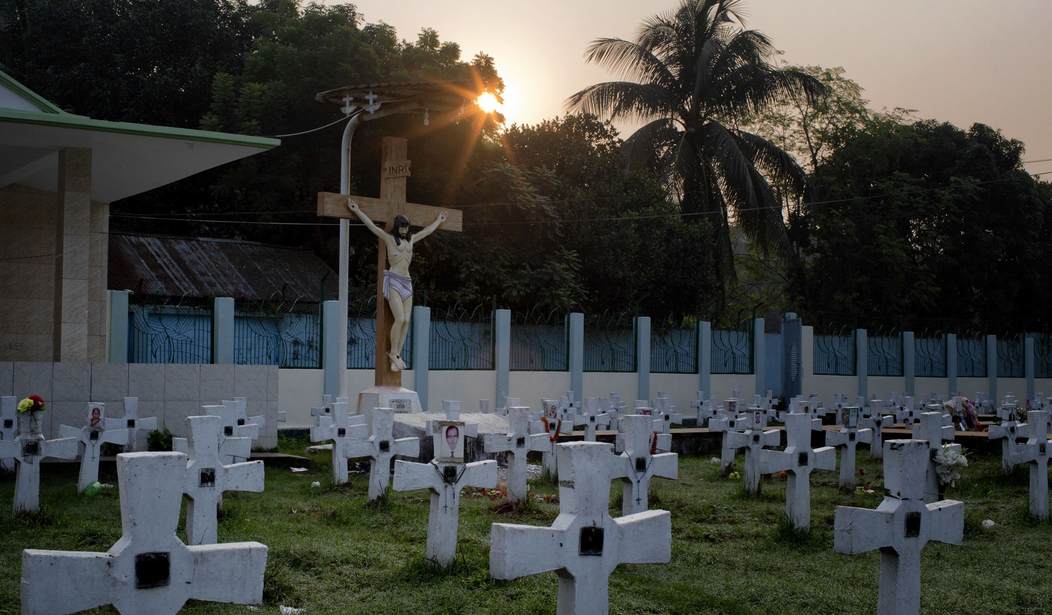
The priest who performed the services shared a burial tradition that I was unaware of, and Kevin confirmed it: in many Christian practices, people are buried with their feet facing the east, symbolizing a readiness for Christ's return. Also, couples are positioned so that at resurrection, they'll stand in the same position as they did on their wedding day. These ancient rituals persist beside federal compliance codes and airline cargo forms.
Cargo and resurrection occupied my week.
Kevin never romanticized his profession, acknowledging that funeral directors are compensated for their work. It's a skilled profession with legal exposure and administrative weight. What varies is effort, how much of an emotional strain a director is willing to absorb on behalf of a grieving family.
He shared that in larger cities, such as Milwaukee or Chicago, a funeral director may serve only a single family, maybe once. In smaller cities, a director serves more than a married couple; it might be extended families.
But for Kevin, living in tiny communities, he's burying good friends, people he may have shot hoops with or spent an afternoon on a golf course.
Kevin gives more than required. I've known him for 50 years and well enough to plainly say that. He's but one funeral director in Wisconsin and is speaking only from that perspective. Others may approach the role differently.
But what I see is responsibility carried without weight, a good man whose first concern is for the families he serves. Death doesn't end obligation; it transfers it.
Between the moment a heart stops and the moment earth closes over a grave lies a corridor filled with forms, signatures, coordination, and fragile human emotion. Families are often too stunned to navigate it alone.
Bureaucracy doesn't slow down for grief. Somebody must bridge that distance.
On the morning of Easter Sunday, I watched a forklift carry a container away from Kevin's vehicle to its waiting area. Days later, I stood beside my aunt's casket. In both moments, I understood something I didn't before.
The distance between death and burial is long.
And it's the living who must carry it.
Join PJ Media VIP today and use promo code FIGHT to receive 60% off your membership and gain access to exclusive analysis and deeper coverage.



Join the Conversation
VIP members get the ability to comment on articles.