





The House didn't just pass a bill; it exposed a line that's been quietly shifting for years, and now it's out in the open.
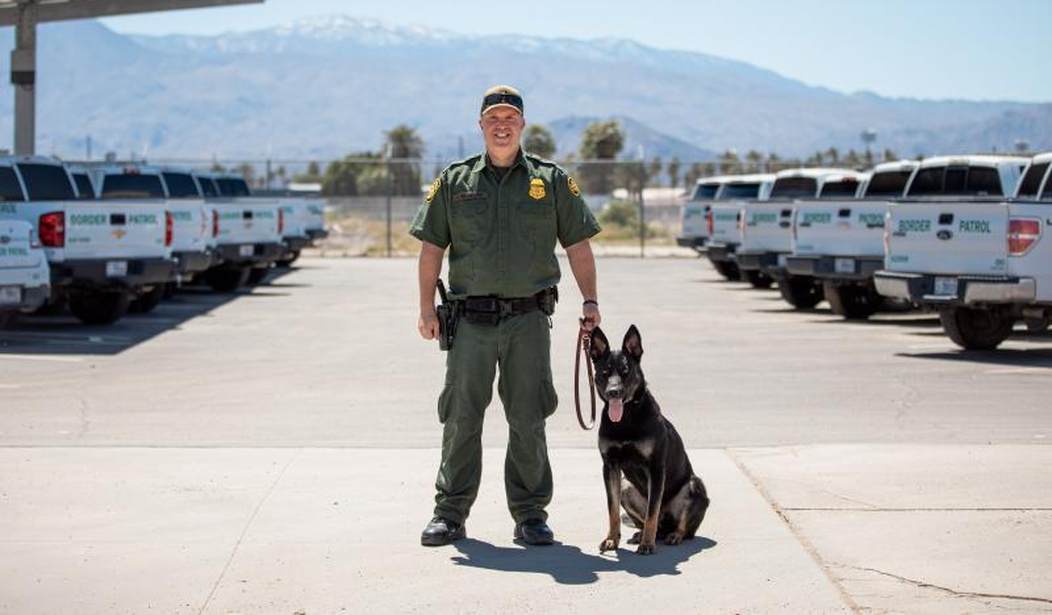
Rep. Ken Calvert (R-Calif.) introduced the Bill to Outlaw Wounding of Official Working Animals (BOWOW) Act after real-world incidents forced the issue into daylight. An Egyptian man kicked and injured Freddie, a trained Customs and Border Protection detector dog working at Dulles International Airport. Freddie wasn't just wandering around looking for trouble; he was doing his job, the same as any officer assigned to that terminal.
“The dogs and horses on the front lines of our federal law enforcement efforts alongside our officers deserve our protection,” said Rep. Calvert. “The BOWOW Act sends a clear message that we will stand up for our four-legged friends and have zero tolerance for any immigrants who assault them. Animals, like Freddie, work every day to keep Americans safe—we owe it to Freddie to do our best to keep him safe too.”
The bill itself reads plainly: if a “noncitizen” harms a federal working animal such as a police dog or horse and either gets convicted or admits guilt, that person becomes deportable and barred from reentry.
No sweeping rewrite of immigration law, no complicated framework, just a consequence directly tied to an act against law enforcement.
The vote came in at 228 to 190; 15 Democrats joined Republicans in support, while the rest didn't.
That number carries weight because the facts surrounding the bill don't invite much confusion. These animals detect explosives, narcotics, and contraband. They track suspects, find missing people, and stand beside officers in moments that turn dangerous instantly. Anyone who's watched a handler work with a K9 knows the bond isn't symbolic; it's operational.
Opposition didn't hinge on whether harming a police animal is wrong. Rep. Jamie Raskin (D-Md.), ranking member of the House Judiciary Committee, argued the law wasn't needed because penalties already exist for harming these animals, a point that conveniently sidesteps the central issue the bill addresses.
During floor debate Thursday, Rep. Jamie Raskin, D-Md., argued the legislation was redundant, pointing out that the assailant in the 2025 incident was deported.
“Freddie got justice. We got a system that actually works there,” Raskin said.
The lawmaker also raised concerns that the bill could penalize individuals who are not convicted of — but rather just admitted to — hurting an animal.
Existing penalties punish the act. The BOWOW Act adds an immigration consequence when the offender isn't a U.S. citizen.
That distinction sits at the heart of the vote.
A person could reasonably walk through the possibilities without stretching logic. One possibility is that lawmakers don't believe that harming a working animal should trigger removal from the country. Another proposes they don't want immigration consequences layered onto crimes already on the books. A third suggests concern about expanding deportation triggers in any form, regardless of the underlying offense.
None of those positions were clearly stated during the vote, yet the outcome leaves them hanging in the air.
The language surrounding the story adds another layer. Headlines leaned on the word “noncitizen,” a term that sounds clinical and distant. The public hears that word and thinks paperwork. The reality often involves individuals who entered or remained in the country without legal status. The difference in wording shapes how the story lands before anyone even reads the first sentence.
That framing matters because it softens the stakes. Freddie didn't face a policy debate; he took a kick from somebody who chose to strike an animal working under federal authority. Law enforcement didn't debate the terminology in that moment. They responded to an attack on one of their own.
The House vote now stands as a marker, not because the bill itself carries sweeping consequences, but because it forced a clear decision on a narrow issue: protecting working animals tied directly to law enforcement and attaching immigration consequences to those who harm them.
When 190 lawmakers refuse that step, the public doesn't need a speech to understand something deeper is at play.
The Senate now holds the next move. If the bill advances, it reinforces the idea that actions against law enforcement, including the animals working beside officers, carry real consequences tied to immigration status. If it stalls, the same unanswered questions remain.
Freddie can't explain what happened to him because he doesn't need to.
The vote already said enough.
Freddie can’t explain what happened to him. He doesn’t need to. The vote already said enough.
If you want more straight talk like that, PJ Media VIP keeps it coming without the noise or the filters. Right now, you can grab a subscription at a steep discount using promo code FIGHT. Lock in your access.


Join the Conversation
VIP members get the ability to comment on articles.