The Battle of the Bulge didn't open with a famous stand or a rallying cry; it began in a frozen Luxembourg valley where narrow roads twisted downhill and snow swallowed sound.
Clervaux sat in the way of Hitler's last gamble, and a handful of American soldiers decided that ground mattered, even when logic argued otherwise.
At dawn on December 16, 1944, German artillery cracked the silence along the Our River. Units from the 2nd Panzer Division pushed west with urgency. Speed mattered; every delay threatened fuel supplies, coordination, and surprise. Clervaux controlled the roads feeding that advance, and German commanders expected a quick clearing action.
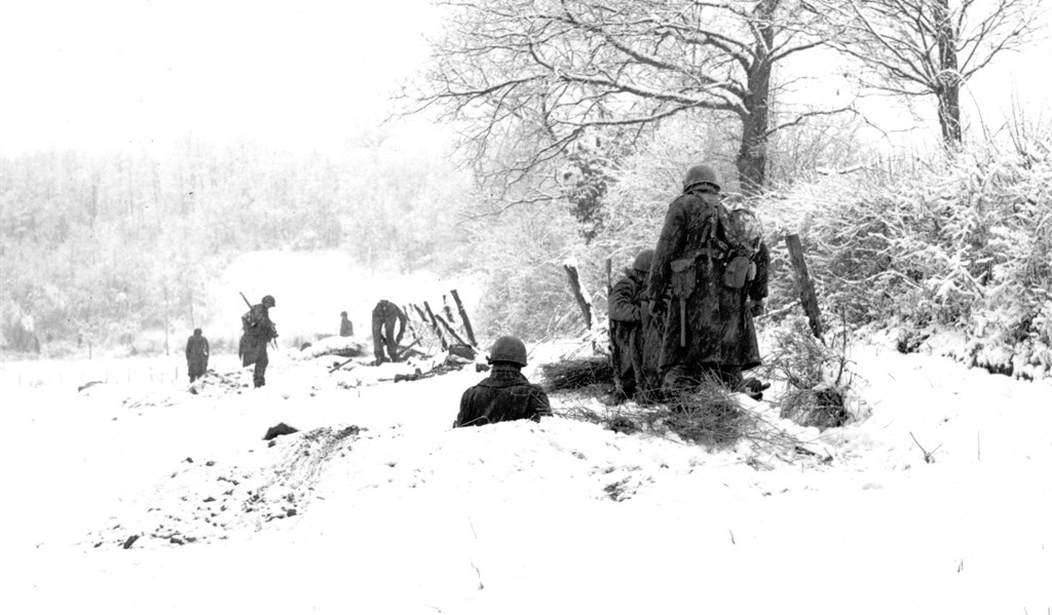
They ran straight into a place the soldiers soon called the Bloody Bucket; the road dropped steeply toward town, narrow and exposed, forcing tanks to slow and line up nose-to-tail. American defenders recognized the trap immediately. Sherman tank crews tucked hulls behind bends in the road; infantry teams, armed with bazookas, waited above and below in the grade.
When the first German tanks entered the valley, the valley erupted. Steel burned and wrecked vehicles slid downhill, blocking those behind them. Smoke hung low in the cold air, and the road became impassable, not by design, but by destruction. Accounts from the 28th Infantry Division described the scene as relentless and close, with crews firing until fingers stiffened from cold and recoil.
German tankers pressed forward anyway; Panthers advanced into blind curves knowing fire waited. Courage was evident on both sides, but the terrain favored the defenders. Every minute clearing wreckage drained momentum the offensive couldn't spare. Single stretches of road disrupted the carefully planned timing during the offensive's opening hours.
As fighting spilled into Clervaux, Colonel Hurley Fuller established his command post inside the Hotel Claravallis near the Clerve Bridge. The bridge mattered. Roads branching west and south passed through it, and losing control meant surrendering movement. German infantry pushed into town under fire from windows and rooftops. Tanks fired point-blank into stone buildings, causing snow to turn pink under boots and treads.
Above it all stood Clervaux Castle, with its medieval walls never meant to withstand modern artillery. American troops used it anyway. Surrounded and cut off, defenders held out for nearly three days, while ammunition ran low and medical care was nonexistent.
German forces finally used incendiaries to flush survivors from stone corridors built centuries earlier. Many Americans died or were captured there. Nobody easily surrendered.
German victory carried an unspoken cost: The defense of Clervaux delayed the advance by precious days. German columns arrived tardily at later objectives. Allied commanders gained time to reposition forces, reinforce Bastogne, and blunt the offensive before it reached the Meuse.
Luxembourg historians note that civilians suffering mirrored military loss as homes collapsed and families hid in cellars during the shelling.
The 110th Infantry Regiment paid dearly; losses crippled the unit. Survivors carried memories forged not in famous sieges, but in snow-choked valleys where names never became headlines.
German crews paid the price, too, losing vehicles they couldn't replace and burning precious fuel reserves meant to carry them west.
Today, Clervaux remains quiet, the castle rebuilt, and a Sherman tank rests near the gate, silent but stubborn, much like the men who fought nearby.
It's amazing to witness how memory endures in places where timing mattered more than territory.
While Bastogne became a legend, Clervaux bought the chance for the legend to exist at all. Before the speeches and before maps turned red, a frozen road called the Bloody Bucket filled with fire, smoke, and resolve.
That stand shaped the opening chapter of the Battle of the Bulge, even if history rarely pauses long enough to notice.