
Something upbeat for this week.
And remember, just in case you think you had a bad day....
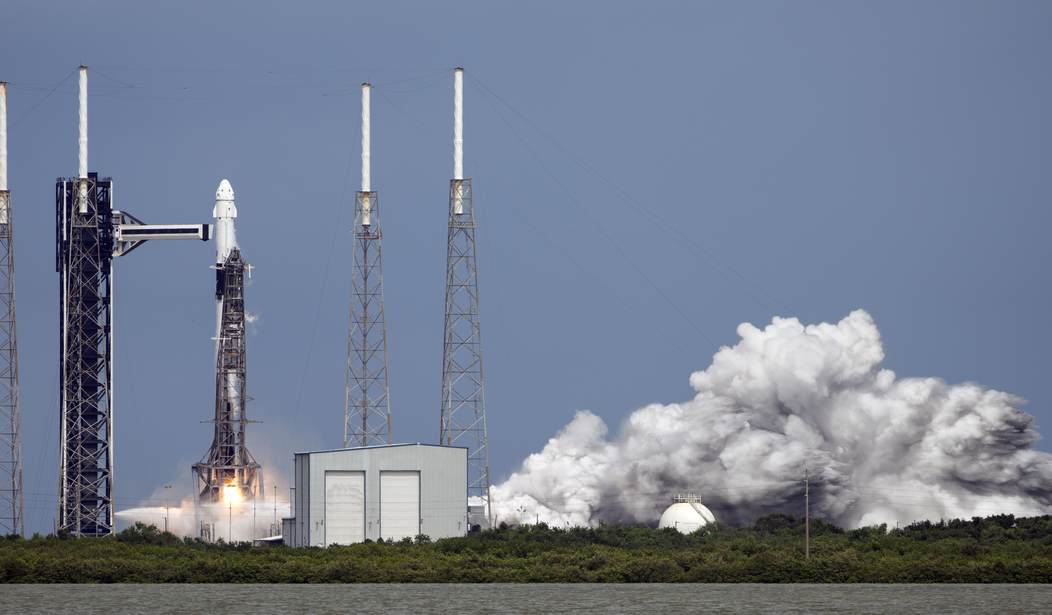
This New Glenn rocket explosion released 20% of the energy of the Hiroshima atomic bomb and that wasn't even the bad part:
— Josh Kale (@JoshKale) May 29, 2026
→ The pad: LC-36 is the only pad on Earth that launches New Glenn and now it's gone. Over $1B to build. SpaceX needed 7 months to rebuild after a similar… https://t.co/5TadWH3JCB pic.twitter.com/Ptr1m5mPom
... you could be the New Glenn Project Manager. My buddy Steve Green has written more on this, but one of his commenters made a really good point:
Blue Origin is selling space on New Glenn. They are saying it's ready for prime time so a routine integration test before a bought and paid for commercial flight shouldn't dump 4.2 million megaJoules of energy into the Merritt Island National Wildlife Refuge in less than a second. Blowing up a supposedly operational rocket during a test is very different than blowing up a test rocket during a test.
Other than that, there's been just too much news this week, and I'm tired. Let's get away from it all. Far, far away. Let's start in low Earth orbit, because I can't resist aurorae:
[Overview the Earth] No.2597: Aurora
— LiVEARTH (@livearthjp) May 28, 2026
Astronaut aboard #ISS captured beautiful #aurora. This aurora looks like a dragon. (Credit: NASA)#LiVEARTH https://t.co/SDG2DdNLYf #Earth #EarthFromSpace #overview #perspective pic.twitter.com/4lMf6DisMt
We're heading out: 1,270 light-years.
A spectacular view of AE Aurigae, a hot, massive star surrounded by glowing nebulosity.
— World and Science (@WorldAndScience) May 26, 2026
Its intense energy excites the surrounding gas, setting the nebula aglow in dramatic, luminous detail.
(Credit: T.A.Rector and B.A.Wolpa/NOIRLab/NSF/AURA) pic.twitter.com/CqMkSJI0Jw
This is 5,700 light-years away, just down the block, really.
M16, Eagle Nebula
— Black Hole (@konstructivizm) May 28, 2026
Credit: Marco Papa
Italy pic.twitter.com/FMKcGs8JHY
This is practically our neighborhood. Just 160,000 light-years.
This star-forming region, N11B, is located in a neighboring galaxy called the Large Magellanic Cloud.
— Black Hole (@konstructivizm) May 28, 2026
Video based on Hubble Space Telescope data pic.twitter.com/xVKkusfIcy
It was only about a hundred years ago that we realized there were galaxies other than ours. We know better now.
Hundreds of galaxies appear in this view, which is set against the black background of space. There are many overlapping objects at various distances. They include large, blue foreground stars, some with eight diffraction spikes, and white and pink spiral and elliptical galaxies.… pic.twitter.com/9O1pOelfLU
— Stellarix (@Stellarixorine) May 22, 2026
Sing with Bokonon:
Oh, a sleeping drunkard
Up in Central Park
Or the lion hunter in the jungle dark
Or the Chinese dentist
Or the British Queen
They all fit together in the same machine
City of stars, are you shining just for me?
— Hubble (@NASAHubble) May 29, 2026
This new Hubble view shows the spiral galaxy M88, located about 63 million light-years away.
M88 is an active galaxy, which means that its center holds a supermassive black hole that snacks on gas and dust: https://t.co/wgqlDIHqSq pic.twitter.com/bnLqVY5j7H
A huge, dense field completely filled with tiny stars. A few of the star images are a bit larger than the rest, with visible diffraction spikes; two foreground stars are large and bright on the right side. Many small galaxies within various shapes and sizes can be seen hiding… pic.twitter.com/cwHyNx0315
— Stellarix (@Stellarixorine) May 26, 2026
Nice kitty. About 5,500 light-years.
A-meow-zing 😻
— The Space Tech Guy (@Thespacetechguy) May 28, 2026
NASA’s Webb and Chandra observatories combined their data to reveal the Cat’s Paw Nebula in stunning detail. By blending different wavelengths, they uncover clusters of young stars forming deep within the dusty clouds. pic.twitter.com/rmkNdz16y5
The Sombrero Galaxy is a favorite. This is an interesting new view. To my surprise, this is a visible-light image; I would have thought infrared, since it doesn't have that cloud around the center. 35 million light-years from us.
800 billion stars captured in a single frame..
— Black Hole (@konstructivizm) May 29, 2026
This is Sombrero Galaxy captured by Hubble.,
31 million light-years away from us.! pic.twitter.com/unE99Jpfau
This is 68 million light-years.
The Hubble Space Telescope reveals a jewel-like view of NGC 1385, a graceful spiral galaxy shining 68 million light-years away in the constellation Fornax.
— Universal-Sci (@universal_sci) May 29, 2026
(Credit: ESA/Hubble & NASA, J. Lee and the PHANGS-HST Team) pic.twitter.com/KBt5TNuQTN
100 million light-years.
#PPOD: Galaxy in Transition 🌀
— The SETI Institute (@SETIInstitute) May 29, 2026
This @HUBBLE_space image reveals an enigmatic #galaxy with a bright center and a face that hints at spiral structure, yet it holds no obvious spiral arms. Reddish-brown clumps and filaments of dust partially obscure the galaxy’s full face, while… pic.twitter.com/nITpokhXv1
110 million light-years.
The Hubble Space Telescope reveals a jewel-like view of NGC 1385, a graceful spiral galaxy shining 68 million light-years away in the constellation Fornax.
— Universal-Sci (@universal_sci) May 29, 2026
(Credit: ESA/Hubble & NASA, J. Lee and the PHANGS-HST Team) pic.twitter.com/KBt5TNuQTN
But that's nothing. Here's one at 250 million light-years. It's actually two galaxies in the process of colliding, and it's much brighter in infrared because dust is blocking visible light.
Impressive: Arp 220 is the closest Ultraluminous Infrared Galaxy (ULIRG) to our planet! It emerged from the collision and current merging of two galaxies.
— World and Science (@WorldAndScience) May 29, 2026
(Credit: NASA, ESA, the Hubble Heritage (STScI/AURA)-ESA/Hubble Collaboration, and A. Evans) pic.twitter.com/XC043xGbuA
Maybe as much as 300 million light-years.
Hubble has captured a galaxy, Messier 88, on a perilous journey to the centre of the Virgo galaxy cluster!
— ESA Science (@esascience) May 29, 2026
Read more 👉 https://t.co/xAbN5lgeYy pic.twitter.com/mLeKzzIXcO
And finally, the "Little Red Dot", about 13 billion light years away, and only about 700 million years younger than the whole universe.
New data from @NASAWebb shows that supermassive black holes can grow to their current size without a much larger host galaxy to feed them.
— NASA (@NASA) May 29, 2026
This helps to explain why some black holes in the early universe got so big so quickly. https://t.co/9l3SjnKHqZ pic.twitter.com/oeMaJX2RHH
And let's close with a little more Bokonon:
I wanted all things to make sense
So we'd be happy instead of tense
I'm not promising things will make sense next week, but there will be more Sky Candy.