
“Oh, say does that Star-Spangled Banner yet wave o’er the land of the free and the home of the brave!”
My America 250 trip has taken me to Independence Hall and other historic sites in Philadelphia, Mount Vernon in Virginia, and now Fort McHenry and historic battleships in Maryland. The fort's history includes POW detention during the Civil War, a surgically innovative hospital during World War I, and military training during the Mexican-American War and World War II. But, of course, the reason it is famous in America today is the 1814 battle that inspired what is now our national anthem.
Read Also: America 250 Advice: Teach Kids History the Hands-On Way
Francis Scott Key, an American lawyer, had boarded the British flagship to negotiate the release of his friend William Beanes. While the British were willing to release Beanes, they delayed sending any of the Americans back until after the bombardment of the fort, since the Redcoats didn’t want the Americans to be able to leak any details of the planned attack. Hence Key and his friends found themselves watching the hellish bombardment of the fort from the British ship. Key described it “as though mother earth had opened and was vomiting shot and shell in a sheet of fire and brimstone.” But somehow the next morning, as Key strained his eyes through the fog and early light, the American flag was still flying over the battered fort. Overjoyed, Key wrote the poem that has since become “The Star-Spangled Banner."
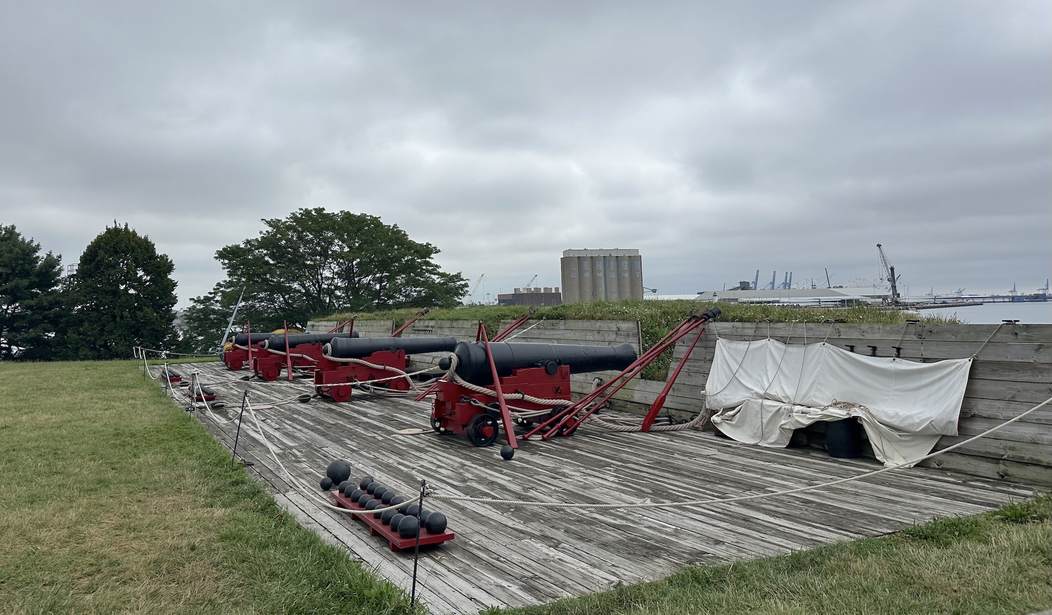
The fort is no longer in operation as a military post, but it is a national historic site. The earthworks are green and thick with grass and dotted with flowers. Children and dogs and elderly couples stroll along the paths winding through the star-shaped brick fortifications, and tourists from across America and around the world admire the view and the silent cannons. On a quiet and cloudy day like today, July 7, it is strange to think of the pounding shots from the British, the injured and dying defenders, the panic and the noise and the screaming and the fire.
But a bigger question is whether the men who fought on that distant day in 1814 would still be proud of this country and of the American spirit. Are we carrying on their legacy? Do we honor our flag as Key did? It is not enough for us simply to identify the problems in our country. We must also be a part of the solution, as the soldiers, sailors, and civilians who defended Baltimore were.
As I sit and look out over Baltimore’s Harbor, which leads into the Chesapeake Bay, with the fort behind me, I think about how God has blessed our country so many times. Despite the British firing 1,500 rockets and bombs over a 25-hour period, according to the museum here, only four American defenders died from the bombardment. And of course, Baltimore escaped the fate of Washington, D.C. In our day, America has become the most powerful nation in the world. The issue now is whether we will appreciate our blessings as the Americans of Key’s era did, and remember always to thank God for them.
As so many generations of Americans have before us, we can draw inspiration for the culture war and the renewal of America from the end of Key’s poem:
Then conquer we must, when our cause it is just,
And this be our motto - “In God is our trust,”
And the star-spangled banner in triumph shall wave
O’er the land of the free and the home of the brave.